Plastic electronics (Coursera)

Offered by École Polytechnique,
Plastic electronics (Coursera)

Plastic electronics is a concept that emerged forty years ago, with the discovery of electrically conductive polymers. Ten years later, the first electronic devices using organic solids in place of the ubiquitous inorganic semiconductors were realised. The best achievement of plastic electronics is constituted by Organic Light-Emitting Diodes (OLEDs) that equip the display of many smartphones, and even TV sets.

Class Deals by MOOC List - Click here and see Coursera's Active Discounts, Deals, and Promo Codes.

The objective of this course is to provide a comprehensive overview of the physics of plastic electronic devices. After taking this course, the student should be able to demonstrate theoretical knowledge on the following subjects:

  • Concept of organic semiconductors;
  • Charge carrier transport in polymeric and organic semiconductors;
  • Optical properties of organic semiconductors;
  • Charge injection from metals to organic solids;

Operating mode of the main plastic electronic devices: Organic light-emitting diodes (OLEDs), organic photovoltaic cells (OPVs) and organic field-effect transistors (OFETs).

Syllabus

WEEK 1
Introduction to plastic electronics
This first module is an introduction to the concept of semiconductor, which is the primary consituent of all electronic decives. We also show how some organic compounds can behave as semiconductors.

WEEK 2
Charge carrier transport in organic semiconductors
Electronic devives work through an electrical current generated by applying an electrical voltage. The process is controlled by charge carrier transport, descibed in this module.

WEEK 3
Optical properties of organic semiconductors
Beside electrical properties, electronic devices also involve optical aspects, for example in light-emitting diodes and photovoltaic cells. This modulel describes the interactions of light with organic semiconductors.

WEEK 4
Interfaces in plastic electronic devices

WEEK 5
Plastic electronic devices
Go to Class
MOOC List is learner-supported. When you buy through links on our site, we may earn an affiliate commission.

Related Courses

Electrones en Acción: Electrónica y Arduinos para tus propios Inventos (Coursera) Coursera
Pontificia Universidad Católica de Chile

Electrones en Acción: Electrónica y Arduinos para tus propios Inventos (Coursera)

Este curso introduce al alumno a la electrónica y los Arduinos, comenzando desde lo más básico de un circuito eléctrico y finalizando con el diseño de circuitos de baja complejidad empleando dispositivos electrónicos programables. Durante el curso los alumnos aprenderán los fundamentos básicos de la electricidad y de la electrónica, conocerán los diferentes bloques empleados en el diseño de un circuito electrónico, aprenderán las bases del diseño de circuitos analógicos y digitales, y serán introducidos a la programación de estos últimos empleando la plataforma Arduino.

Jun 1st 2026
4 Weeks
Adding Electronics to Rapid Prototypes (Coursera) Coursera
Arizona State University

Adding Electronics to Rapid Prototypes (Coursera)

Hello, everyone! Welcome to this course on Adding Electronics to Rapid Prototypes. This is part of the Rapid Prototyping and Tooling specialization. In this course, I’ll cover the basics of electric circuits, breadboards, and multimeters. I’ll then discuss different options for connecting electrical components as well as discuss different types of motors and actuators. Finally, I’ll end this course by discussing microcontrollers and how to use them to make even more sophisticated prototypes.

Jun 22nd 2026
5-12 Weeks
Teaching Physical Computing with Raspberry Pi and Python (FutureLearn) FutureLearn
Raspberry Pi Foundation

Teaching Physical Computing with Raspberry Pi and Python (FutureLearn)

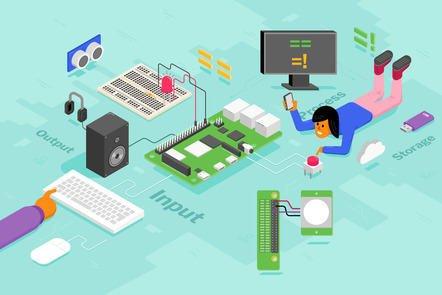
Explore the exciting world of physical computing and create electronic circuits that you can control with code. Learn the benefits of using physical computing with your students. On this course from the Raspberry Pi Foundation, you will be introduced to the world of physical computing. You will use input devices to capture data, process that data with the Python programming language, and then use output devices to get information back out from your computer.

Mar 6th 2023
3 Weeks
Circuits and Electronics 3: Applications (edX) EdX
MIT,MITx

Circuits and Electronics 3: Applications (edX)

Learn about cool applications, op-amps and filters in the design of microchips used in smartphones, computers, and the internet. Want to learn how your radio works? Wondering how to implement filters using resistors, inductors, and capacitors? Wondering what are some other applications of RLC and CMOS circuits? This free circuit course, taught by edX CEO and MIT Professor Anant Agarwal and MIT colleagues, is for you.

Self Paced
Self-Paced
Your first Arduino project: Design and Build a Colorful Musical Toy. (Skillshare) Skillshare
Skillshare

Your first Arduino project: Design and Build a Colorful Musical Toy. (Skillshare)

Arduino’s are a family of inexpensive single-board computers that allow you to create just about anything you can dream of with minimal technical skills. This class will teach you to build your first Arduino project, a fun device that plays a tune and flashes colored LED lights. You can design it to play your national anthem while flashing your country's colors or get creative and make a unique tribute to your favorite sports team!

Self Paced
Self-Paced
Teaching Physical Computing to 5-11 year olds (FutureLearn) FutureLearn
Raspberry Pi Foundation,National Centre for Computing Education

Teaching Physical Computing to 5-11 year olds (FutureLearn)

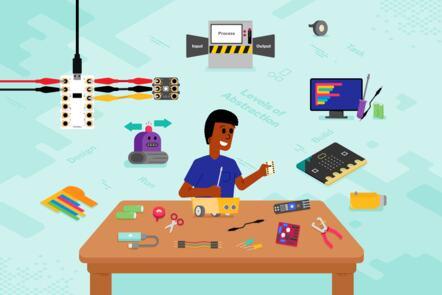
Teach your young learners how to create electronic circuits, then learn to control them using block-based programming languages. Learn how to create physical computing projects using a Crumble or micro:bit. Physical computing is the process of designing, building, and programming systems that use physical components such as buttons, lights, and motors.

Mar 6th 2023
3 Weeks
Electrónica Digital Bit a Bit: Aprendiendo fundamentos (Coursera) Coursera
Pontificia Universidad Católica de Chile

Electrónica Digital Bit a Bit: Aprendiendo fundamentos (Coursera)

Es desafiante y hasta atemorizante entender un circuito digital cuando observamos la cantidad de transistores que puede contener, y aún más difícil diseñarlo eficientemente para su implementación en un circuito integrado o una FPGA. Sin embargo, saber diseñar circuitos digitales simples nos abre las puertas para diseñar sistemas digitales más complejos a partir de estos.

Jun 22nd 2026
5-12 Weeks
Electrónica Digital Bit a Bit: Diseñando circuitos complejos (Coursera) Coursera
Pontificia Universidad Católica de Chile

Electrónica Digital Bit a Bit: Diseñando circuitos complejos (Coursera)

Los circuitos digitales más complejos como memorias y procesadores, que contienen millones de transistores gracias a su reducido tamaño, pueden ser divididos en circuitos más simples ya conocidos para facilitar su diseño e implementación. Lo mismo podemos realizar utilizando Verilog para diseñar circuitos digitales complejos que realizan muchas funciones o cuentan con un gran número de entradas y salidas.

Jun 22nd 2026
5-12 Weeks
Recent Advances in Freeform Electronics (Coursera) Coursera
Yonsei University

Recent Advances in Freeform Electronics (Coursera)

In this course, the learners will understand fundamental basic backgrounds of p-n junctions, diodes and MOSFETs (Metal Oxide Semiconductor Field Effect Transistors). Also, recent approaches on flexible / stretchable electronics, transparent optoelectronics, and printed electronics using one dimensional or two dimensional nanomaterials will be introduced.

Jun 15th 2026
5-12 Weeks