This course introduces DC (direct current) circuits and is typically the first course an undergraduate student in electrical engineering would take. We learn about voltage, current, and power, while building and analyzing progressively more complex circuits.
Class Deals by MOOC List - Click here and see EdX's Active Discounts, Deals, and Promo Codes.
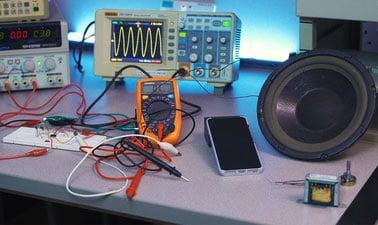
We also learn about typical electrical test equipment; this course is not merely a “whiteboard-style” course, but we actually build and measure a number of real circuits.
We start from the very beginning in electronics. What is voltage? What does it physically mean? What is current? What happens in a circuit and how can things like power consumption be calculated?
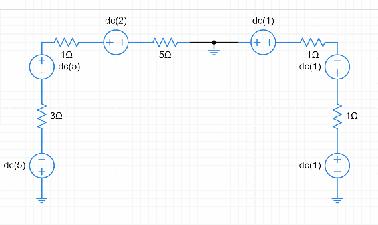
In this course we learn how to analyze circuits through a variety of methods, including the Kirchoff voltage and current laws, superposition, Node Voltage Analysis, Thevenin’s Theorem and concepts such as impedance matching and maximum power transfer. These are useful to predict the performance of circuits.
We look at various types of equipment used for electrical circuit measurements, including power supplies, multimeters, oscilloscopes, and function generators. At the end of the course, students will be able to use transistors to switch components on and off, as well as understand resistors, capacitors, inductors, diodes, and batteries. One of the circuits built in the course is a light sensing circuit.
What you'll learn
- What is voltage?
- What is current?
- What is power?
- How are these calculated?
- Circuit analysis methods
- Electrical measurement equipment
- How to calculate voltage, current, and power
- How to use resistors, capacitors, inductors, diodes in circuits
- How a transistor can function as a switch
- Impedance matching
- How to transfer maximum power in a circuit
- How to choose components (power ratings)
- Basic sensor circuits
Syllabus
Week Theme
- Introduction
- Resistors, Kirchoff’s Voltage and Current Laws
- Linear Circuit Analysis
- Capacitors, Inductors, and LEDs
- Time Dependence in Circuits
- Thevenin-Equivalent Circuits/Input and Output Impedance