Planet Earth ... and You! (Coursera)

Planet Earth ... and You! (Coursera)

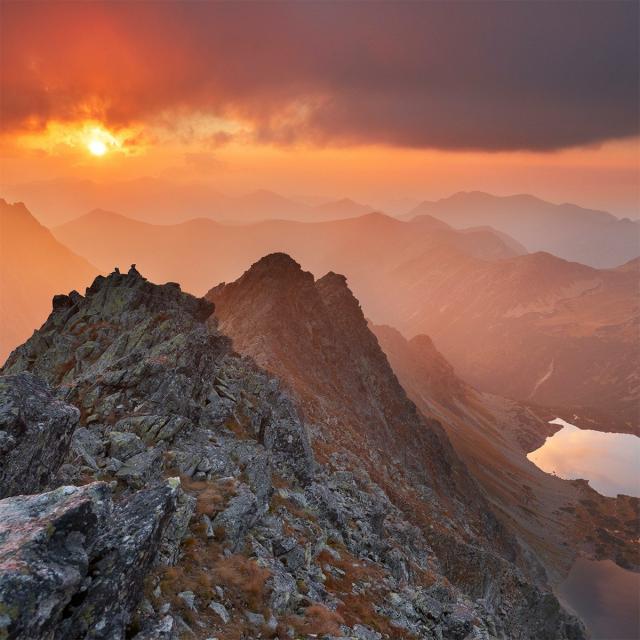
Earthquakes, volcanoes, mountain building, ice ages, landslides, floods, life evolution, plate motions—all of these phenomena have interacted over the vast expanses of deep time to sculpt the dynamic planet that we live on today. Planet Earth presents an overview of several aspects of our home, from a geological perspective. We begin with earthquakes—what they are, what causes them, what effects they have, and what we can do about them. We will emphasize that plate tectonics—the grand unifying theory of geology—explains how the map of our planet's surface has changed radically over geologic time, and why present-day geologic activity—including a variety of devastating natural disasters such as earthquakes—occur where they do. We consider volcanoes, types of eruptions, and typical rocks found there.

Class Deals by MOOC List - Click here and see Coursera's Active Discounts, Deals, and Promo Codes.

Finally, we will delve into the processes that produce the energy and mineral resources that modern society depends on, to help understand the context of the environment and sustainability challenges that we will face in the future.

Syllabus

WEEK 1
Orientation
You will become familiar with the course, your classmates, and our learning environment. The orientation will also help you obtain the technical skills required for the course.
Earthquakes!
In the lectures for this week, we will consider what an earthquake is, how it occurs, how we can record and measure its size, and what we can do to mitigate damage. Our first weekly assignment consists of reporting your own experience with earthquakes (if any). The Week 1 Lab gives you a chance to work with seismograms, locate an earthquake epicenter, and determine magnitude. Finally, the Week 1 Discussion addresses the balance between risks from quakes and costs of preventive measures.

WEEK 2
Plate Tectonics
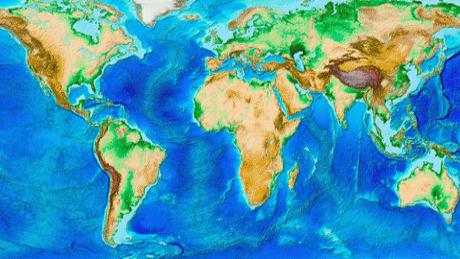
In the early twentieth century, publication of the hypothesis on continental drift caused an uproar that soon died down. Data collected in mid-century led geologists to reconsider the idea that continents could move. During the 1960s and 1970s, old ideas were reworked into what is now called the theory of plate tectonics. As we will see, this robust theory encompasses many geological phenomena that appear to be unrelated at first glance: earthquakes and volcanoes, but also ice ages, fossils, and mountains. Today, plate tectonics provides an overarching framework for interpreting the Earth. We study its details in Week 2, but we will return to this theory again and again throughout the rest of this course.

WEEK 3
Volcanoes!
This week, you will learn how and where rocks can melt, and what happens when molten material of various compositions bursts out of the ground. The lecture videos also cover different types of eruptions, as well as the rocks and mountains produced by them. In the lab, you will study details about the 1980 eruption of Mount St. Helens and the eruption of Mount Vesuvius in the year 79. The discussion forum gives you the opportunity to weigh risks to people living on or near volcanoes and what can be done to minimize damage and loss of life. The weekly assignment provides a place for you to share your own experiences with volcanoes or eruptions or, if you have never been near a volcano, your thoughts about such events.

WEEK 4
Rocks and Mineral Resources
As part of the Week 4 Assignment, you will take a close look at your daily surroundings to identify Earth resources. The video lectures for the week examine various aspects of finding, extracting, and using resources such as metals and stones. For the lab, you will utilize Google Earth to examine several mining sites around the world. In the discussion, you will weigh the pros and cons of mining operations, as many communities have had to do already. This week also includes peer grading discussions, as explained on the How Graded Discussions Work page. Finally, we provide an optional assignment for those who would like to identify some common minerals.

WEEK 5
Energy Resources
The video lectures for this week cover various aspects of energy usage by modern civilization, especially our utilization of fossil fuels. The Week 5 Lab sends you on a Google Earth tour of energy-producing sites around the world, places where both conventional and alternative forms of energy are being generated. The Week 5 Assignment gives you a chance to survey your own personal use of energy – where does it come from and how much do you use – and then to share the information with others in the class. During the Week 5 Discussion, you will consider the implications of how society uses the energy of fossil fuels and the implications for the local environment and global climate.

Go to Class
MOOC List is learner-supported. When you buy through links on our site, we may earn an affiliate commission.

Related Courses

Getting There and Going Beyond (Coursera) Coursera
University of Colorado Boulder

Getting There and Going Beyond (Coursera)

Welcome to Course 2 - Getting There and Going Beyond. If you are here, you have successfully completed Course 1 (Our Place in the Cosmos) and are ready for more. There is so much more to learn in Course 2 with 40 learning objectives spread out over 5 weeks and 12 lessons. We will cover all the ways we explore space and near space from planes to rockets to satellites and humans.

Jun 22nd 2026
5-12 Weeks
Introduction to the Orbital Perspective (Coursera) Coursera
University of Florida,University of Arizona,Drexel University

Introduction to the Orbital Perspective (Coursera)

The goals of this course are to develop the student’s critical thinking skills, global awareness, and ability to work as an integral part of a team in an increasingly complex global job market. The course provides a foundation in such skills as team building, collaboration, and elevated empathy using real-world scenarios from some of world’s most effective collaborative projects including the Earthrise-2068 Project.

Jun 22nd 2026
5-12 Weeks
Ecological and Energy Transitions in Southern Countries (Coursera) Coursera
École normale supérieure

Ecological and Energy Transitions in Southern Countries (Coursera)

This MOOC is at the junction between the development of Southern countries and sustainable development. It has: 1) a macroeconomic and financial dimension, developed by Gael Giraud and Alain Grandjean; 2) an ecological and climatic dimension, developed by David Claessen and ENS speakers; and 3) a focus on Southern countries, developed by AFD speakers.

Jun 22nd 2026
5-12 Weeks
New Space: Access to space - Basics (Coursera) Coursera
ISAE-SUPAERO

New Space: Access to space - Basics (Coursera)

The spirit of NewSpace is revolutionizing our vision of access to space. Reading keys will enable you to understand the technological and strategic challenges in games with new rules, fixed by ambitious players. Combine the new technologies and management of space access with the classical paradigm of the existing space context.

Jun 22nd 2026
3 Weeks
Seismology to Earthquake Engineering (Coursera) Coursera
École Polytechnique

Seismology to Earthquake Engineering (Coursera)

This course ranges from the earth structure, the generation of earthquakes and seismic waves by faults to the seismic response of soils, foundations and structures as well as seismic risk. It is consequently aimed at undergraduates, graduates and professionals interested in engineering seismology, earthquake engineering or seismic risk. It investigates various technical fields: rock mechanics, soil dynamics, structural dynamics and dynamic soil-structure interaction.

Jun 22nd 2026
5-12 Weeks
Electric Utilities Fundamentals and Future (Coursera) Coursera
University of Colorado System

Electric Utilities Fundamentals and Future (Coursera)

The approach of this course is truly unique in how it approaches and engages learners. It looks at the electric utility industry, which has remained critical to our quality of life, health and comfort from the eyes of numerous industry experts through on-location interviews, compelling visuals, and animation. You will benefit from having the inside track because you see some behind-the-scenes information not covered in news stories, social media or even if we are in the business ourselves.

Jun 22nd 2026
5-12 Weeks
Mechanics: Motion, Forces, Energy and Gravity, from Particles to Planets (Coursera) Coursera
UNSW Sydney - University of New South Wales

Mechanics: Motion, Forces, Energy and Gravity, from Particles to Planets (Coursera)

Most of the phenomena in the world around you are, at the fundamental level, based on physics, and much of physics is based on mechanics. Mechanics begins by quantifying motion, and then explaining it in terms of forces, energy and momentum. This allows us to analyse the operation of many familiar phenomena around us, but also the mechanics of planets, stars and galaxies.

Jun 22nd 2026
5-12 Weeks
Particle Dynamics (Coursera) Coursera
Korea Advanced Institute of Science and Technology - KAIST

Particle Dynamics (Coursera)

This course teaches dynamics, one of the basic mechanics subjects of Mechanical Engineering. Students would be able to organize their knowledge about force and motion, work-energy, impulse-momentum in view of Newton's 2nd law and its integration over time and displacement. The Engineering Dynamics consists of two parts: particle dynamics and rigid body dynamics.

Jun 22nd 2026
13-24 Weeks