EdX

Our Global Ocean – An Introduction Course (edX)

Offered by Smithsonian, SmithsonianX,
Our Global Ocean – An Introduction Course (edX)

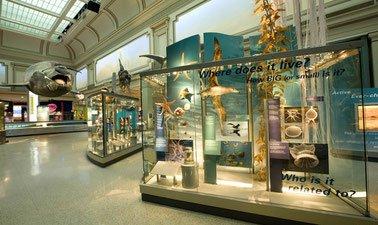
Our ocean is vast, mysterious, and key to all life on our planet. This short course will introduce you to the basics of our ocean, marine life, and the connection between humans and our ocean. In the Sant Ocean Hall at the Smithsonian National Museum of Natural History, our goal is to teach the public that that the ocean is a global system essential to all life on our planet, including yours. In this course, we will explore the ocean from the coast to the deep sea, and from our planet’s beginnings to its function today.

Class Deals by MOOC List - Click here and see EdX's Active Discounts, Deals, and Promo Codes.

Though this course, you will discover why we truly live on an “ocean planet,” as well as your role in our shared responsibility to protect our global ocean and all of the life it supports.
This short course was developed by Smithsonian National Museum of Natural History educators and reviewed by scientists at the Smithsonian and National Oceanic and Atmospheric Administration.

What you'll learn

  • The basics of oceanography - including currents, circulation, abiotic conditions, ecosystems, and zonation
  • An introduction to paleoceanography and the evolutionary history of marine life
  • An overview of marine biodiversity – including marine species, classification systems, and how biodiversity is represented in museum collections
  • Examples of how humans are impacting the health of the ocean and steps being taken to address these impacts
Go to Class
MOOC List is learner-supported. When you buy through links on our site, we may earn an affiliate commission.

Related Courses

Ecosystem Services: a Method for Sustainable Development (Coursera) Coursera
University of Geneva

Ecosystem Services: a Method for Sustainable Development (Coursera)

Ecosystem services are a way of thinking about – and evaluating – the goods and services provided by nature that contribute to the well-being of humans. This MOOC will cover scientific (technical), economic, and socio-political dimensions of the concept through a mix of theory, case-studies, interviews with specialists and a serious-game.

Jun 15th 2026
5-12 Weeks
Ecosystems of California (Coursera) Coursera
University of California, Santa Cruz

Ecosystems of California (Coursera)

This course surveys the diversity, structure and functioning of California’s ecosystems through time and the ways they have influenced and responded to human activities and stewardship. Topics include ecosystem drivers such as climate, soils, and land use history; human and ecological prehistory of the state; comparative marine, freshwater, and terrestrial ecosystem dynamics; and managed ecosystems such as range, fisheries and agriculture in California.

Jun 15th 2026
5-12 Weeks
Environmental Protection and Sustainability (edX) EdX
IsraelX

Environmental Protection and Sustainability (edX)

Uncover better solutions to help manage a wide range of environmental problems and challenges facing our world today. Do you want to understand more about the environmental problems we currently face? Do you want to learn ways we can reduce the negative effects of these problems, and keep our environment more sustainable? If so, this course is for you.

Self Paced
Self-Paced
Beyond the Sustainable Development Goals (SDGs): Addressing Sustainability and Development (Coursera) Coursera
University of Michigan

Beyond the Sustainable Development Goals (SDGs): Addressing Sustainability and Development (Coursera)

We’re excited you’re here! This course, “Beyond the Sustainable Development Goals (SDGs): Addressing Sustainability and Development,” is the first course in the upcoming Sustainability and Development MasterTrack Certificate program (Fall 2020), but you can also take this course as a stand-alone learning opportunity.

Jun 17th 2026
5-12 Weeks
AI and Climate Change (Coursera) Coursera
DeepLearning.AI

AI and Climate Change (Coursera)

In Course 2: AI and Climate Change, you will begin by learning the basics of anthropogenic climate change — why it is happening, its projected impacts, and how it is already driving extreme weather around the globe. You will then learn how machine learning techniques can lessen climate change’s impacts and help communities prepare for those that do occur.

Jun 15th 2026
4 Weeks
Introduction to Sustainability (Coursera) Coursera
University of Illinois at Urbana-Champaign

Introduction to Sustainability (Coursera)

This course introduces the academic approach of Sustainability and explores how today’s human societies can endure in the face of global change, ecosystem degradation and resource limitations. The course focuses on key knowledge areas of sustainability theory and practice, including population, ecosystems, global change, energy, agriculture, water, environmental economics and policy, ethics, and cultural history.

Jun 8th 2026
5-12 Weeks
Our Earth's Future (Coursera) Coursera
American Museum of Natural History

Our Earth's Future (Coursera)

Our Earth’s Future is about the science of climate change and how to talk about it. You will learn from scientists in the fields of climatology, oceanography, Earth science, and anthropology who study how climate change is affecting people, populations, and ways of life. Explore the multiple lines of evidence for the human-induced climate change that is happening today, and consider what that means for the future of our planet. At the end of this course you will be able to understand key scientific principles, identify and address misconceptions, and contribute confidently to conversations about climate change.

Jun 15th 2026
5-12 Weeks
Water: Addressing the Global Crisis (edX) EdX
SDGAcademyX,SDG Academy

Water: Addressing the Global Crisis (edX)

We are living in a water stressed world. It is a global crisis and therefore we must act now! What can we do to save the planet and ensure availability of water for all by 2030? Water isthe source of all life. Without it, neither humans nor nature will survive. Yet lack of access to water is a rapidly growing problem and one of the world’s gravest risks. It is a global crisis.

Self Paced
Self-Paced
One Planet, One Ocean (edX) EdX
SDGAcademyX,SDG Academy

One Planet, One Ocean (edX)

A holistic view of how the ocean functions, how human interactions with the ocean can be understood, and what solutions are available to support both sustainable use and stewardship of our blue planet. Is the ocean the real final frontier? Humans have a greater understanding of the surface of the moon than they do of the depths of these waters.

Self Paced
Self-Paced
As above, so below: An introduction to soils, ecosystems and livelihoods in the Tropics (edX) EdX
KU Leuven University,KULeuvenX

As above, so below: An introduction to soils, ecosystems and livelihoods in the Tropics (edX)

The tropics are as beautiful and diverse below-ground as they are above-ground. Learn how to use knowledge about the natural variability in soil properties for the sustainable management of ecosystems and farms. Soils form the foundation of sustainable development. They grow our food, fiber and fuel, are a habitat for organisms, buffer and purify water and safeguard archaeological legacies.

Self Paced
Self-Paced