EdX

From the Ground Up: Managing and Preserving Our Terrestrial Ecosystems (edX)

Offered by SDGAcademyX, SDG Academy,
From the Ground Up: Managing and Preserving Our Terrestrial Ecosystems (edX)

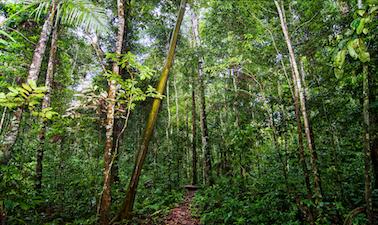
How can we preserve, restore, manage and sustainably use terrestrial ecosystems? Join us as we explore this question in the Brazilian Amazon and around the world. In this course, you’ll learn the science behind the capacities of various ecosystems including extinction rates, desertification and how their physical makeup has evolved with environmental shifts. You’ll experience the lives of local populations dependent upon these resources, from their economic activities to their societal norms.

Class Deals by MOOC List - Click here and see EdX's Active Discounts, Deals, and Promo Codes.

Examine our reliance on the Earth’s resources – and vice versa – and you will discover a stunning tapestry of complex interactions between ecosystems and human life. From preventing the extinction of species (from plants to animals) to mitigating the effects of long-term environmental shifts, how do we ensure that our interaction with the world around us doesn’t leave it destroyed?

After taking this course, you will be equipped with an understanding of diverse ecosystems and how responsible use of these resources is imperative to our planet’s survival.

This course is for:

  • Graduate students and advanced undergraduate students studying ecosystem management, forestry, sustainable development, economics, sustainable business and related fields
  • Practitioners in forestry, ecosystem management, conservation and related fields who are interested in current science and research around use and preservation
  • Sustainable development practitioners – as well as private-sector actors, such as those who work in corporate sustainability and responsibility, land development or tourism – who need to understand responsible consumption and interaction with our ecosystems

What you'll learn

  • The factors that determine the resilience of an ecosystem, its susceptibility to human activities and climate change, and more
  • What events will fundamentally alter an ecosystem and its ability to support extant life?
  • Use, preservation and management in the Brazilian Amazon, Bhutan and other regions
  • How communities and policymakers can preserve local ecosystems

Syllabus

Module 1: Introduction to Terrestrial Ecosystems
1.1 Welcome to the Course
1.2 Introduction to SDG 15
1.3 Terrestrial and Inland Freshwater Ecosystems
1.4 Social and Economic Importance of Terrestrial Ecosystems
1.5 Human Dimension of Ecosystem Protection and Management
1.6 The Savanna Grasslands

Module 2: The Challenges Facing Terrestrial Ecosystems
2.1 Ecosystem Degradation
2.2 Ecosystem Conversion
2.3 Biodiversity Loss
2.4 Thresholds and Tipping Points
2.5 Fragmentation and Landscape Management

Module 3: Terrestrial Ecosystem Valuation
3.1 Valuing ecosystems services
3.2 Payment for environmental services
3.3 The Cost of Inaction
3.4 Forest certification

Module 4: Management Systems for Terrestrial Ecosystems
4.1 Protected Area Management I
4.2 Protected Area Management II
4.3 Agroforestry Systems
4.4 Sustainable Forest Management
4.5 Cross-sectoral Issues: The Case of Small-scale Gold Mining

Module 5: Designing Sustainable Ecosystem Programs
5.1 From Strategy to Action
5.2 Designing for Complex Landscapes
5.3 Designing Participatory Methods
5.4 Designing Sustainable Institutions: The case of the Amazonas Sustainable Foundation
5.5 The Amazon Rainforest: The Bolsa Floresta Program

Module 6: Public Policies, Programs and Projects: Evaluation and Assessment
6.1 The Holistic Design of Public Policies for SDG 15
6.2 Evaluation of Public Policies for SDG 15
6.3 Evaluation of projects and programs related to SDG15
6.4 Evaluation of international policies related to SDG15

Module 7: Enabling Institutional Environments for SDG 15
7.1 Partnerships for Implementing SDG15
7.2 Integrating SDG15 into Local, National and Development Strategies
7.3 Enabling Environments for SDG15: The Case of Bhutan
7.4 Financial Resources for Achieving SDG15
7.5 Technology: Latin American and Caribbean Regional Case Study
7.6 How SDG15 Links with Other SDGs
7.7 Putting this Course into Action

Go to Class
MOOC List is learner-supported. When you buy through links on our site, we may earn an affiliate commission.

Related Courses

The Hidden Side of Energy Access: Understanding Clean Cooking (Virtual Knowledge Exchange) (edX) EdX
World Bank Group,WBGx

The Hidden Side of Energy Access: Understanding Clean Cooking (Virtual Knowledge Exchange) (edX)

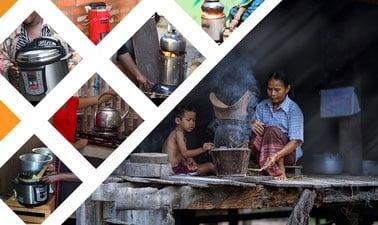
This course is based on the World Bank’s “ The Hidden Side of Energy Access: Understanding Clean Cooking ”. This course explores the hidden side of energy access by uncovering the reality that over 4 billion people around the world currently lack access to modern energy cooking services (MECS) for their daily cooking needs. Throughout the developing world, households still cook with firewood and charcoal on rudimentary stoves in poorly ventilated rooms, resulting in significant negative impacts for health, gender, the environment, and our climate.

Self Paced
Self-Paced
Tropical Coastal Ecosystems (edX) EdX
University of Queensland,UQx

Tropical Coastal Ecosystems (edX)

Take the challenge and understand problems and solutions to managing tropical coastal ecosystems. Do you want to develop the skills and knowledge needed to help preserve tropical coastal ecosystems? These habitats provide goods and services for hundreds of millions of people but human activities have led to their global decline.

Self Paced
Self-Paced
Islamic Finance for the Sustainable Development Goals (edX) EdX
The Islamic Research and Training Institute - IRTI,IRTIx

Islamic Finance for the Sustainable Development Goals (edX)

Explore the foundations and principles of Islamic finance from the perspective of sustainable development. Did you know that the financing gap in developing countries to achieve the Sustainable Development Goals by 2030 could increase by 70% in the wake of the COVID-19 pandemic? Are you interested in the role of Islamic finance in building a sustainable future? Do you want to learn about the foundations and principles of Islamic finance from the perspective of the Sustainable Development Goals? Are you a development professional engaging with Islamic finance institutions? An Islamic finance professional willing to acquire an in-depth understanding of financing sustainable development? Do you want to be a part of this alliance for a better world by channeling Islamic finance resources for the Sustainable Development Goals?

Self Paced
Self-Paced
The Korean Story: Secrets of an Economic Miracle (edX) EdX
SDGAcademyX,SDG Academy

The Korean Story: Secrets of an Economic Miracle (edX)

What can the world learn from the Korean development story? The Korean Story discusses the socio-political and historical context that has shaped the economic growth of South Korea. It probes into how South Korea, post the Second World War, was able to transform its economy within three decades to emerge as a leading innovation and technology center in the 21st century.

Self Paced
Self-Paced
Natural Resources for Sustainable Development (edX) EdX
SDGAcademyX,SDG Academy

Natural Resources for Sustainable Development (edX)

Explore the sustainable development opportunities and challenges in using oil, gas and minerals. Natural resources represent a potentially transformational opportunity to support development but are ultimately finite How do we make the most of them without destroying the planet? In this 12-week course, produced by the Natural Resource Governance Institute, the Columbia Center on Sustainable Investment and the World Bank, learn about efforts to sustainably manage extractive industry investments.

Self Paced
Self-Paced
The Best Start in Life: Early Childhood Development for Sustainable Development (edX) EdX
SDGAcademyX,SDG Academy

The Best Start in Life: Early Childhood Development for Sustainable Development (edX)

Children are our future – so how do we give them the best beginning for a happy and healthy life? What does a successful early childhood care program look like? How has a child’s brain developed at the age of 3? How does nutrition impact the future well-being of a child into adulthood?

Self Paced
Self-Paced
Sustainable Urban Development (edX) EdX
Wageningen University,Delft University of Technology,DelftX,WageningenX

Sustainable Urban Development (edX)

Learn why cities are key in resolving global urbanization and sustainability challenges and how you can engineer tomorrow’s cities today. Did you know that cities take up less than 3% of the earth’s land surface, but more than 50% of the world’s population live in them? And, cities generate more than 70% of the global emissions? Large cities and their hinterlands (jointly called metropolitan regions) greatly contribute to global urbanization and sustainability challenges, yet are also key to resolving these same challenges.

Self Paced
Self-Paced
Work and Employment for a Sustainable Future (edX) EdX
SDGAcademyX,SDG Academy

Work and Employment for a Sustainable Future (edX)

We are living in a financially fragile world. There is economic growth, but not enough opportunities to find decent work. Globally, more than 200 million people are still unemployed, but there has been progress in standards of labour and work. This is not sustainable. Learn from experts from the International Labour Organization, Harvard University, and more about the state of work in our world, and what it will take to ensure steady, inclusive and sustainable economic development for all.

Self Paced
Self-Paced
Globalization: Past and Future (edX) EdX
SDGAcademyX,SDG Academy

Globalization: Past and Future (edX)

Is globalization a new phenomenon or a cyclical pattern throughout human history? In this four-part mini-course, Professor Jeffrey Sachs argues that we have always lived in a global world. He takes students on a historical and anthropological tour of six distinct waves of globalization and outlines the key factors that drove innovation, technology dispersal and development during these epochs.

Self Paced
Self-Paced