Clinical Kidney, Pancreas and Islet Transplantation (Coursera)

Clinical Kidney, Pancreas and Islet Transplantation (Coursera)

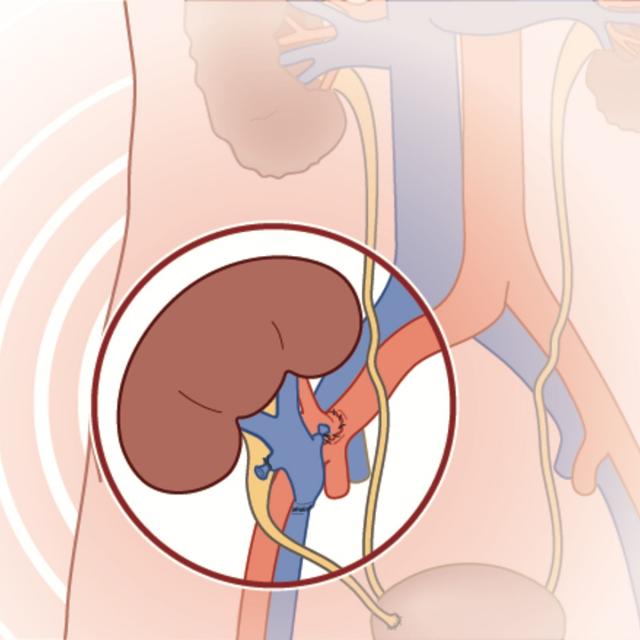
Kidney transplantation is a major advance of modern medicine which provides high-quality of life for patients with end-stage renal disease. What used to be an experimental, risky, and very limited treatment option more than 50 years ago is now routinely performed in many countries worldwide. The number of renal transplants is expected to rise sharply in the next decade since the proportion of patients with end stage renal disease is increasing.

Class Deals by MOOC List - Click here and see Coursera's Active Discounts, Deals, and Promo Codes.

Are you interested in clinical kidney, pancreas and islet transplantation? If you are a (bio) medical student or a health care professional who works in the (pre) clinical transplant field this might be the course for you. This course is also for anyone interested in the research and knowledge on clinical transplantation. The course will be taught by a multidisciplinary team of transplant professionals and will give you the state of the art updates.
It is divided in 4 modules:
1) Before the transplant
2) The surgical procedures and the challenged patient, including the patient with diabetes
3) Early challenges
4) Late challenges after transplantation.
The offered modules will include lectures, interactive patient cases, 3D movies, interviews with well-known experts and with patients and a donor, a serious game to increase knowledge of the field and of course an active forum. Become an expert and join us!
The course is endorsed by The European Society of Organ Transplantation (ESOT), The International Society of Nephrology (ISN) and The Transplantation Society (TTS).

Syllabus

WEEK 1
Welcome to the course
Great that you are joining us! In this course you will learn about clinical kidney, pancreas and islet transplantation and its challenges. Before you start with studying we invite you first go through our introduction module and introduce yourself in the forum to meet your fellow learners. Medical professionals can receive Continuing Medical Education (CME) credit for this course. Information on CME credit and how to obtain credit can be found in our CME credit module. If you encounter any difficulties while studying, please let us know in the forum. For technical difficulties or questions regarding the course certificate, you can always contact the Coursera Learner Helpdesk. Good luck & we hope you enjoy studying in this course!
Before the Transplant
Welcome to this first module of the course! We will answer important questions before transplantation. These include: why is transplantation the preferred option for patients with end stage renal disease? What are the immunological barriers for transplantation? And what are the selection criteria before transplantation? Unique 3D movies about the different immunological tests will help you to understand the concepts. There are also optional lectures, including a fascinating movie about the Eurotransplant allocation system and patient/donor interviews. At the end of the module we will link the contents you have learned to clinical patient cases, patient - donor interviews and a quiz. You can find each other on the discussion forum. With the e-tivities you can apply your knowledge. In the honors lessons more in depth immunological testing and pre transplant screening can be obtained. The lesson also includes peer reviews about important preclinical questions. Have fun and good luck with the first module!

WEEK 2
The Procedure and the Patient
Now you know the factors of importance before transplantation, including the immunological barriers and important aspects for patient selection, we can focus on challenged patient groups and on surgical procedures. What does a kidney, pancreas and islet transplantation surgical procedure look like? What is important? And what are the key aspects in elderly patients, patients with diabetes and immunological challenged patients. We have unique visulisations, 360 virtual reality videos and a game about a patient case. Advanced readings will invite you to look at the different subjects in more depth. At the end of the module there are interviews about a patient with diabetes and the transplant recipient and donor to illustrate the impact of life. You can discuss patient cases on the forum together with your peers. In the honors lesson you can apply knowledge about more in depth immunological, surgical and metabolic challenges and living kidney donation. Let’s start and we hope you will enjoy this module.

WEEK 3
Early Challenges in Transplantation
You are now familiar with the basic knowledge about challenges in transplant recipients and the surgical transplant procedures. Once the transplantation has been successful, it doesn’t mean everything is stable. What are actually the graft survival data? Which challenges do we face in the first months? How can we tackle these challenges? 3D movies about early surgical challenges and about the targets for immunosuppressives, including cell therapy, will help you to understand the concepts. In addition, we invite you to master the advanced knowledge and to give your opinion in the patient cases in the forum. There is also a serious game about a patient case. Can you solve the challenges? And can you think of a scenario for the game and help us with building? We will make a game of the best scenario, which will be incorporated in the course. In the honors lesson you can learn in more detail about immunological concepts, including the complement system. A patient case will help to show you the importance of this knowledge. Good luck with this module and happy learning!

WEEK 4
Late Challenges in Transplantation
Now you’ve learned about the challenges in the early period after transplantation. But what about the late period? What is the long term patient and allograft survival? Have we improved in the last decades? What are the main causes for morbidity and mortality? And can we reach tolerance in the future? We invite you to give your opinion in the patient cases and to discuss it on the forum. There are also advanced readings to look at additional subjects, including recurrence of the kidney disease after transplantation, the organization of dermatological care for the transplant recipient and the role of the patient himself in the whole process. The interview about tolerance gives you insight why pregnancy is of interest to understand the concept of tolerance and which steps have been made from lab research to a clinical protocol. In the honors lesson late challenges will be discussed in more detail, with a focus on infections, recurrence of the kidney disease after transplantation and tolerance. Have fun and good luck with this last module.
Final Quiz
We hope you have enjoyed all the modules. Good luck with the final quiz! If you are interested in an intensive course about transplantation go to the course resources.

Go to Class
MOOC List is learner-supported. When you buy through links on our site, we may earn an affiliate commission.

Related Courses

Introduction to the Biology of Cancer (Coursera) Coursera
Johns Hopkins University

Introduction to the Biology of Cancer (Coursera)

Over 500,000 people in the United States and over 8 million people worldwide are dying every year from cancer. As people live longer, the incidence of cancer is rising worldwide and the disease is expected to strike over 20 million people annually by 2030. This open course is designed for people who would like to develop an understanding of cancer and how it is prevented, diagnosed, and treated.

Jun 8th 2026
5-12 Weeks
Easing the burden of obesity, diabetes and cardiovascular disease (Coursera) Coursera
The University of Sydney

Easing the burden of obesity, diabetes and cardiovascular disease (Coursera)

This course is multidisciplinary in nature, and aims to equip the global audience of interested lay people, people with chronic disease, public health researchers, health clinicians, students, administrators, and researchers to reflect on the overall impact of the burden of chronic disease. It shows how all chronic diseases (obesity, diabetes, cardiovascular disease, chronic obstructive pulmonary disease, and cancer) are related by a set of common causes, and that such diseases should be tackled, not individually, but as part of a complex system, with interrelated contributing factors. These factors are genetic, environmental, psychological, economic, social, developmental, and media related.

Jun 8th 2026
5-12 Weeks
HI-FIVE: Health Informatics For Innovation, Value & Enrichment (Administrative/IT Perspective) (Coursera) Coursera
Columbia University

HI-FIVE: Health Informatics For Innovation, Value & Enrichment (Administrative/IT Perspective) (Coursera)

HI-FIVE (Health Informatics For Innovation, Value & Enrichment) Training is an approximately 10-hour online course designed by Columbia University in 2016, with sponsorship from the Office of the National Coordinator for Health Information Technology (ONC). The training is role-based and uses case scenarios. No additional hardware or software are required for this course. Our nation’s healthcare system is changing at a rapid pace.

Jun 8th 2026
4 Weeks
The New Nordic Diet - from Gastronomy to Health (Coursera) Coursera
University of Copenhagen

The New Nordic Diet - from Gastronomy to Health (Coursera)

The New Nordic Diet is a new food culture developed in 2009-13 with key emphasis on gastronomy, health, and environment. Major research in its effect on acceptability, behaviour and learning skills, and disease prevention have been conducted by the OPUS centre at the University of Copenhagen and the people behind the award-winning restaurant Noma in Copenhagen. This course will give the participants the opportunity to experience a healthy and palatable new food and eating concept diet “The New Nordic Diet” and an understanding of how food and diets can affect mental and physical health and ensure the foundation for a healthier life style for future generations with a regional based diet and food culture.

Jun 8th 2026
5-12 Weeks
PrEParing: PrEP for Providers and Patients (Coursera) Coursera
Johns Hopkins University

PrEParing: PrEP for Providers and Patients (Coursera)

Pre-Exposure Prophylaxis (PrEP) using the antiretroviral medication emtricitibine/tenofovir approved in countries around the world is a highly effective means of reducing transmission of HIV through sexual encounters and needle sharing. This Johns Hopkins University course PrEPares you with essential information, concepts and practical advice regarding PrEP from leaders in the field. A first of its kind learning opportunity, both providers and patients learn from the same experts through content that meets the needs of both audiences, while facilitating the opportunity for a shared community space.

Jun 8th 2026
5-12 Weeks
HI-FIVE: Health Informatics For Innovation, Value & Enrichment (Clinical Perspective) (Coursera) Coursera
Columbia University

HI-FIVE: Health Informatics For Innovation, Value & Enrichment (Clinical Perspective) (Coursera)

HI-FIVE (Health Informatics For Innovation, Value & Enrichment) Training is a 12-hour online course designed by Columbia University in 2016, with sponsorship from the Office of the National Coordinator for Health Information Technology (ONC). The training is role-based and uses case scenarios. Also, it has additional, optional modules on other topics of interest or relevance. Although we suggest to complete the course within a month's timeframe, the course is self-paced and so you can start and finish the course at anytime during a month's time period. No additional hardware or software are required for this course.

Jun 8th 2026
4 Weeks
Public Involvement in Research (Coursera) Coursera
Imperial College London

Public Involvement in Research (Coursera)

This course focuses on participatory approaches in research, known as 'public involvement' in the UK. You'll specifically, consider why citizens and patients would be involved in research and explore participatory approaches across and within the research cycle in more detail, diving into questions such as: What kinds of participation can be undertaken at each of the 7 stages of the cycle? How can you utilise participation in research? What examples of using participatory approaches exist in research?

Jun 10th 2026
4 Weeks
Primeros Auxilios Psicológicos (PAP) (Coursera) Coursera
Universitat Autònoma de Barcelona

Primeros Auxilios Psicológicos (PAP) (Coursera)

Este curso on-demand (ABIERTO, se puede cursar en cualquier momento), impartido en castellano por la Universidad Autónoma de Barcelona y el Centro de Crisis de Barcelona, está destinado a entrenar en la aplicación de primeros auxilios psicológicos (PAP) a personas afectadas por situaciones altamente estresantes, abarcando tanto emergencias cotidianas (incidentes críticos estadísticamente frecuentes que afectan de manera muy intensa: un accidente de tráfico, una hospitalización, una agresión o la muerte traumática o repentina de una persona, etc.) como emergencias comunitarias y/o masivas (sucesos infrecuentes, que afectan a muchas personas o a una comunidad entera y que sobrepasan con mucho lo que sucede habitualmente en ella: una catástrofe natural, un accidente ferroviario o aéreo o un atentado).

Jun 8th 2026
5-12 Weeks
Living with Dementia: Impact on Individuals, Caregivers, Communities and Societies (Coursera) Coursera
Johns Hopkins University

Living with Dementia: Impact on Individuals, Caregivers, Communities and Societies (Coursera)

Health professionals and students, family caregivers, friends of and affected individuals, and others interested in learning about dementia and quality care will benefit from completing the course. Led by Drs. Nancy Hodgson and Laura Gitlin, participants will acquire foundational knowledge in the care of persons with Alzheimer’s Disease and other neurocognitive disorders.

Jun 8th 2026
5-12 Weeks
Take the Lead on Healthcare Quality Improvement (Coursera) Coursera
Case Western Reserve University

Take the Lead on Healthcare Quality Improvement (Coursera)

In this course you will learn about the importance of quality in healthcare and how you can contribute by implementing a quality improvement (QI) project to improve processes of care and patient outcomes. You will learn about powerful tools to add to your QI ‘toolbox’ during short lectures and reflective exercises. You will apply these tools to the implementation of a QI project in your own practice setting or an area of personal improvement. At the completion of the course, you will have a storyboard that captures your QI project success to share with others.

Jun 8th 2026
5-12 Weeks
Health Across the Gender Spectrum (Coursera) Coursera
Stanford University

Health Across the Gender Spectrum (Coursera)

This course offers an intimate, story-based introduction to the experiences of six transgender children and their families. Through illustrated stories and short teaching videos, learners will gain a better understanding of gender identity and the gender spectrum. Stanford physicians, K-12 educators, and transgender faculty members offer practical tips for parents, teachers, healthcare providers and anyone who wants to help create a more gender-expansive environment - one in which all people can live authentically. As a global community of unique individuals, we can begin to build a world that is ready to nurture and love each and every child.

Jun 8th 2026
3 Weeks
Understanding Cancer Metastasis (Coursera) Coursera
Johns Hopkins University

Understanding Cancer Metastasis (Coursera)

Over 500,000 people in the United States and over 8 million people worldwide are dying from cancer every year. As people live longer, the incidence of cancer is rising worldwide, and the disease is expected to strike over 20 million people annually by 2030. Everyone has been, or will be touched by cancer in some way during their lifetime. Thanks to years of dedication and commitment to research we’ve made enormous advances in the prevention and treatment of cancer, But there is still a lot of work to be done. In this course, physicians and scientists at the Johns Hopkins School of Medicine explain how cancer spreads or metastasizes.

Jun 8th 2026
3 Weeks