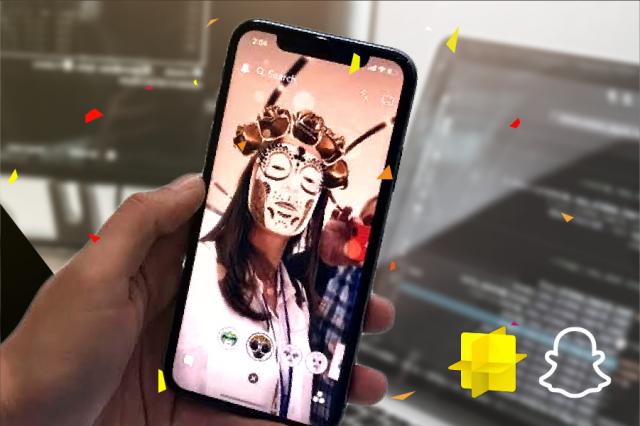
Meta Spark Creator AR Certification (Coursera)

Offered by Meta,
Meta Spark Creator AR Certification (Coursera)

This course helps you prepare for the Meta Certified Meta Spark Creator exam. You’ll be guided through scheduling the exam and you’ll get access to the study guide and other resources to help you prepare for the exam.

Class Deals by MOOC List - Click here and see Coursera's Active Discounts, Deals, and Promo Codes.

This course is only accessible to learners who have successfully completed course 1 (Foundations of AR), course 2 (AR in marketing using Meta Spark), course 3 (AR for Web using JavaScript), course 4 (Unity and C# Basics), course 5 (Using AR Foundation with Unity) and course 6 (AR Games using Vuforia SDK) in this program.
Course 7 of 7 in the Meta AR Developer Professional Certificate.

Go to Class
MOOC List is learner-supported. When you buy through links on our site, we may earn an affiliate commission.

Related Courses

Revit for Structural Engineers (edX) EdX
University System of Maryland - USM,USMx

Revit for Structural Engineers (edX)

Learn how to model basic building structural systems in Autodesk Revit. Building Information Modeling (BIM) has initiated a sea change in the way that buildings are designed and constructed. Old methods rooted in two-dimensional thinking have been pushed aside to make way for new three-dimensional approaches that leverage the latest advancements in computing technology.

Self Paced
Self-Paced
Foundations of AR (Coursera) Coursera
Meta

Foundations of AR (Coursera)

In this course, you will learn the basics of augmented reality (AR). You will focus on where AR fits in the XR spectrum, how AR is used, what AR can do today—and in the future—and the various technologies used for building such experiences. You will also learn about computer vision in AR, the software development lifecycle, and careers in AR development.

Nov 25th 2024
4 Weeks
MOOC on Visual Literacies: Exploring educational practice and technologies (ViliProject) Other Providers
Lancaster University

MOOC on Visual Literacies: Exploring educational practice and technologies (ViliProject)

Welcome to this MOOC on visual literacies where we will be exploring the educational practices and technologies associated with visual communication and visual thinking. In this course you will find out about the transformative power of photos, mind maps, comics, infographics and data visualization; how educators use video and animation and why it works; game-based learning, augmented reality, virtual and mixed reality; and synchronous video communication and holography.

No sessions available
5-12 Weeks
AR VR The Promise of Sci-Fi (OpenLearning) OpenLearning
Sunway University

AR VR The Promise of Sci-Fi (OpenLearning)

This course explores how the emerging forms of media and the development in the digital field opens possibilities for exploration of virtual reality and augmented reality that carries potential benefits applicable to various industries portrayed through user experience cases that you will discover throughout this course.

Self Paced
Self-Paced
AR (Augmented Reality) & Video Streaming Services Emerging Technologies (Coursera) Coursera
Yonsei University

AR (Augmented Reality) & Video Streaming Services Emerging Technologies (Coursera)

Welcome to the course “Augmented Reality & Video Service Emerging Technologies.” The level of AR (Augmented Reality) and advanced video & multimedia technology included in a product is what determines the level of value and luxury. The objective of this course is to teach all important technologies that are used in state-of-the-art AR, Skype, and YouTube video and multimedia products and services.

Oct 12th 2026
5-12 Weeks
Principles of Computing (Part 2) (Coursera) Coursera
Rice University

Principles of Computing (Part 2) (Coursera)

This two-part course introduces the basic mathematical and programming principles that underlie much of Computer Science. Understanding these principles is crucial to the process of creating efficient and well-structured solutions for computational problems. To get hands-on experience working with these concepts, we will use the Python programming language. The main focus of the class will be weekly mini-projects that build upon the mathematical and programming principles that are taught in the class.

Nov 2nd 2026
4 Weeks
Programming Languages, Part A (Coursera) Coursera
University of Washington

Programming Languages, Part A (Coursera)

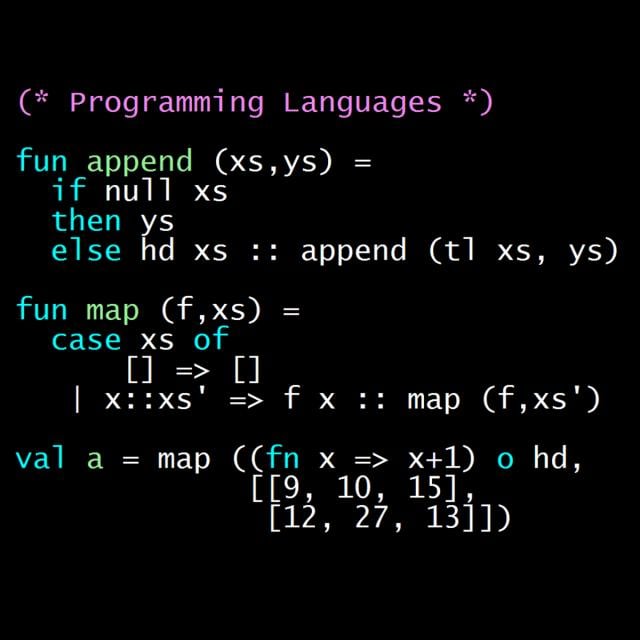
This course is an introduction to the basic concepts of programming languages, with a strong emphasis on functional programming. The course uses the languages ML, Racket, and Ruby as vehicles for teaching the concepts, but the real intent is to teach enough about how any language “fits together” to make you more effective programming in any language -- and in learning new ones.

Nov 2nd 2026
5-12 Weeks