AR in marketing using Meta Spark (Coursera)

Offered by Meta,
AR in marketing using Meta Spark (Coursera)

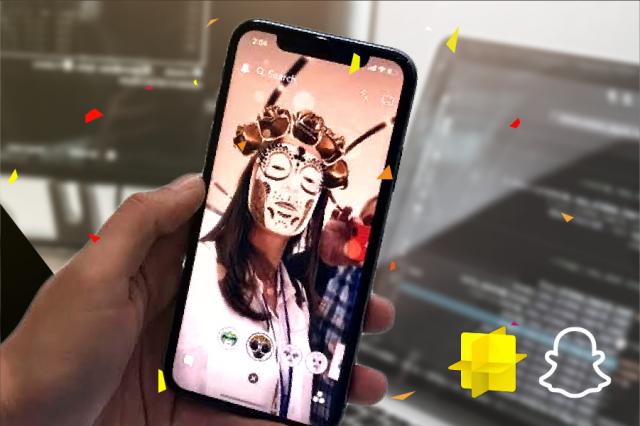
This course prepares you for a career using AR in marketing. You will learn how AR is used for marketing purposes as well as processes, guidelines, and best practices for creating AR effects. While this course focuses on creating AR effects using Meta Spark, the skills you will build apply to many other similar tools.

Class Deals by MOOC List - Click here and see Coursera's Active Discounts, Deals, and Promo Codes.

By the end of this course, you will be able to:

  • List the capabilities and limitations of Meta Spark.
  • Install, set-up, and configure your work environment.
  • Explain the different elements of the Meta Spark Studio and Meta Spark Hub interfaces.
  • Optimize and test Meta Spark effects.
  • Identify best practices for designing, developing, and testing in Meta Spark.
  • Push content to Instagram using Meta Spark Hub.
  • Identify Agile and Scrum best practices for Meta Spark development.
  • Use Meta Spark scripting to create travel posters.

To be successful in this course, experience with object oriented programming and basic web development is needed. JavaScript is a plus but not required. We recommend completing the previous courses in the program so you can build on the knowledge and skills from those courses here.
Course 2 of 7 in the Meta AR Developer Professional Certificate.

Syllabus

WEEK 1
Meta Spark Quick Start
This module will introduce you to the basics of AR, as well as introduce you to Meta Spark, a tool you will use to create, save, test, and publish AR projects that you create.

WEEK 2
Meta Spark fundamentals
Now that you have learned about the basics of AR and AR in marketing, it's time for a closer look. In this module you'll learn about 2D target trackers (where you can attach text or assets) and Meta Spark effects you can use to bring your projects to life.

WEEK 3
Meta Spark pro
Now that you've become more comfortable using Meta Spark, it's time to practice implementing some of the more advanced features, such as design patterns, scripting, user input, audio, pickers, sliders, custom rendering, debugging, and optimization.

WEEK 4
Game creation in Meta Spark
Now that you've learned all about creating effects in Meta Spark, it's time to put your skills to the test by creating and end-of-course project. You'll use the tools and technique you discovered in the course to create a series of a series of AR posters that incorporate 2D object trackers and interactions. We're calling it the scavenger hunt.

Go to Class
MOOC List is learner-supported. When you buy through links on our site, we may earn an affiliate commission.

Related Courses

AR (Augmented Reality) & Video Streaming Services Emerging Technologies (Coursera) Coursera
Yonsei University

AR (Augmented Reality) & Video Streaming Services Emerging Technologies (Coursera)

Welcome to the course “Augmented Reality & Video Service Emerging Technologies.” The level of AR (Augmented Reality) and advanced video & multimedia technology included in a product is what determines the level of value and luxury. The objective of this course is to teach all important technologies that are used in state-of-the-art AR, Skype, and YouTube video and multimedia products and services.

Oct 12th 2026
5-12 Weeks
Revit for Structural Engineers (edX) EdX
University System of Maryland - USM,USMx

Revit for Structural Engineers (edX)

Learn how to model basic building structural systems in Autodesk Revit. Building Information Modeling (BIM) has initiated a sea change in the way that buildings are designed and constructed. Old methods rooted in two-dimensional thinking have been pushed aside to make way for new three-dimensional approaches that leverage the latest advancements in computing technology.

Self Paced
Self-Paced
Continuous Delivery & DevOps (Coursera) Coursera
University of Virginia

Continuous Delivery & DevOps (Coursera)

Amazon famously delivers new code every 11.6 seconds. Just a few years ago, this was unthinkable: many ‘cutting edge’ firms would release software quarterly. When it comes to digital innovation, velocity is critical and many would say it’s the most reliable determinant of success. Bringing an organization to the state of the art (or even functional capability) in this area requires strong work in a combination of disciplines and a combination of both technical and managerial skills. There is no single cookie-cutter approach for achieving this capability.

Nov 2nd 2026
4 Weeks
Leading Digital and Data Decision Making (edX) EdX
Arizona State University,ASUx

Leading Digital and Data Decision Making (edX)

In this course, you will learn how leaders make managerial and relevant decisions based on data across multiple global industries. You will also explore how companies benefit from a digital ecosystem including sensors (IoT), Blockchain, artificial intelligence (AI), and augmented reality (AR) that move data-driven insights from the data scientist to the boardroom.

This course is archived
5-12 Weeks
MOOC on Visual Literacies: Exploring educational practice and technologies (ViliProject) Other Providers
Lancaster University

MOOC on Visual Literacies: Exploring educational practice and technologies (ViliProject)

Welcome to this MOOC on visual literacies where we will be exploring the educational practices and technologies associated with visual communication and visual thinking. In this course you will find out about the transformative power of photos, mind maps, comics, infographics and data visualization; how educators use video and animation and why it works; game-based learning, augmented reality, virtual and mixed reality; and synchronous video communication and holography.

No sessions available
5-12 Weeks
AR VR The Promise of Sci-Fi (OpenLearning) OpenLearning
Sunway University

AR VR The Promise of Sci-Fi (OpenLearning)

This course explores how the emerging forms of media and the development in the digital field opens possibilities for exploration of virtual reality and augmented reality that carries potential benefits applicable to various industries portrayed through user experience cases that you will discover throughout this course.

Self Paced
Self-Paced
Getting started with Augmented Reality (Coursera) Coursera
Institut Mines-Telecom

Getting started with Augmented Reality (Coursera)

This course will teach you the basics of developing mobile applications using Mixed and Augmented Reality (MAR) technologies. Through hands-on projects, you’ll learn practical techniques to rapidly and easily prototype three different applications for Android smartphones and tablets – even with no previous coding experience. If you’re a creative entrepreneur, this is your ideal introduction to today’s trends in the products and technologies of the emerging augmented reality market.

No sessions available
5-12 Weeks
Foundations of AR (Coursera) Coursera
Meta

Foundations of AR (Coursera)

In this course, you will learn the basics of augmented reality (AR). You will focus on where AR fits in the XR spectrum, how AR is used, what AR can do today—and in the future—and the various technologies used for building such experiences. You will also learn about computer vision in AR, the software development lifecycle, and careers in AR development.

Nov 25th 2024
4 Weeks
Capstone: Autonomous Runway Detection for IoT (Coursera) Coursera
EIT Digital

Capstone: Autonomous Runway Detection for IoT (Coursera)

The students will develop a larger system using the learning outcomes from these courses, and the students will evaluate the developed system in a real-world programming environment. This course is a true engineering task in which the student must, not only implement the algorithm code, but also handle the interfaces between many different actors and hardware platforms.

Nov 2nd 2026
3 Weeks
An Introduction to Interactive Programming in Python (Part 2) (Coursera) Coursera
Rice University

An Introduction to Interactive Programming in Python (Part 2) (Coursera)

This two-part course is designed to help students with very little or no computing background learn the basics of building simple interactive applications. Our language of choice, Python, is an easy-to learn, high-level computer language that is used in many of the computational courses offered on Coursera. To make learning Python easy, we have developed a new browser-based programming environment that makes developing interactive applications in Python simple.

Nov 2nd 2026
4 Weeks