FUN

Changement climatique et santé en contexte africain (FUN)

Changement climatique et santé en contexte africain (FUN)

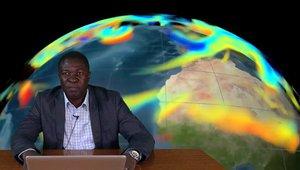
Le MOOC «Changement climatique et santé dans le contexte africain» ne se contente pas de fournir des explications sur la réalité du changement climatique et de ses impacts sanitaires en Afrique, il constitue un véritable espace de réflexion en commun sur la meilleure façon de se préparer, s'adapter et prévenir au mieux les risques sur la santé.

Différents experts en santé publique, en climatologie et en météorologie issus du centre de santé de Nouna au Burkina Faso et de l'université de Heidelberg en Allemagne interviennent sur ce MOOC pour décrire, expliquer et analyser les changements climatiques et aider les participants à envisager des initiatives pratiques de réponses en termes de prévention, d'atténuation et d'adaptation.
Ce MOOC a pour objectif de fournir à l'Afrique francophone et plus particulièrement à l'Afrique de l'ouest une source d'information et un espace d'échange, de réflexion et de travail collaboratif sur le changement climatique et ses impacts sanitaires. Différents sujets de discussion ainsi que des documents à construire ensemble seront ainsi proposés au long des 5 semaines du cours pour permettre à chaque participant de prendre part à la réflexion et à la construction d'une base de savoirs théoriques et pratiques essentiels pour prévenir et s'adapter au changement climatique

Format
Le MOOC se déroulera en 5 semaines. La première semaine sera dédiée aux explications des bases physiques du changement climatique. Deux documents collaboratifs seront mis à disposition des participants et devront être complétés tout au long du MOOC. L'un sera consacré aux liens entre manifestations physiques du changement climatique, impacts sur la santé et les différentes réponses possibles. L'autre constituera un glossaire des notions essentielles. Les semaines suivantes mettront en avant les divers impacts du changement climatique sur la santé avant d'envisager des solutions en termes de surveillance, prévention et adaptation, pour enfin présenter les réponses politiques existantes. Différents questionnaires à choix multiples et sujets de discussions seront proposés tout au long du MOOC pour permettre aux participants de valider leurs acquis, partager leurs savoirs, expériences et réflexions.

Plan du cours

Semaine 0 : Bienvenue dans ce MOOC
Semaine 1 : Bases physiques du changement climatique
Semaine 2 : Liens entre changement climatique et santé humaine
Semaine 3 : Les réponses regardant l'atténuation, la surveillance et la prévention
Semaine 4 : Les réponses en termes d'adaptation
Semaine 5 : Les réponses politiques
Go to Class
MOOC List is learner-supported. When you buy through links on our site, we may earn an affiliate commission.

Related Courses

De l'atome à l'humain : à la racine des mots scientifiques (FUN) FUN
Université de Lorraine

De l'atome à l'humain : à la racine des mots scientifiques (FUN)

Ce cours en ligne gratuit porte donc sur l’étymologie du vocabulaire scientifique et médical. Il s’adresse aux lycéens se préparant à la PACES, aux formations paramédicales, aux études scientifiques, aux STAPS... Il s’adresse également aux étudiants de ces différentes filières, ainsi qu’à toute personne intéressée par l’étymologie.

Sep 27th 2021
4 Weeks
Synapses, Neurons and Brains (Coursera) Coursera
Hebrew University of Jerusalem

Synapses, Neurons and Brains (Coursera)

These are very unique times for brain research. The aperitif for the course will thus highlight the present “brain-excitements” worldwide. You will then become intimately acquainted with the operational principles of neuronal “life-ware” (synapses, neurons and the networks that they form) and consequently, on how neurons behave as computational microchips and how they plastically and constantly change - a process that underlies learning and memory.

Nov 16th 2026
5-12 Weeks
Community Change in Public Health (Coursera) Coursera
Johns Hopkins University

Community Change in Public Health (Coursera)

In bringing about behavior change in public health, we often focus on the individual mother, student, or farmer. We should not forget the community structure and norms constrain for encouraging individual health behaviors. This course examines the community context of the changes needed to promote the public’s health. We begin by examining the various definitions of ‘community’ and the processes by which we ‘diagnose’ or seek to understand the structure and characteristics of different types of communities.

Nov 16th 2026
5-12 Weeks
At the heart of medical radioactivity (FUN) FUN
Université de Nantes

At the heart of medical radioactivity (FUN)

After a brief introduction on the physical basis of radioactivity, the MOOC "at the heart of medical radioactivity", will present in different stages the interest of medical radioactivity, from the design of a radiopharmaceutical to its use in the patient. The public objective of this MOOC is to demonstrate the medical use of radioactivity and its modalities.

No sessions available
5-12 Weeks
Our Energy Future (Coursera) Coursera
University of California, San Diego

Our Energy Future (Coursera)

This course is designed to introduce students to the issues of energy in the 21st century – including food and fuels – which are inseparably linked – and will discuss energy production and utilization from the biology, engineering, economics, climate science, and social science perspectives. This course will cover the current production and utilization of energy, as well as the consequences of this use, examining finite fossil energy reserves, how food and energy are linked, impacts on the environment and climate, and the social and economic impacts of our present energy and food production and use.

Nov 16th 2026
5-12 Weeks
Agir pour sa santé ! (FUN) FUN
Université de Liège

Agir pour sa santé ! (FUN)

Etre en bonne santé, ce n’est pas un secret, ça nous permet de profiter plus longtemps d’une vie de qualité. Mais pour rester en bonne santé, il faut agir et ce n’est pas qu’une question de motivation! Il existe des dizaines de comportements de santé : mettre de la crème solaire, manger sainement, porter un casque à vélo, boire régulièrement de l’eau, ou encore pratiquer une activité physique régulière. Mais qu’est-ce qui explique que nous réalisons certaines de ces actions et pas d’autres ? Pourquoi est-ce si difficile de changer ses comportements ? L’objectif de ce cours sera de vous aider à mieux comprendre les mécanismes qui influencent notre motivation et les outils qui peuvent faciliter le passage de l’intention au comportement de santé.

Oct 10th 2022
5-12 Weeks
Tuberculosis (FUN) FUN
Institut Pasteur

Tuberculosis (FUN)

To provide an up-to-date overview of the disease, the Institut Pasteur has created a MOOC dedicated to Tuberculosis. This course will provide a knowledge base that goes from the basics of TB to the current state of knowledge on various aspects of tuberculosis: the clinical picture, epidemiology, pediatric TB, factors affecting susceptibility to the disease, including HIV, diabetes and human genetics, immunology, vaccines, diagnosis, current and future ways to detect drug resistance, and how to treat drug sensitive and multi-drug resistant strains.

Sep 7th 2021
5-12 Weeks
PrEParing: PrEP for Providers and Patients (Coursera) Coursera
Johns Hopkins University

PrEParing: PrEP for Providers and Patients (Coursera)

Pre-Exposure Prophylaxis (PrEP) using the antiretroviral medication emtricitibine/tenofovir approved in countries around the world is a highly effective means of reducing transmission of HIV through sexual encounters and needle sharing. This Johns Hopkins University course PrEPares you with essential information, concepts and practical advice regarding PrEP from leaders in the field. A first of its kind learning opportunity, both providers and patients learn from the same experts through content that meets the needs of both audiences, while facilitating the opportunity for a shared community space.

Nov 23rd 2026
5-12 Weeks
Understanding the Brain: The Neurobiology of Everyday Life (Coursera) Coursera
University of Chicago

Understanding the Brain: The Neurobiology of Everyday Life (Coursera)

Learn how the nervous system produces behavior, how we use our brain every day, and how neuroscience can explain the common problems afflicting people today. We will study functional human neuroanatomy and neuronal communication, and then use this information to understand how we perceive the outside world, move our bodies voluntarily, stay alive, and play well with others.

Nov 16th 2026
5-12 Weeks
HIV Science (FUN) FUN
Institut Pasteur

HIV Science (FUN)

Since the start of the epidemic HIV has infected over 75 million people and provoked more than 35 million deaths. Today, although HIV replication can be controlled by antiretroviral treatment, HIV infection remains an outstanding global health issue, with 36.7 million infected people and 1 million HIV-related deaths in 2016, according to WHO. Half of the infected population does not have access to antiretroviral treatment and 2 million new infections are registered every year. In addition there is currently no cure for HIV and antiretroviral treatment needs to be maintained for life. In this MOOC we will review different aspects of HIV infection: from its biological origin and its identification as the causative agent of AIDS to the perspectives of eradication.

No sessions available
5-12 Weeks
Au cœur de la radioactivité médicale (FUN) FUN
Université de Nantes

Au cœur de la radioactivité médicale (FUN)

L’objectif général de ce MOOC est de replacer les enjeux de l’utilisation de la radioactivité en santé. Il aborde les notions essentielles à savoir sur la radioactivité, sur la production d’isotopes radioactifs et sur les médicaments radiopharmaceutiques. Les applications médicales et les règles élémentaires de radioprotection y sont traitées au travers d’exemples concrets.

No sessions available
5-12 Weeks