Mathematik Online-Kurs - Mathematisch denken! (iversity)

Mathematik Online-Kurs - Mathematisch denken! (iversity)

Mathematik: das ist Freude am Denken! Und mathematisch denken kann jeder! Wer an diesem Kurs teilnimmt, erhält seine regelmäßige Dosis an meditativen Denkaufgaben, spannenden Knobeleien und mathematischen Einsichten. In den Inhaltsgebieten Arithmetik und Geometrie werden mathematische Denk- und Arbeitsweisen vermittelt, beispielsweise Problemlösen, Begriffe definieren und Sätze finden und beweisen.

Im ersten Kursblock werden wir uns mit folgenden Fragen befassen: Wie definiert man mathematische Begriffe? Wie findet man eigentlich mathematische Gesetzmäßigkeiten? Und wie beweist man diese? Welche Rolle spielen Annahmen in der Mathematik? Wie baut sich das Gebäude der Mathematik aus Definitionen, Annahmen und Gesetzmäßgikeiten auf? Fragen über Fragen, denen wir uns mit zahlreichen Experimenten widmen.

Im zweiten Kursblock werden wir die Denk- und Arbeitsweisen aus dem ersten Block in verschiedenen Gebieten anwenden und dadurch festigen. In der Geometrie werden wir uns mit der Tätigkeit des Messens und dem Abstandsbegriff, mit Strecken, Halbgeraden und Geraden, mit Ebenen und Halbenenen und mit Winkeln befassen. In der Arithmetik schauen wir uns den Begriff der Teilbarkeit näher an, veranschaulichen Begriffe wie "größter gemeinsamer Teiler" und "kleinstes gemeinsames Vielfaches", untersuchen Primzahlen und Primfaktorzerlegungen und experimentieren mit Stellenwertsystemen.
Im dritten Kursblock befassen wir uns mit grundlegenden mathematischen Konzepten: Was sind Mengen, Relationen und Funktionen? Auch hier werden wir uns den Begriffen und ihren Zusammenhängen mit grundlegenden mathematischen Denk- und Arbeitsweisen nähern. Experimentieren, erforschen, untersuchen, ergründen, Vermutungen anstellen, Vermutungen verwerfen, Vermutungen beweisen.
Im vierten und letzten Kursblock machen wir uns noch einmal an zentrale Gesetzmäßigkeiten der Mathematik. Wie findet man solche Gesetzmäßgikeiten, und wie beweist man sie? In der Geometrie schauen wir uns schicke Sätze am Kreis an, in der Arithmetik nicht weniger schicke Sätze der Zahlentheorie. Mathematik pur, Mathematik anschaulich, Mathematik handgemacht.

Go to Class
MOOC List is learner-supported. When you buy through links on our site, we may earn an affiliate commission.

Related Courses

Constructivism and Mathematics, Science, and Technology Education (Coursera) Coursera
University of Illinois at Urbana-Champaign

Constructivism and Mathematics, Science, and Technology Education (Coursera)

This course is designed to help participants examine the implications of constructivism for learning and teaching in science, mathematics, and technology focused areas. Course readings, discussions, and assignments will examine constructivist views of learning, research on students' ideas and idea-based interactions, research on instructional approaches taking student ideas into account, and challenges in implementing constructivist perspectives in instruction.

Jun 22nd 2026
5-12 Weeks
The Finite Element Method for Problems in Physics (Coursera) Coursera
University of Michigan

The Finite Element Method for Problems in Physics (Coursera)

This course is an introduction to the finite element method as applicable to a range of problems in physics and engineering sciences. The treatment is mathematical, but only for the purpose of clarifying the formulation. The emphasis is on coding up the formulations in a modern, open-source environment that can be expanded to other applications, subsequently.

Jun 15th 2026
13-24 Weeks
Mathematical Logic and Algorithms Theory (iversity) Iversity
TUSUR University

Mathematical Logic and Algorithms Theory (iversity)

This is an illustrated basic course in mathematical logic. We invite everyone who wants to be creative in mathematics and programming. Enrol now and get started! We present a course developed by the team of Tomsk State University of Control Systems and Radioelectronics. This course offers basic knowledge in mathematical logic.

No sessions available
5-12 Weeks
English for Science, Technology, Engineering, and Mathematics (Coursera) Coursera
University of Pennsylvania

English for Science, Technology, Engineering, and Mathematics (Coursera)

Welcome to English for Science, Technology, Engineering, and Mathematics, a course created by the University of Pennsylvania, and funded by the U.S. Department of State Bureau of Educational and Cultural Affairs, Office of English Language Programs. This course is designed for non-native English speakers who are interested in improving their English skills in the sciences. In this course, you will explore some of the most innovative areas of scientific study, while expanding your vocabulary and the language skills needed to share scientific information within your community.

Jun 15th 2026
5-12 Weeks
Aléatoire : une introduction aux probabilités - Partie 1 (Coursera) Coursera
École Polytechnique

Aléatoire : une introduction aux probabilités - Partie 1 (Coursera)

Ce cours d'introduction aux probabilités a la même contenu que le cours de tronc commun de première année de l'École polytechnique donné par Sylvie Méléard. Le cours introduit graduellement la notion de variable aléatoire et culmine avec la loi des grands nombres et le théorème de la limite centrale. Les notions mathématiques nécessaires sont introduites au fil du cours et de nombreux exercices corrigés sont proposés.

Jun 15th 2026
5-12 Weeks
Initiation à la théorie des distributions (Coursera) Coursera
École Polytechnique

Initiation à la théorie des distributions (Coursera)

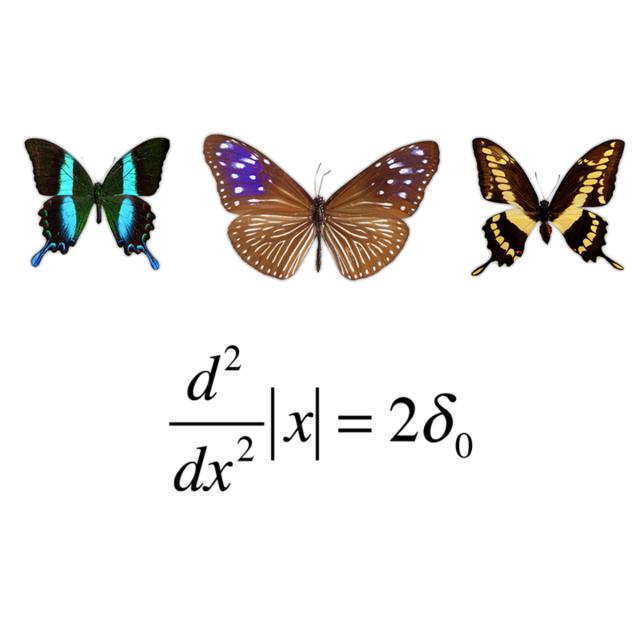
Une fonction discontinue peut-elle être solution d'une équation différentielle? Comment définir rigoureusement la masse de Dirac (une "fonction" d'intégrale un, nulle partout sauf en un point) et ses dérivées? Peut-on définir une notion de "dérivée d'ordre fractionnaire"? Cette initiation aux distributions répond à ces questions - et à bien d'autres.

Jun 15th 2026
5-12 Weeks
Number Theory and Cryptography (Coursera) Coursera
University of California, San Diego,Higher School of Economics - HSE University

Number Theory and Cryptography (Coursera)

We all learn numbers from the childhood. Some of us like to count, others hate it, but any person uses numbers everyday to buy things, pay for services, estimated time and necessary resources. People have been wondering about numbers’ properties for thousands of years. And for thousands of years it was more or less just a game that was only interesting for pure mathematicians. Famous 20th century mathematician G.H. Hardy once said “The Theory of Numbers has always been regarded as one of the most obviously useless branches of Pure Mathematics”. Just 30 years after his death, an algorithm for encryption of secret messages was developed using achievements of number theory. It was called RSA after the names of its authors, and its implementation is probably the most frequently used computer program in the word nowadays.

Jun 22nd 2026
4 Weeks
Matrix Methods (Coursera) Coursera
University of Minnesota

Matrix Methods (Coursera)

Mathematical Matrix Methods lie at the root of most methods of machine learning and data analysis of tabular data. Learn the basics of Matrix Methods, including matrix-matrix multiplication, solving linear equations, orthogonality, and best least squares approximation. Discover the Singular Value Decomposition that plays a fundamental role in dimensionality reduction, Principal Component Analysis, and noise reduction.

Jun 22nd 2026
5-12 Weeks