Initiation à la théorie des distributions (Coursera)

Offered by École Polytechnique,
Initiation à la théorie des distributions (Coursera)

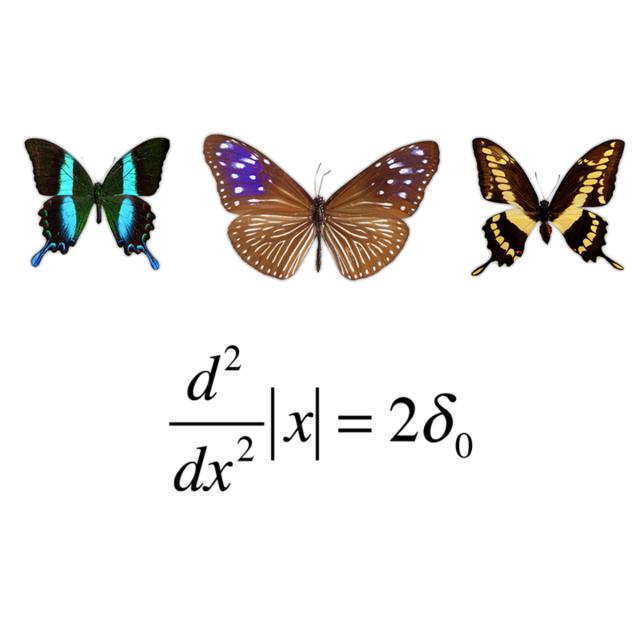
Une fonction discontinue peut-elle être solution d'une équation différentielle? Comment définir rigoureusement la masse de Dirac (une "fonction" d'intégrale un, nulle partout sauf en un point) et ses dérivées? Peut-on définir une notion de "dérivée d'ordre fractionnaire"? Cette initiation aux distributions répond à ces questions - et à bien d'autres.

Class Deals by MOOC List - Click here and see Coursera's Active Discounts, Deals, and Promo Codes.

Dans plusieurs domaines des sciences (physique, mécanique, analyse numérique, etc.) apparaît la nécessité de développer un calcul différentiel "généralisé" pour des fonctions peu régulières, par exemple discontinues. La première leçon présente une situation de ce genre. L'objet de ce cours est d'introduire la théorie des distributions qui fournit une réponse élégante à ce problème.

Dans un premier temps, nous présentons la notion de distribution, généralisant la notion de fonction, et les premières propriétés de ces objets mathématiques.
On montre ensuite comment certaines opérations bien connues sur les fonctions, en particulier la dérivation, se prolongent naturellement au cadre des distributions.
Le cours s'achève sur quelques applications à des exemples classiques d'équations aux dérivées partielles linéaires.

Go to Class
MOOC List is learner-supported. When you buy through links on our site, we may earn an affiliate commission.

Related Courses

Image and video processing: From Mars to Hollywood with a stop at the hospital (Coursera) Coursera
Duke University

Image and video processing: From Mars to Hollywood with a stop at the hospital (Coursera)

In this course, you will learn the science behind how digital images and video are made, altered, stored, and used. We will look at the vast world of digital imaging, from how computers and digital cameras form images to how digital special effects are used in Hollywood movies to how the Mars Rover was able to send photographs across millions of miles of space.

Jun 15th 2026
5-12 Weeks
Introduction to Logic (Coursera) Coursera
Stanford University

Introduction to Logic (Coursera)

This course is an introduction to Logic from a computational perspective. It shows how to encode information in the form of logical sentences; it shows how to reason with information in this form; and it provides an overview of logic technology and its applications - in mathematics, science, engineering, business, law, and so forth.

Jun 22nd 2026
5-12 Weeks
Differential Equations for Engineers (Coursera) Coursera
The Hong Kong University of Science and Technology - HKUST

Differential Equations for Engineers (Coursera)

This course is about differential equations and covers material that all engineers should know. Both basic theory and applications are taught. In the first five weeks we will learn about ordinary differential equations, and in the final week, partial differential equations. The course is composed of 56 short lecture videos, with a few simple problems to solve following each lecture. And after each substantial topic, there is a short practice quiz. Solutions to the problems and practice quizzes can be found in instructor-provided lecture notes. There are a total of six weeks in the course, and at the end of each week there is an assessed quiz.

Jun 22nd 2026
5-12 Weeks
Precalculus: Relations and Functions (Coursera) Coursera
Johns Hopkins University

Precalculus: Relations and Functions (Coursera)

This course helps to build the foundational material to use mathematics as a tool to model, understand, and interpret the world around us. This is done through studying functions, their properties, and applications to data analysis. Concepts of precalculus provide the set of tools for the beginning student to begin their scientific career, preparing them for future science and calculus courses. This course is designed for all students, not just those interested in further mathematics courses.

Jun 15th 2026
4 Weeks
Aléatoire : une introduction aux probabilités - Partie 1 (Coursera) Coursera
École Polytechnique

Aléatoire : une introduction aux probabilités - Partie 1 (Coursera)

Ce cours d'introduction aux probabilités a la même contenu que le cours de tronc commun de première année de l'École polytechnique donné par Sylvie Méléard. Le cours introduit graduellement la notion de variable aléatoire et culmine avec la loi des grands nombres et le théorème de la limite centrale. Les notions mathématiques nécessaires sont introduites au fil du cours et de nombreux exercices corrigés sont proposés.

Jun 15th 2026
5-12 Weeks
Matrix Algebra for Engineers (Coursera) Coursera
The Hong Kong University of Science and Technology - HKUST

Matrix Algebra for Engineers (Coursera)

This course is all about matrices, and concisely covers the linear algebra that an engineer should know. The mathematics in this course is presented at the level of an advanced high school student, but typically students should take this course after completing a university-level single variable calculus course. There are no derivatives or integrals in this course, but students are expected to have attained a sufficient level of mathematical maturity. Nevertheless, anyone who wants to learn the basics of matrix algebra is welcome to join.

Jun 22nd 2026
4 Weeks
Electrical Power Distribution (Coursera) Coursera
L&T EduTech

Electrical Power Distribution (Coursera)

This is an application-oriented course explaining the various aspects of power distribution, indoor and outdoor equipment up to 33kV. The course adopts a cross-disciplinary approach to ensure that the learners understand site execution, testing and commissioning. Throughout the course, safety aspects have been emphasized in every area of work. This course blends with conceptual knowledge covering the latest technological trends like SCADA & automation.

Jun 22nd 2026
5-12 Weeks
Fundamentals of Engineering Exam Review (Coursera) Coursera
Georgia Institute of Technology

Fundamentals of Engineering Exam Review (Coursera)

The purpose of this course is to review the material covered in the Fundamentals of Engineering (FE) exam to enable the student to pass it. It will be presented in modules corresponding to the FE topics, particularly those in Civil and Mechanical Engineering. Each module will review main concepts, illustrate them with examples, and provide extensive practice problems.

Jun 15th 2026
5-12 Weeks
Algebra: Elementary to Advanced - Equations & Inequalities (Coursera) Coursera
Johns Hopkins University

Algebra: Elementary to Advanced - Equations & Inequalities (Coursera)

This course is intended for students looking to create a solid algebraic foundation of fundamental mathematical concepts from which to take more advanced courses that use concepts from precalculus, calculus, probability, and statistics. This course will help solidify your computational methods, review algebraic formulas and properties, and apply these concepts model real world situations.

Jun 22nd 2026
4 Weeks
Mathematical Biostatistics Boot Camp 1 (Coursera) Coursera
Johns Hopkins University

Mathematical Biostatistics Boot Camp 1 (Coursera)

This class presents the fundamental probability and statistical concepts used in elementary data analysis. It will be taught at an introductory level for students with junior or senior college-level mathematical training including a working knowledge of calculus. A small amount of linear algebra and programming are useful for the class, but not required.

Jun 22nd 2026
4 Weeks
Basic Data Descriptors, Statistical Distributions, and Application to Business Decisions (Coursera) Coursera
Rice University

Basic Data Descriptors, Statistical Distributions, and Application to Business Decisions (Coursera)

The abilities to understand and apply Business Statistics are becoming increasingly important in the industry. A good understanding of Business Statistics is a requirement to make correct and relevant interpretations of data. Lack of knowledge could lead to erroneous decisions which could potentially have negative consequences for a firm. This course is designed to introduce you to Business Statistics. We begin with the notion of descriptive statistics, which is summarizing data using a few numbers.

Jun 15th 2026
4 Weeks