Mathematical Logic and Algorithms Theory (iversity)

Offered by TUSUR University,
Mathematical Logic and Algorithms Theory (iversity)

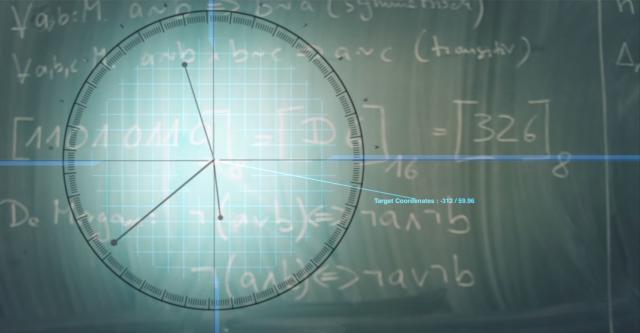
This is an illustrated basic course in mathematical logic. We invite everyone who wants to be creative in mathematics and programming. Enrol now and get started! We present a course developed by the team of Tomsk State University of Control Systems and Radioelectronics. This course offers basic knowledge in mathematical logic.

The goals of mathematical logic are:

  • To provide a formal language for mathematical statements that is easily translatable into the natural language and that allows compact and convenient notation.
  • To offer clear and unambiguous interpretation of such statements that is at the same time simple and close to the natural mathematical concepts.

We made sure to make this course informative and interesting for everyone!
Upon completion of the course, students will have acquired fundamental knowledge that is valuable in itself and will serve as the foundation for other studies. For example, software engineers strongly rely on logic-mathematical theories in their work.
• Natural languages possess a number of flaws - inaccuracy, polysemy, complexity.
• Knowledge of the simple yet powerful methods of mathematical statement transformations made possible by the language of logic is just as vital as is the knowledge of elementary algebra. No need to reinvent the wheel.
• Invented almost a century ago to address the needs of mathematics, mathematical logic has found application in theoretical and practical programming.
• When dealing with applied problems, a researcher has to switch between the descriptive language, mathematical language, the language of numerical methods and algorithms, and specific programming languages. The language of mathematical logic offers a great opportunity to practice this translation between languages and is used as a powerful formalised tool for transmission of information between distant languages.

Go to Class
MOOC List is learner-supported. When you buy through links on our site, we may earn an affiliate commission.

Related Courses

Matrix Algebra for Engineers (Coursera) Coursera
The Hong Kong University of Science and Technology - HKUST

Matrix Algebra for Engineers (Coursera)

This course is all about matrices, and concisely covers the linear algebra that an engineer should know. The mathematics in this course is presented at the level of an advanced high school student, but typically students should take this course after completing a university-level single variable calculus course. There are no derivatives or integrals in this course, but students are expected to have attained a sufficient level of mathematical maturity. Nevertheless, anyone who wants to learn the basics of matrix algebra is welcome to join.

Jun 22nd 2026
4 Weeks
Mathematik Online-Kurs - Mathematisch denken! (iversity) Iversity
Pädagogische Hochschule Heidelberg

Mathematik Online-Kurs - Mathematisch denken! (iversity)

Mathematik: das ist Freude am Denken! Und mathematisch denken kann jeder! Wer an diesem Kurs teilnimmt, erhält seine regelmäßige Dosis an meditativen Denkaufgaben, spannenden Knobeleien und mathematischen Einsichten. In den Inhaltsgebieten Arithmetik und Geometrie werden mathematische Denk- und Arbeitsweisen vermittelt, beispielsweise Problemlösen, Begriffe definieren und Sätze finden und beweisen.

Self Paced
Self-Paced
Mathematical Biostatistics Boot Camp 1 (Coursera) Coursera
Johns Hopkins University

Mathematical Biostatistics Boot Camp 1 (Coursera)

This class presents the fundamental probability and statistical concepts used in elementary data analysis. It will be taught at an introductory level for students with junior or senior college-level mathematical training including a working knowledge of calculus. A small amount of linear algebra and programming are useful for the class, but not required.

Jun 22nd 2026
4 Weeks
Conceptos y Herramientas para la Física Universitaria (Coursera) Coursera
Tecnológico de Monterrey

Conceptos y Herramientas para la Física Universitaria (Coursera)

Este curso provee al estudiante con conceptos y herramientas matemáticas para modelar problemas en física, que al aplicar podrá enfrentar con éxito los cursos de física universitarios. Así pues, la filosofía de este curso consiste en cubrir temas conceptuales relativos a la Física y desarrollar tu capacidad de aprender y aplicarlos en tu vida profesional.

Jun 22nd 2026
5-12 Weeks
Analytic Combinatorics (Coursera) Coursera
Princeton University

Analytic Combinatorics (Coursera)

Analytic Combinatorics teaches a calculus that enables precise quantitative predictions of large combinatorial structures. This course introduces the symbolic method to derive functional relations among ordinary, exponential, and multivariate generating functions, and methods in complex analysis for deriving accurate asymptotics from the GF equations. All the features of this course are available for free. It does not offer a certificate upon completion.

Jun 15th 2026
5-12 Weeks
Pre-MBA Quantitative Skills: Data Analysis (Coursera) Coursera
Rice University

Pre-MBA Quantitative Skills: Data Analysis (Coursera)

This course will equip students with the quantitative skills needed to begin any Masters of Business Administration program. The goal is not to build foundational skills or expert mastery but rather, to provide some middle ground to “shake the rust off” skills that a typical MBA student probably knows, but may not have thought about for quite some time.

Jun 22nd 2026
4 Weeks
Introduction to Calculus (Coursera) Coursera
The University of Sydney

Introduction to Calculus (Coursera)

The focus and themes of the Introduction to Calculus course address the most important foundations for applications of mathematics in science, engineering and commerce. The course emphasises the key ideas and historical motivation for calculus, while at the same time striking a balance between theory and application, leading to a mastery of key threshold concepts in foundational mathematics.

Jun 15th 2026
5-12 Weeks
Aléatoire : une introduction aux probabilités - Partie 1 (Coursera) Coursera
École Polytechnique

Aléatoire : une introduction aux probabilités - Partie 1 (Coursera)

Ce cours d'introduction aux probabilités a la même contenu que le cours de tronc commun de première année de l'École polytechnique donné par Sylvie Méléard. Le cours introduit graduellement la notion de variable aléatoire et culmine avec la loi des grands nombres et le théorème de la limite centrale. Les notions mathématiques nécessaires sont introduites au fil du cours et de nombreux exercices corrigés sont proposés.

Jun 15th 2026
5-12 Weeks