Maps and the Geospatial Revolution (FutureLearn)

Maps and the Geospatial Revolution (FutureLearn)

Learn to make maps and analyze geographic patterns using the latest geographic information systems (GIS) and cartographic tools.

Class Deals by MOOC List - Click here and see FutureLearn's Active Discounts, Deals, and Promo Codes.

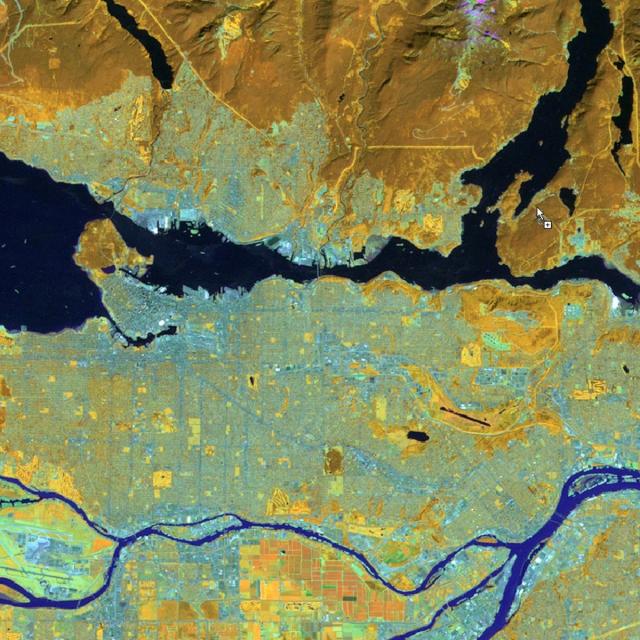
The past decade has seen an explosion of new ways to understand and use location information in widely-accessible technologies. This Geospatial Revolution has created new consumer GPS tools, interactive web maps and location-aware mobile devices. These advances make it possible for everyone to use, collect, and understand spatial information.
This online course brings together core concepts in cartography, geographic information systems (GIS) and spatial thinking, and uses real-world examples, to give you the fundamental skills to engage with geography beyond the surface-level.

What will you achieve?
By the end of the course, you will be able to:

  • Explain the Geospatial Revolution and its impact on the science of geography
  • Practice thinking spatially to solve geographic problems in environmental, social, and technical domains
  • Understand how spatial data is created
  • Apply spatial analysis techniques using interactive web maps
  • Explain the key elements of effective cartographic design

-Practice the art and science of mapmaking using interactive web maps.

Go to Class
MOOC List is learner-supported. When you buy through links on our site, we may earn an affiliate commission.

Related Courses

Inheritance and Data Structures in Java (Coursera) Coursera
University of Pennsylvania

Inheritance and Data Structures in Java (Coursera)

This course provides a comprehensive look at Java inheritance, including access modifiers and overriding methods. Students are introduced to abstract classes, and will learn how to read and write to files, use regular expressions for parsing text, and how to leverage complex data structures like collections and maps. Additionally, this course offers strategies for catching errors and debugging code, including an overview of Eclipse’s debugging tool.

Aug 31st 2026
4 Weeks
Geographical Information Systems - Part 2 (Coursera) Coursera
École Polytechnique Fédérale de Lausanne

Geographical Information Systems - Part 2 (Coursera)

This course is the second part of a course dedicated to the theoretical and practical bases of Geographic Information Systems (GIS). It offers an introduction to GIS that does not require prior computer skills. It gives the opportunity to quickly acquire the basics that allow you to create spatial databases and produce geographic maps. This is a practical course that relies on the use of free Open Source software (QGIS, Geoda).

Aug 31st 2026
5-12 Weeks
Exploring Humans’ Space: An Introduction to Geographicity (edX) EdX
École Polytechnique Fédérale de Lausanne,EPFLx

Exploring Humans’ Space: An Introduction to Geographicity (edX)

Explore how geography, cartography, urbanization and spatial justice play a role in shaping the notion of human space. How do we understand the notion of space? How have urbanisation, mobility, digital spaces, and globalization changed the way we perceive it? This course aims to help you feel comfortable with the notion of space.

Self Paced
Self-Paced
Geohealth: Improving Public Health through Geographic Information (FutureLearn) FutureLearn
University of Twente

Geohealth: Improving Public Health through Geographic Information (FutureLearn)

Explore how spatial data and geographic information systems (GIS) can be used to understand and improve public health. The environment in which we live and work can have a profound effect on our health – an effect that is explored by the emerging field of geohealth. This free online course will introduce you to new developments in geohealth, looking at the latest thinking and methods for using spatial data and geographic information systems (GIS) in health settings.

No sessions available
4 Weeks
Spatial Analysis and Satellite Imagery in a GIS (Coursera) Coursera
University of Toronto

Spatial Analysis and Satellite Imagery in a GIS (Coursera)

In this course, you will learn how to analyze map data using different data types and methods to answer geographic questions. First, you will learn how to filter a data set using different types of queries to find just the data you need to answer a particular question. Then, we will discuss simple yet powerful analysis methods that use vector data to find spatial relationships within and between data sets.

Aug 24th 2026
5-12 Weeks
GIS Data Formats, Design and Quality (Coursera) Coursera
University of California, Davis

GIS Data Formats, Design and Quality (Coursera)

In this course, the second in the Geographic Information Systems (GIS) Specialization. What you will learn: design data tables and use separating and joining data in a relational database; write query strings to subset data; create and work with raster data; create web maps.

Aug 24th 2026
4 Weeks
Introduction to GIS Mapping (Coursera) Coursera
University of Toronto

Introduction to GIS Mapping (Coursera)

Get started learning about the fascinating and useful world of geographic information systems (GIS)! In this first course of the specialization GIS, Mapping, and Spatial Analysis, you'll learn about what a GIS is, how to get started with the software yourself, how things we find in the real world can be represented on a map, how we record locations using coordinates, and how we can make a two-dimensional map from a three-dimensional Earth.

Aug 24th 2026
5-12 Weeks
China’s First Empires and the Rise of Buddhism (edX) EdX
HarvardX,Harvard University

China’s First Empires and the Rise of Buddhism (edX)

Learn about the Qin and Han dynasties, and how Buddhism and ideas of self-realization influenced the medieval period. This course, the second in a collection on Chinese history and culture, addresses how the Qin dynasty conquered China and established a new system of government and how the Han dynasty built a stable, centralized empire that lasted for hundreds of years. We cover the early history of Buddhism in China and how the rising feudal aristocracy responded to the loss of empire by looking inward.

Self Paced
Self-Paced
El lenguaje de los mapas (edX) EdX
Universidad Autonoma de Madrid,UAMx

El lenguaje de los mapas (edX)

Los mapas están de moda. Forman parte de nuestra vida cotidiana. Los consultamos en el GPS y en Internet. Por eso es útil conocer su historia, su lenguaje secreto y su relación con el poder. Viajemos, pues, por el mundo de la cartografía para “ponernos en el mapa” del conocimiento.

Self Paced
Self-Paced
Geographical Information Systems - Part 1 (Coursera) Coursera
École Polytechnique Fédérale de Lausanne

Geographical Information Systems - Part 1 (Coursera)

This course is organized into two parts presenting the theoretical and practical foundations of geographic information systems (GIS). Together theses courses constitute an introduction to GIS and require no prior knowledge. By following this introduction to GIS you will quickly acquire the basic knowledge required to create spatial databases and produce high-quality maps and cartographic representations. This is a practical course and is based on free, open-source software, including QGIS.

Sep 14th 2026
5-12 Weeks