America Through Foreign Eyes (Coursera)

Offered by Rice University,
America Through Foreign Eyes (Coursera)

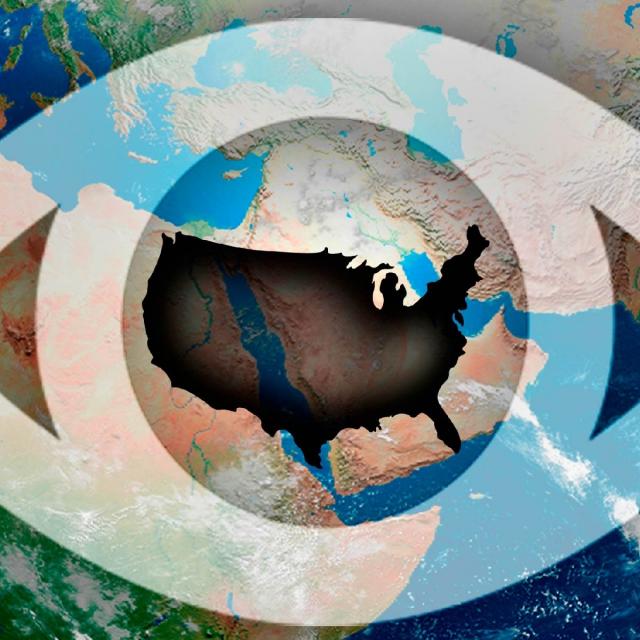
The United States has always been a source of fascination — both attraction and repulsion — for the people of France, Mexico, China, and African countries such as Nigeria, Ghana, and Sudan. "America Through Foreign Eyes" is a rich, interdisciplinary, international course that features Rice University faculty from a variety of disciplines and area studies. Focused on perceptions of America abroad, the course is a cross between World Cultures and American Studies. The course features five core modules, each covering the perceptions and interactions of particular regions with America, Americans and Americanization.

Class Deals by MOOC List - Click here and see Coursera's Active Discounts, Deals, and Promo Codes.

Syllabus

WEEK 1
Introduction
The United States has always been a source of fascination – both attraction and repulsion – for Africans, Chinese, French, Mexicans, and Russians, as well as for many other people from other countries and regions. "America through Foreign Eyes" is an interdisciplinary, international course that features Rice faculty from a variety of disciplines and area studies. Focused on perceptions of America abroad, the course is a cross between World Cultures and American Studies.The course features five modules, each covering the perceptions and interactions of a particular regions of the world with America, Americans, and Americanization. An introductory module offers ways to approach cross-cultural study and a concluding module "reverses the gaze" and analyze what Americans said, thought, or perceived of African nations or Africa as a continent, of China, France, Mexico, and Russia.

WEEK 2
America through African Eyes
The United States has always been a source of fascination for Africans. African observers and travelers are rarely indifferent to American culture and people. This module, “America Through African Eyes,” examines historical and contemporary perceptions of America, Americans, and Americanization through the lens of African writers, politicians, intellectuals, refugees, and local citizens. Taught by Dr. Jeffrey Fleisher, a professor of Archeology, this module will cover the four themes of the course: Democracy and Modernity; Globalization and Capitalism; Racism and Immigration; and Intellectual and Cultural Life.

WEEK 3
America Through Chinese Eyes
The United States has always been a source of fascination for the people of China. Chinese observers and travelers are rarely indifferent to American culture and people. This module, “America Through Chinese Eyes,” examines historical and contemporary perceptions of America, Americans, and Americanization through the lens of Chinese writers, artists, politicians, intellectuals, and public opinion. Taught by Dr. Anne Chao, a professor of History, this module will cover the four themes of the course: Democracy and Modernity; Globalization and Capitalism; Racism and Immigration; and Intellectual and Cultural Life.

WEEK 4
America Through French Eyes
The United States has always been a source of fascination for the people of France. French observers and travelers are rarely indifferent to American culture and people. This module, “America Through French Eyes,” examines historical and contemporary perceptions of America, Americans, and Americanization through the lens of French writers, artists, politicians, intellectuals, and public opinion. Taught by Dr. Julie Fette, a professor of French Studies, this module will cover the four themes of the course: Democracy and Modernity; Globalization and Capitalism; Racism and Immigration; and Intellectual and Cultural Life.

WEEK 5
America Through Mexican Eyes
The United States has always been a source of fascination for the people of Mexico. Mexican observers and travelers are rarely indifferent to American culture and people. This module, “ America Through Mexican Eyes,” examines historical and contemporary perceptions of America, Americans, and Americanization through the lens of Mexican writers, artists, politicians, intellectuals, and public opinion. Taught by Dr. Moramay López-Alonso, a professor of History, this module will cover the four themes of the course: Democracy and Modernity; Globalization and Capitalism; Racism and Immigration; and Intellectual and Cultural Life.

WEEK 6
America through Russian Eyes
The United States has always been a source of fascination for the people of Russia. Russian observers and travelers are rarely indifferent to American culture and people. This module, “America Through Russian Eyes,” examines historical and contemporary perceptions of America, Americans, and Americanization through the lens of Russian writers, thinkers, and film makers. Taught by Dr. Lida Oukaderova, a professor of Art History, this module will cover the four themes of the course: Democracy and Modernity; Globalization and Capitalism; Racism and Immigration; and Intellectual and Cultural Life.

WEEK 7
Reversing the Gaze
This course has explored how the United States has been a source of fascination for African, Chinese, French, Mexican, and Russian people. What happens when we “reverse the gaze?” This module examines historical and contemporary perceptions of Africa, China, France, Mexico, and Russia through American eyes. Join all five instructors for informal conversations over a meal at various Houston restaurants about American perceptions of the world.

Go to Class
MOOC List is learner-supported. When you buy through links on our site, we may earn an affiliate commission.

Related Courses

The Power of Team Culture (Coursera) Coursera
University of Pennsylvania

The Power of Team Culture (Coursera)

Behind the success and failure of teams lies team culture. But what exactly is culture? How and why does it contribute to success and failure? In this course, you learn how to recognize aspects of team culture of which most people are typically unaware. It is often these seemingly unimportant aspects that have the greatest effect on the outcomes of group tasks. Your recognition of them enables you to form, join and lead teams more effectively.

Jun 22nd 2026
5-12 Weeks
Arctic Economy (Coursera) Coursera
University of Alberta,UiT The Arctic University of Norway

Arctic Economy (Coursera)

Arctic communities have diverse histories and roles in local, regional and global economies. However, the scope and scale of globalization has increased so quickly that vulnerable Arctic communities are facing new kinds of challenges to their survival. In this 3-week MOOC, a unique collaboration between the University of Alberta and UiT The Arctic University of Norway, you will investigate the challenges faced by Indigenous, North American, Russian and Nordic Arctic communities in a modern world. So join us as we venture above the 60th parallel North, and explore how these fascinating communities adjust to change while maintaining their ways of life, socio-economic histories, and cultural traditions.

Jun 22nd 2026
4 Weeks
ART of the MOOC: Activism and Social Movements (Coursera) Coursera
Duke University,Creative Time

ART of the MOOC: Activism and Social Movements (Coursera)

This course is for activists, artists, and thinkers who wish to better understand and participate in social change. We will focus on the prolific and exciting overlap between socially engaged art and cultural practices generated by recent social movements around the world. Rather than assess the political efficacy of activities like mourning, listening, organizing, dancing, or partying, the lectures examine such cultural activities next to, and within, contemporary art practice.

Jun 22nd 2026
5-12 Weeks
Arctic Change & the Nexus of Governance, Economics & Culture (Coursera) Coursera
University of Colorado Boulder

Arctic Change & the Nexus of Governance, Economics & Culture (Coursera)

In this course, you will learn how the changing Arctic environment is tied to the growing economic and strategic importance of the North. After setting the stage through a review of the peoples of the Arctic and how they are dealing with change, Arctic governance, economies national defense, attention turns to marine use of the Arctic, oil and gas exploration, mining, fisheries and tourism.

Jun 22nd 2026
4 Weeks
Globalização, Impacto Social e Mundo Digital (Coursera) Coursera
FIA Business School

Globalização, Impacto Social e Mundo Digital (Coursera)

Nossas boas-vindas ao Curso Globalização, Impacto Social e Mundo Digital. Neste curso, você aprenderá sobre grandes temas que envolvem o mundo contemporâneo dos negócios. Irá se discutir o fenômeno da globalização e desglobalização; o conceito de diversidade e gestão de diversidade nas organizações, os empreendimentos de impacto social; e o mundo digital, a exemplo do blockchain e da IoT.

Jun 22nd 2026
3 Weeks
Black Agricultural Solutions to Food Apartheid: A Teach-Out (Coursera) Coursera
Johns Hopkins University

Black Agricultural Solutions to Food Apartheid: A Teach-Out (Coursera)

Black Agricultural Solutions to Food Apartheid is a series where we dive deep into the historical, ancestral, and spiritual connections that Black people have to land and agriculture. Throughout this course, we encourage participants to learn about their ancestral foodways, agrarian practices, and spiritual connections. These sessions share wisdom and highlight the importance of food sovereignty, rebuilding community, and land based living.

Jun 22nd 2026
1 Week
Anti-Racism II (Coursera) Coursera
University of Colorado Boulder

Anti-Racism II (Coursera)

Anti-Racism II is an intermediate course between Anti-Racism I and Anti-Racism III, focusing on the topic of race, racism, and strategies regarding how to be an anti-racist. Anti-Racism II is for anyone who has previously taken Anti-Racism I, or who has basic knowledge of the racial issues plaguing the United States, and globally. Anti-Racism I focused upon how to have open dialogue and conversations about race and racism. Anti-Racism II takes on the vital role assisting students in guiding their own conversations regarding race, and additionally gender and sexuality.

Jun 22nd 2026
4 Weeks
Afrique et mondialisation, regards croisés (Coursera) Coursera
Sciences Po

Afrique et mondialisation, regards croisés (Coursera)

Au-delà des relations internationales classiques, le processus de mondialisation mobilise quantité d'acteurs économiques, sociaux et culturels, individuels et collectifs, qui agissent dans l'espace mondial. Nous étudions ensemble, Africains, Latino-américains et Européens, comment il en dérive de nouvelles relations internationales. Ce cours prend sa source dans les approches sociologique et historique françaises des relations internationales, comme celles promues en Afrique et en Amérique latine.

Jun 22nd 2026
5-12 Weeks
Asian American History and Identity: An Anti-Racism Toolkit (Coursera) Coursera
University of Colorado Boulder

Asian American History and Identity: An Anti-Racism Toolkit (Coursera)

In this course, students will develop a greater understanding of Asian American history and identities, explore the problematic history of anti-Asian discrimination in the US, and develop skill sets that they can use to address anti-Asian hate and violence in their community. Target learners include students interested in Asian American history and Anti-Racism, but also any learner interested in creating more inclusive communities for AAPI Americans and stopping racism, hate, and violence in their community.

Jun 22nd 2026
4 Weeks
Singing Popular Music (Coursera) Coursera
Berklee College of Music

Singing Popular Music (Coursera)

You've been studying the greats, working on improving your vocal skills, and building vocal technique. Now it's time to take the next step in your singing career to shine as a vocalist. Singing Popular Music provides you with the essential skills to define your own unique vocal style and sing healthfully. The course begins with devices to support and alter your sound including vowel quality, tone production, and breathing techniques.

Jun 22nd 2026
4 Weeks
Anti-Racism I (Coursera) Coursera
University of Colorado Boulder

Anti-Racism I (Coursera)

Anti-Racism I is an introduction to the topic of race and racism in the United States. The primary audience for this course is anyone who is interested in learning about race/racism in the US who has never taken a course in critical race or ethnic studies or affiliated fields (indeed, who may not know what the fields of critical race studies or ethnic studies are), who has never read a book about race/racism, or attended any race equity or diversity trainings on the topic of race/racism.

Jun 22nd 2026
3 Weeks