EdX

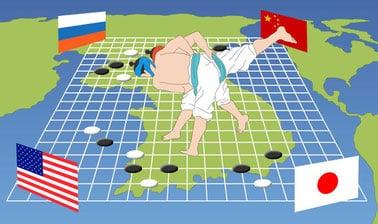
International Politics in the Korean Peninsula (edX)

International Politics in the Korean Peninsula (edX)

Explore the genesis, expansion, projection and challenges of the Chinese World Order in China and East Asia. This course is divided into three parts. First, you’ll learn how the Chinese World Order emerged in the ancient world, focusing on the concept of the "heavenly mandate" (天命) as the ultimate source of political power.

Class Deals by MOOC List - Click here and see EdX's Active Discounts, Deals, and Promo Codes.

You’ll also learn how the Chinese World Order expanded into the relationship between China and surrounding political entities (1 module) and several challenges when the Qing (淸) Empire replaced the Ming (明) Empire.
Second, this course will review how China tried to project its world order into the relationship with Korea and Korea came to be integrated into the Chinese World Order from the 14th century to the 18th century (4 modules). More specifically, it will show how China intervened in the interstate trade and Korean music.
Finally, it will compare the two trajectories of political thoughts between Korea and Japan since 17th century. Korea fantasized itself as the genuine heir and center of the Chinese World Order, closing its door to foreigners. Meanwhile, Japan overcame the Chinese World Order and eventually converted itself as a modern state (1 module).
The working language is Korean with English subtitles.

What you'll learn:

  • Genesis and Expansion of the Chinese World Order
  • Projection of the Chinese World Order into East Asian Trade
  • Projection of the Chinese World Order into Korean Music
  • Challenges of the Chinese World Order

Syllabus

Week 1: Genesis of the Chinese World Order
Week 2: Expansion of the Chinese World Order into East Asia
Week 3: Projection of the Chinese World Order into Korean Music
Week 4: Projection of the Chinese World Order into Korea in 14-15th Century
Week 5: Projection of the Chinese World Order into International Trade (1)
Week 6: Projection of the Chinese World Order into International Trade (2)
Week 7: Challenges to the Chinese World Order
Go to Class
MOOC List is learner-supported. When you buy through links on our site, we may earn an affiliate commission.

Related Courses

Development in Emerging Economies: The Case of China (edX) EdX
Peking University,PekingX

Development in Emerging Economies: The Case of China (edX)

Curious about China's development and the Chinese market but haven't known where to start? Peking University brings you an easy-to-understand primer. Guanghua's professors will unpack China's development over five weeks, first giving an overview of China's economic growth as context before addressing private equity, real estate financing, banking, the stock market, wealth management, and other topics associated with China's financial markets.

Self Paced
Self-Paced
Structuring Values in Modern China (Coursera) Coursera
The Chinese University of Hong Kong

Structuring Values in Modern China (Coursera)

This sequence of four courses will propose a multi-disciplinary approach to the study of Chinese cultural history conceived of as a succession of modes of rationality (philosophical, bureaucratic, and economic). The focus will be on the moments of paradigm shift from one mode of rationality to another. For each of these moments, cultural facts and artifacts—thought, literature, ritual—will be examined in relationship to changing social, political, and economic systems.

Sep 14th 2026
5-12 Weeks
Re-imaging God in Korean Context (Coursera) Coursera
Yonsei University

Re-imaging God in Korean Context (Coursera)

This course will be an overview of a development of the theological methods in relation to Korea’s cultural context. Completing the course, the learners can understand cultural influences on the dynamic development of Korean churches and indigenous theology; they can also gain an insight into their own image of God and theological imagination in their own cultural context.

Sep 14th 2026
5-12 Weeks
A Global History of Architecture (edX) EdX
MIT,MITx

A Global History of Architecture (edX)

Learn about humanity’s rich architectural history on this journey around the globe – from 100,000 BCE to ca. 1,600 CE. How do we understand architecture? One way of answering this question is by looking through the lens of history, beginning with First Societies and extending to the 16th century. This course in architectural history is not intended as a linear narrative, but rather aims to provide a more global view, by focusing on different architectural "moments."

Oct 18th 2023
5-12 Weeks
Global China: From the Mongols to the Ming (edX) EdX
HarvardX,Harvard University

Global China: From the Mongols to the Ming (edX)

Explore the impact of the conquest dynasties and the world of the Ming. In the 13th century, by force of arms, the Mongols created the greatest empire in human history. Yet by the end of the Ming dynasty in the late 16th century, a new global economy emerged. New World silver brought together the Americas, Europe, and East Asia, and the intellectuals of East and West began to speak to each other directly.

Self Paced
Self-Paced
China Humanities: The Individual in Chinese Culture (edX) EdX
HarvardX,Harvard University

China Humanities: The Individual in Chinese Culture (edX)

Explore Chinese history and culture from the perspective of the individual through philosophical texts, literary works, and art. In China’s history, there has been a longstanding belief that being cultured and being moral are necessary for a person to participate in public life. We often think of China in political terms – and focus on the history of government – or in social terms – and study the role of the family in society. But this course looks at the individual and the striving for culture and morality.

Self Paced
Self-Paced
Invasions, Rebellions, and the Fall of Imperial China (edX) EdX
HarvardX,Harvard University

Invasions, Rebellions, and the Fall of Imperial China (edX)

An overview of modern Chinese history, including the fall of the Qing and the end of imperial China. In the 18th century, the Qing Dynasty is at its height; it is the wealthiest, most powerful, most civilized state on earth. And yet the 19th century brought enormous challenges for the Qing and for the place we call China. By the 20th century, a 2,000-year imperial tradition is gone. What happened?

Self Paced
Self-Paced
Mao to Now: On Chinese Marxism (edX) EdX
The University of Newcastle, Australia,NewcastleX

Mao to Now: On Chinese Marxism (edX)

An insightful study of Chinese Marxism, socialism and capitalism - critical for anyone who wishes to engage with China today. To make sense of modern China, you simply cannot ignore Marxism. ‘From Mao to Now’ presents current topics that anyone who wishes to engage with China should know. Rather than praising or condemning, the course focuses on building a deeper understanding of this history through two interwoven elements.

No session available
5-12 Weeks
Chinese Culture: Interaction (edX) EdX
The Hong Kong Polytechnic University,HKPolyUx

Chinese Culture: Interaction (edX)

This compact course introduces 5 interesting aspects of Chinese cultural exchange and interaction with other countries in history. They are (a) China and the West, (b) China and Central Asia (c) China and Vietnam, (d) Colonialism, Anti-Colonialism and Pan-Asianism, and (e) Chinese Food and Cuisine. This dynamic course forms part of the HKPolyUx series on Chinese culture.

Self Paced
Self-Paced