Low Poly Art For Video Games (Coursera)

Low Poly Art For Video Games (Coursera)

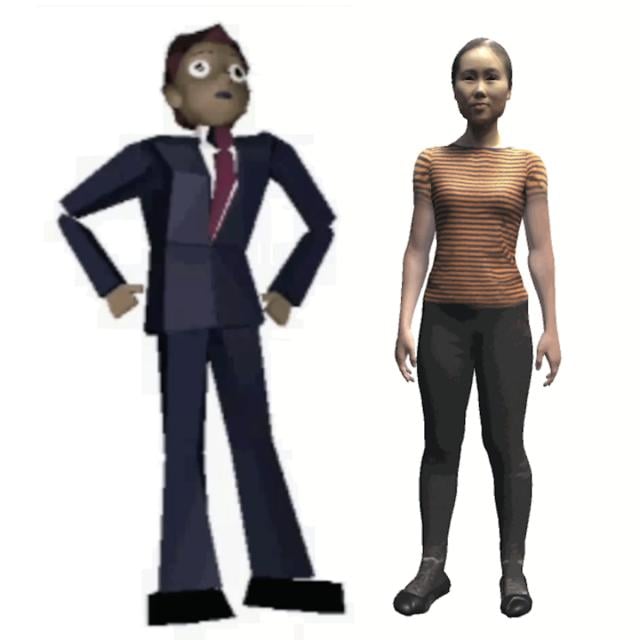
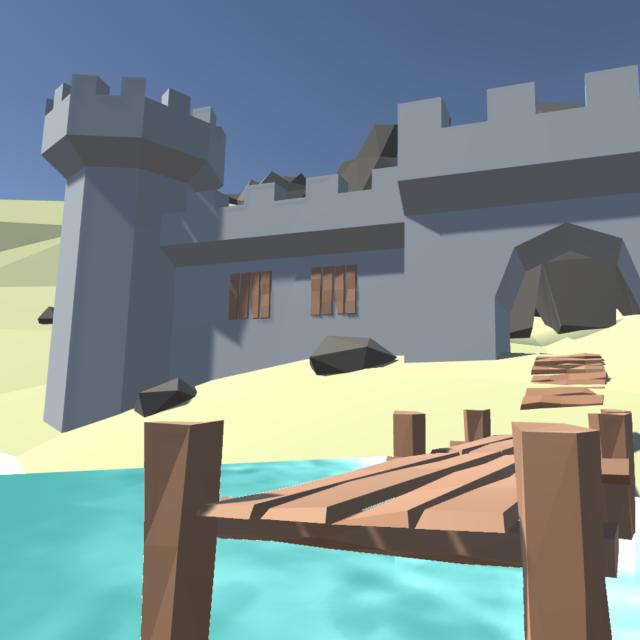
This course is aimed to give you the tools and knowledge you need to start creating simple 3D art for video games made in the Unity game engine. Through the aesthetic of pixel art we will explore artistic principals like shape language, color theory, and composition as well as show you a step by step workflow for creating assets that you can use to make your own games.

Class Deals by MOOC List - Click here and see Coursera's Active Discounts, Deals, and Promo Codes.

The course is broken into 4 main modules, props, environments, characters, and animation. Each of these courses will have a series of video lessons alternating between artistic and technical skills culminating in a peer-reviewed project based assignment. The last module will challenge you to take the knowledge learned in the previous 4 and use it to create your own pixel art asset pack.
This course is aimed at art novices who are interested in creating art for their own games or contributing to game projects. If you are a game designer or programmer, you will find this course helps give you a glimpse into the world of game art. You will be able to better work with artists, or create your own prototype or final artwork. If you are an artist or visual designer who is interested in bringing your style to the world of video game development, this course will give you the workflow to properly interface with a game engine and help contextualize how your artistic sensibilities can enable gameplay.
If you have ever wanted to start making art for video games but have no idea how to start, this course is the perfect for giving you a solid foundation while teaching you usable practical skills. Our goal is to give you a sense of the whole pipeline from creation to setting up in a game engine.
Course 2 of 4 in the Art for Games Specialization.

Syllabus

WEEK 1
Intro to Low Poly Art
In this first week we will talk about the basics of creating a game model in the low poly style. This will likely be the quickest of the 5 weeks, so take some time to check out the optional Maya LT intro to make sure you have a grasp of all the essential skills we will be covering in the course.

Week 2
Low Poly Environment Art
In this week we will move onto environments. The goal is to create a set of simple models that can be used to create scenes in maya. Depending on the number of models and their complexity this might be a more time consuming than the previous week.

Week 3
Low Poly Character Art

Week 4
Animating Low Poly Art
In this week we will be taking our character from week 3 and animating a few simple animations for it. Rigging can be tricky at first, so make sure you check out the rigging and animation primer if you need to. The goal here is to quickly get a character that we can animate, then create a few simple and expressive animations for use in a 3d game.

Week 5
Low Poly Art Project
For the final week, take the project assets you have made so far and improve them based on the feedback you received. Take this week to go back and redo anything you would have like to tackle in a different way. The goal here is to finish with a series of low poly assets you could use in a simple 3d game.
Go to Class
MOOC List is learner-supported. When you buy through links on our site, we may earn an affiliate commission.

Related Courses

Shooters and Game Engines in Level Design (edX) EdX
LaSalle College,LaSalleX

Shooters and Game Engines in Level Design (edX)

Shooter games have been and continue to be the dominant genre in video games. Learn about this important genre in game design. Do you want to learn more about game genres and subgenres? This course continues your exploration of level design by introducing you to an important genre: the shooter. The shooter genre is huge in the game world, containing a wide variety of subgenres with their own gameplay needs.

Self Paced
Self-Paced
The 3D Printing Revolution (Coursera) Coursera
University of Illinois at Urbana-Champaign

The 3D Printing Revolution (Coursera)

This course will demonstrate how 3D printers work, show what people make with them, and examine the 3D printing ecosystem. It will also explore the future of 3D printing and discuss how this technology will revolutionize our world. Learners who complete this introductory course will have a solid understanding of 3D printing and its revolutionary potential, and will be able to print and customize 3D designs.

Oct 12th 2026
2 Weeks
The Basics of Level Design (edX) EdX
LaSalle College,LaSalleX

The Basics of Level Design (edX)

Discover how to create captivating video games with not just your visuals and gameplay, but level design as well. This course introduces you to the fundamentals of game level design—a crucial aspect of video game design that centers around the creation of playable spaces. As a level designer, you will be required to create well-designed levels that direct the movement of the player(s) through the game—often without the player consciously recognizing they’re being directed.

Self Paced
Self-Paced
Story and Narrative Development for Video Games (Coursera) Coursera
California Institute of the Arts

Story and Narrative Development for Video Games (Coursera)

In this course, you will examine how storytelling acts as a vital mechanism for driving video gameplay forward. Looking at several historical and contemporary games, you will be asked to evaluate and interpret different story styles with the goal of identifying themes and procedures for your own game ideas. We'll examine traditional narrative story processes, such as three-act structure, and how they fit into game story flows and the strategic elements of gameplay. Ultimately, you will learn how to define character, setting, and structure to create a compelling game concept.

Oct 12th 2026
4 Weeks
Beginning Game Programming with C# (Coursera) Coursera
University of Colorado System

Beginning Game Programming with C# (Coursera)

The Beginning Game Programming with C# course is all about learning how to develop video games using the C# programming language. Why use C# instead of C++, Java, ActionScript, or some other programming language you may have heard of? First, using C# lets us use the open-source MonoGame framework, which help us quickly develop games for Windows, Android, iOS, Mac OS X, and others. Second, the Unity game engine is very popular with indie game developers, and C# is one of the programming languages you can use in the Unity environment. And finally, C# is a really good language for learning how to program.

Jul 16th 2018
5-12 Weeks
Gameplay en videojuegos (Coursera) Coursera
Universitat Autònoma de Barcelona

Gameplay en videojuegos (Coursera)

¿Cómo se estructura y funciona un programa de videojuego? Es lo que comúnmente se conoce como 'gameplay', y que constituirá nuestro núcleo de estudio en este curso. Su análisis detallado nos permitirá comprender su importancia, y qué funcionalidades debe tener. Analizaremos también la interface gráfica del usuario (GUI), que finalmente condiciona el hecho de que el jugador pueda interaccionar correctamente con el videojuego. Para definir y comprender mejor los conceptos se usan ejemplos y referentes de videojuegos de la industria.

Oct 19th 2026
4 Weeks
3D Data Visualization for Science Communication (Coursera) Coursera
University of Illinois at Urbana-Champaign

3D Data Visualization for Science Communication (Coursera)

This course is an introduction to 3D scientific data visualization, with an emphasis on science communication and cinematic design for appealing to broad audiences. You will develop visualization literacy, through being able to interpret/analyze (read) visualizations and create (write) your own visualizations.

Nov 2nd 2026
4 Weeks
3D Model Creation with Autodesk Fusion 360 (Coursera) Coursera
Autodesk

3D Model Creation with Autodesk Fusion 360 (Coursera)

Design is the first phase in the digital manufacturing process. In this course, through a series of lectures and hands-on lessons, we’ll examine a designer’s approach to the design and manufacturing process—from concept to 3D model. We’ll start by applying design thinking to understand user needs, and then we’ll explore design criteria as we dive deeper into Autodesk® Fusion 360™ sketching, modeling, rendering, and documentation features.

Nov 4th 2024
4 Weeks
Geospatial and Environmental Analysis (Coursera) Coursera
University of California, Davis

Geospatial and Environmental Analysis (Coursera)

Apply your GIS knowledge in this course on geospatial analysis, focusing on analysis tools, 3D data, working with rasters, projections, and environment variables. Through all four weeks of this course, we'll work through a project together - something unique to this course - from project conception, through data retrieval, initial data management and processing, and finally to our analysis products.

Mar 18th 2024
4 Weeks
Building Interactive 3D Characters and Social VR (Coursera) Coursera
University of London,Goldsmiths, University of London

Building Interactive 3D Characters and Social VR (Coursera)

Meeting another person is one of the most amazing experiences you can have in Virtual Reality. It is quite unlike communicating through any other medium except a real life face-to-face conversation. Because the other person is life size and shares a virtual space with you, body language works in a way that cannot be done on a flat screen. This course will enable you to create realistic social interactions in VR.

Oct 12th 2026
4 Weeks