Les deux infinis et nous (Coursera)

Offered by École Polytechnique,
Les deux infinis et nous (Coursera)

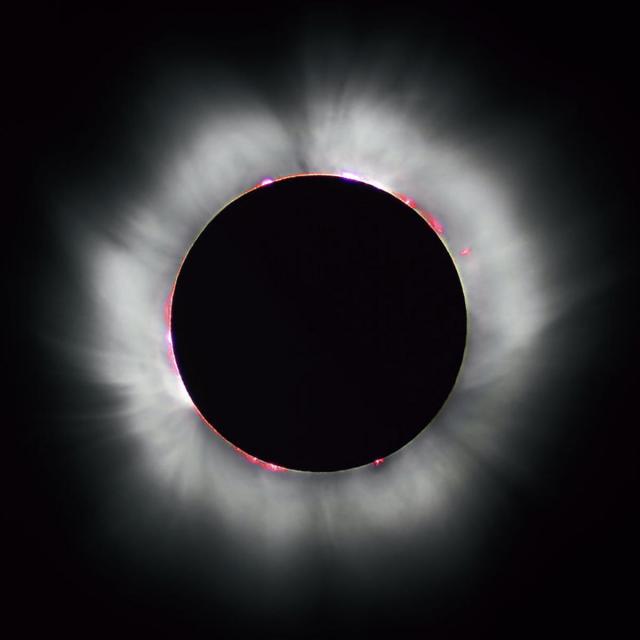
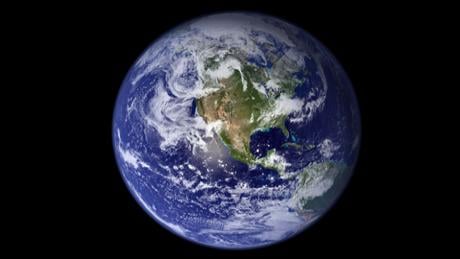
Partez à la découverte de l'infiniment grand et de l'infiniment petit dans leurs aspects les plus proches de notre quotidien, en compagnie de physiciens et de physiciennes qui vont vous faire découvrir leur présence insoupçonnée dans notre vie de tous les jours. Vous vous initierez à la vie et aux métiers d'une grande collaboration en physique de l'infiniment petit et de l'infiniment grand, vous découvrirez comment les outils développés dans ces domaines ont trouvé des applications inattendues, comment la physique nucléaire a profondément modifié les domaines de l'énergie et de la santé, et comment les propriétés de certaines particules aident à présent d'autres disciplines à sonder la matière d'une manière totalement différente.

Class Deals by MOOC List - Click here and see Coursera's Active Discounts, Deals, and Promo Codes.

Ce cours en français fait partie du MOOC "Voyages de l'infiniment grand à l'infiniment petit", conçus par des physiciens et des physiciennes du Labex P2IO (Physique des 2 Infinis et des Origines, IPP et Université Paris-Saclay) regroupant des laboratoires de physique de l'infiniment grand et de l'infiniment petit situés à Orsay et Saclay.

Course 4 of 4 in the Voyages de l'infiniment grand à l'infiniment petit Specialization

Syllabus

WEEK 1
Des Infinis et des Hommes
Ce module s'intéresse à la nature de la recherche fondamentale et à ses liens avec notre quotidien. Il aborde aussi la manière dont travaillent les hommes et les femmes qui participent aux progrès de la connaissance.

WEEK 2
Des technologies dans notre quotidien
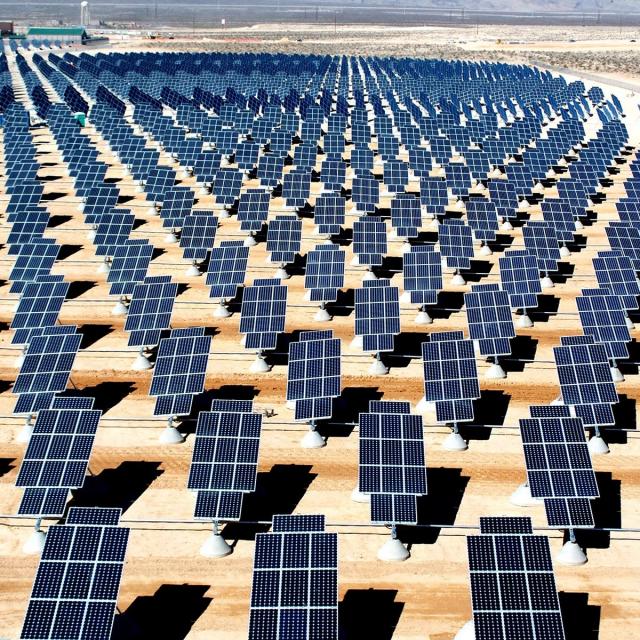
Ce module décrit des technologies qui sont présentes dans notre quotidien et qui présentent des liens forts avec la physique de l'infiniment grand et de l'infiniment petit, tantôt par le biais des concepts, tantôt par celui des outils.

WEEK 3
De nouveaux regards sur le monde
Ce module montre comment les propriétés de certaines particules ont pu être exploitées pour mieux sonder la structure de la matière, en utilisant le rayonnement synchrotron, les neutrinos ou les muons.

WEEK 4
Les noyaux au service de l'énergie et de la santé
Ce module décrit des applications importantes de la physique nucléaire afin de produire de l'énergie ou bien d'aider la recherche médicale par de nouvelles techniques d'imagerie et de soin.

Go to Class
MOOC List is learner-supported. When you buy through links on our site, we may earn an affiliate commission.

Related Courses

Wind resources for renewable energies (Coursera) Coursera
École Polytechnique

Wind resources for renewable energies (Coursera)

The main goal of this course is to get the necessary knowledge on atmospheric and fluid dynamics in order to quantify the wind resource of a local or regional area. We’ll learn about basic meteorology, the specific dynamics of turbulent boundary layers and some standard techniques to estimate wind resources regardless of the type of turbine used or the level of efficiency achieved.

Sep 7th 2026
4 Weeks
The Worldview of Thomas Berry: The Flourishing of the Earth Community (Coursera) Coursera
Yale University

The Worldview of Thomas Berry: The Flourishing of the Earth Community (Coursera)

Thomas Berry (1914-2009) was a historian of world religions and an early voice awakening moral sensibilities to the environmental crisis. He is known for articulating a “new story” of the universe that explores the implications of the evolutionary sciences and cultural traditions for creating a flourishing future. This course investigates Berry’s life and thought in relation to the Journey of the Universe project.

Sep 14th 2026
5-12 Weeks
Astro 101: Black Holes (Coursera) Coursera
University of Alberta

Astro 101: Black Holes (Coursera)

What is a black hole? Do they really exist? How do they form? How are they related to stars? What would happen if you fell into one? How do you see a black hole if they emit no light? What’s the difference between a black hole and a really dark star? Could a particle accelerator create a black hole? Can a black hole also be a worm hole or a time machine? In Astro 101: Black Holes, you will explore the concepts behind black holes. Using the theme of black holes, you will learn the basic ideas of astronomy, relativity, and quantum physics.

Sep 14th 2026
5-12 Weeks
The Finite Element Method for Problems in Physics (Coursera) Coursera
University of Michigan

The Finite Element Method for Problems in Physics (Coursera)

This course is an introduction to the finite element method as applicable to a range of problems in physics and engineering sciences. The treatment is mathematical, but only for the purpose of clarifying the formulation. The emphasis is on coding up the formulations in a modern, open-source environment that can be expanded to other applications, subsequently.

Sep 7th 2026
13-24 Weeks
Municipal Solid Waste Management in Developing Countries (Coursera) Coursera
École Polytechnique Fédérale de Lausanne

Municipal Solid Waste Management in Developing Countries (Coursera)

Have you come across large piles of garbage in neighborhoods and streets, or smelly waste disposal sites polluting the environment of low and middle income countries? Are you also convinced that improvements are necessary and do you want to know what kind of sustainable solutions are appropriate to better manage waste and enhance recycling and recovery? If yes, this course is for you!

Sep 7th 2026
5-12 Weeks
Understanding Einstein: The Special Theory of Relativity (Coursera) Coursera
Stanford University

Understanding Einstein: The Special Theory of Relativity (Coursera)

In this course we will seek to “understand Einstein,” especially focusing on the special theory of relativity that Albert Einstein, as a twenty-six year old patent clerk, introduced in his “miracle year” of 1905. Our goal will be to go behind the myth-making and beyond the popularized presentations of relativity in order to gain a deeper understanding of both Einstein the person and the concepts, predictions, and strange paradoxes of his theory.

Sep 7th 2026
5-12 Weeks
Magic in the Middle Ages (Coursera) Coursera
University of Barcelona

Magic in the Middle Ages (Coursera)

Magical thought has always attracted human imagination. In this course we will introduce you to the Middle Ages through a wide conception of magic. Students will have an approach to medieval culture, beliefs and practices from the perspective of History and History of Science. Popular magic, as well as learned magic (alchemy, geomancy and necromancy) will be addressed. Moreover, we will also deal with how eastern practices and texts influenced western culture. In July 2016, the course will contain a brand-new module devoted to astrology. Magic in the Middle Ages offers a captivating overview of medieval society and promotes reflection about certain stereotypes associated with this period.

Sep 14th 2026
5-12 Weeks