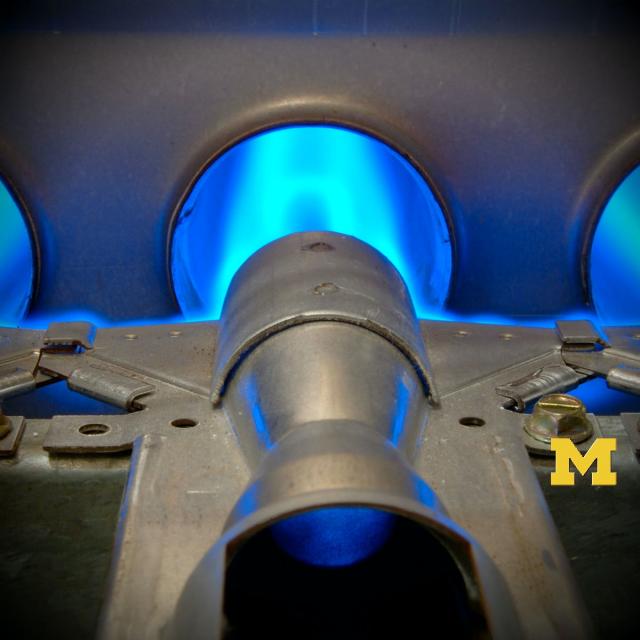
Introduction to Thermodynamics: Transferring Energy from Here to There (Coursera)

Introduction to Thermodynamics: Transferring Energy from Here to There (Coursera)

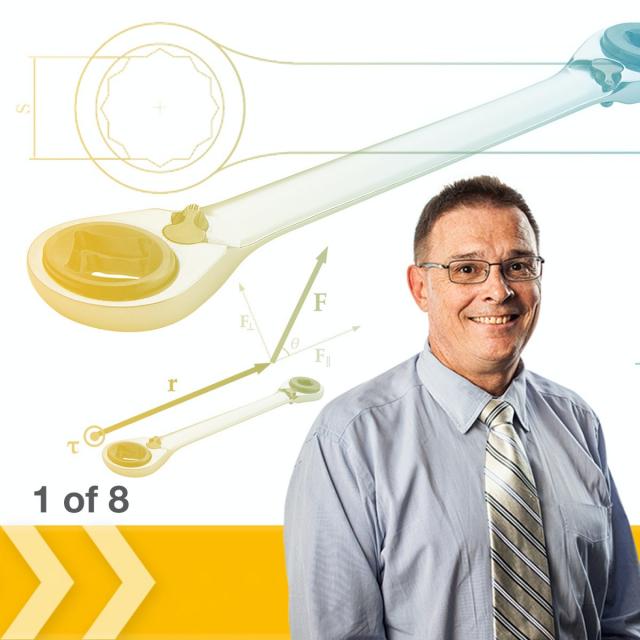
This course provides an introduction to the most powerful engineering principles you will ever learn - Thermodynamics: the science of transferring energy from one place or form to another place or form. We will introduce the tools you need to analyze energy systems from solar panels, to engines, to insulated coffee mugs. More specifically, we will cover the topics of mass and energy conservation principles; first law analysis of control mass and control volume systems; properties and behavior of pure substances; and applications to thermodynamic systems operating at steady state conditions.

Class Deals by MOOC List - Click here and see Coursera's Active Discounts, Deals, and Promo Codes.

Course Format
The class consists of lecture videos, which average 8 to 12 minutes in length. The videos include integrated In-Video Quiz questions. There are also quizzes at the end of each section, which include problems to practice your analytical skills that are not part of video lectures. There are no exams.
If you follow the suggested deadlines, lectures and quizzes will each take approximately ~3 hours per week each, for a total of ~6 hours per week.
Suggested Reading: Fundamentals of Thermodynamics

Syllabus

WEEK 1
In this module, we frame the context of energy and power supply and demand around the world. You will learn that understanding and correctly using units are critical skills for successfully analyzing energy systems. It is also important to be able to identify and categorize systems as “open” or “closed” and “steady state” or “transient”. Thermodynamics is a topic that is very notation intense, but the notation is very helpful as a check on our assumptions and our mathematics. Additionally, in this module we will refresh our understanding of some common thermodynamic properties.

WEEK 2
In this module, we will get started with the fundamental definitions for energy transfer, including the definitions of work transfer and heat transfer. We will also show (by example) how state diagrams are valuable for explaining energy transfer processes. Then, we have all the tools we need to define the 1st Law of Thermodynamics also called the Conservation of Energy. Your second assignment will emphasize these principles and skills.

WEEK 3
In this module, we introduce our first abstract concepts of thermodynamics properties – including the specific heats, internal energy, and enthalpy. It will take some time for you to become familiar with what these properties represent and how we use these properties. For example, internal energy and enthalpy are related to temperature and pressure, but they are two distinct thermodynamic properties. One of the hardest concepts of thermodynamics is relating the independent thermodynamic properties to each other. We have to become experts at these state relations in order to be successful in our analysis of energy systems. There are several common approximations, including the ideal gas model, which we will use in this class. The key to determining thermodynamic properties is practice, practice, practice! Do as many examples as you can.

WEEK 4
In this module we introduce the combined application of the Conservation of Mass and the Conservation of Energy for system analysis. We also review the common assumptions for typical energy transfer devices, like heat exchangers, pumps and turbines. Together these components will form the basis for all power plants used around the world.

WEEK 5
In this module, we tackle some of the most difficult systems to analyze – transient or time-varying systems. Any system where the energy transfer changes as a function of time requires transient analysis. Not only are these difficult problems to analyze, they are also difficult systems to design and interrogate. Some important transient problems include the start-up of a gas turbine or an internal combustion engine. Such transients are becoming more integral to the electrical power grid due to the introduction of more renewable power sources which are also more intermittent. These are very relevant and timely topics for the stationary power sector.

WEEK 6
In this module, we introduce some of the concepts of the Second Law of Thermodynamics. We will only discuss a small fraction of the vast material that falls under the topic of the Second Law. I encourage you to explore beyond our course material for very interesting discussions on the outcomes of the Second Law which include entropy, the absolute temperature scale and Carnot cycles. The most important aspect for our class, is that the Second Law provides a basis for defining the theoretical maximums and minimums for processes. Using these limits, we can define device and system efficiencies. We demonstrate these limits with examples of basic power plants. A good “take-home” exercise is to apply these limits to some of the devices and systems you see every day around you.

WEEK 7
In this module we focus on in-depth analysis of a Rankine power plant. The Rankine power plant is the fundamental design for stationary power generation when the working fluid is water (or steam) and the energy carrier is nuclear, coal, gas, or thermal solar power. We also learn that conventional power plants generate a lot of waste heat! Co-generation is a great way to use that waste heat. Can you think of a few ways you might capture waste heat and use it productively? Then you might have your next environmentally sustainable business venture!

WEEK 8
In this module, we have a brief discussion of energy carriers – including fossil fuels and battery materials. These lectures highlight the thermodynamic properties of these energy carriers and storage materials that make these systems so attractive and at the same time, so difficult to replace. As this is our last module of the course, I hope you have enjoyed this Introduction to Thermodynamics and that you have learned some new skills. Good luck on all your adventures in energy systems!,
Go to Class
MOOC List is learner-supported. When you buy through links on our site, we may earn an affiliate commission.

Related Courses

Ideal Gases (Coursera) Coursera
University of Colorado Boulder

Ideal Gases (Coursera)

Course 3 of Statistical Thermodynamics, Ideal Gases, explores the behavior of systems when intermolecular forces are not important. This done by evaluating the appropriate partition functions for translational, rotational, vibrational and/or electronic motion. We start with pure ideal gases including monatomic, diatomic and polyatomic species.

Jun 8th 2026
3 Weeks
Greening the Economy: Sustainable Cities (Coursera) Coursera
Lund University

Greening the Economy: Sustainable Cities (Coursera)

How can we shape urban development towards sustainable and prosperous futures? This course will explore sustainable cities as engines for greening the economy. We place cities in the context of sustainable urban transformation and climate change. Sustainable urban transformation refers to structural transformation processes – multi-dimensional and radical change – that can effectively direct urban development towards ambitious sustainability and climate goals. We will connect the key trends of urbanization, decarbonisation and sustainability.

Jun 8th 2026
5-12 Weeks
Kinetics: Studying Spacecraft Motion (Coursera) Coursera
University of Colorado Boulder

Kinetics: Studying Spacecraft Motion (Coursera)

As they tumble through space, objects like spacecraft move in dynamical ways. Understanding and predicting the equations that represent that motion is critical to the safety and efficacy of spacecraft mission development. Kinetics: Modeling the Motions of Spacecraft trains your skills in topics like rigid body angular momentum and kinetic energy expression shown in a coordinate frame agnostic manner, single and dual rigid body systems tumbling without the forces of external torque, how differential gravity across a rigid body is approximated to the first order to study disturbances in both the attitude and orbital motion, and how these systems change when general momentum exchange devices are introduced.

Jun 8th 2026
4 Weeks
Energy, Environment, and Everyday Life (Coursera) Coursera
University of Illinois at Urbana-Champaign

Energy, Environment, and Everyday Life (Coursera)

This course teaches you everything you need to know about energy, the environment, and at least a number of things in everyday life. It starts by talking about energy itself and where it comes from. This includes how much we have, who has it, who uses it, and what that all means. The video clips are produced in a fast-paced multimedia format during which Professor Ruzic throws in fun and demonstrations. There are multiple-choice questions to check your understanding and some more in-depth exercises to guide you deeper into the subject.

Jun 8th 2026
5-12 Weeks
Control of Nonlinear Spacecraft Attitude Motion (Coursera) Coursera
University of Colorado Boulder

Control of Nonlinear Spacecraft Attitude Motion (Coursera)

This course trains you in the skills needed to program specific orientation and achieve precise aiming goals for spacecraft moving through three dimensional space. First, we cover stability definitions of nonlinear dynamical systems, covering the difference between local and global stability. We then analyze and apply Lyapunov's Direct Method to prove these stability properties, and develop a nonlinear 3-axis attitude pointing control law using Lyapunov theory. Finally, we look at alternate feedback control laws and closed loop dynamics.

Jun 8th 2026
4 Weeks
Oil & Gas Industry Operations and Markets (Coursera) Coursera
Duke University

Oil & Gas Industry Operations and Markets (Coursera)

The oil and gas industry has an enormous impact on all aspects of daily life. Individuals, corporations, and national governments make financial and policy decisions based on the cost, use, and availability of these two natural resources. This two-week course looks at the two most fundamental aspects of the oil and gas industry, its operations and markets, each of which is addressed as a separate module in the course.

Jun 10th 2026
2 Weeks
Modern Robotics, Course 6: Capstone Project, Mobile Manipulation (Coursera) Coursera
Northwestern University

Modern Robotics, Course 6: Capstone Project, Mobile Manipulation (Coursera)

The capstone project of the Modern Robotics specialization is on mobile manipulation: simultaneously controlling the motion of a wheeled mobile base and its robot arm to achieve a manipulation task. This project integrates several topics from the specialization, including trajectory planning, odometry for mobile robots, and feedback control. Beginning from the Modern Robotics software library provided to you (written in Python, Mathematica, and MATLAB), and software you have written for previous courses, you will develop software to plan and control the motion of a mobile manipulator to perform a pick and place task.

Jun 8th 2026
4 Weeks
Introduction to Sustainability (Coursera) Coursera
University of Illinois at Urbana-Champaign

Introduction to Sustainability (Coursera)

This course introduces the academic approach of Sustainability and explores how today’s human societies can endure in the face of global change, ecosystem degradation and resource limitations. The course focuses on key knowledge areas of sustainability theory and practice, including population, ecosystems, global change, energy, agriculture, water, environmental economics and policy, ethics, and cultural history.

Jun 8th 2026
5-12 Weeks
Tesoros de la Física y sus Descubridores I (Coursera) Coursera
Universidad de los Andes

Tesoros de la Física y sus Descubridores I (Coursera)

¿Sabes cómo vuelan los aviones, tan pesados y no se caen mientras vuelan? ¿Sabes que viajamos por el espacio sobre el planeta Tierra que se traslada y gira muy rápido y no lo percibimos? ¿O acaso, notas efectos de su movimiento? ¿Cuál es nuestro lugar en el universo? ¿Podemos viajar en el tiempo? ¡Preguntas, muchas preguntas! Con espíritu de descubridores nuestra curiosidad nos motiva a buscar respuestas, a explorar nuestro entorno, a entrar a lo desconocido y hallar nuevo conocimiento.

Jun 8th 2026
5-12 Weeks
Understanding Modern Physics I: Relativity and Cosmology (Coursera) Coursera
The Hong Kong University of Science and Technology - HKUST

Understanding Modern Physics I: Relativity and Cosmology (Coursera)

The 20th century was known as the century of physics. In the past 120 years, concepts such as space, time, energy, entropy and particles were understood to much deeper levels. New paradigms of thinking such as relativity and quantum mechanics emerged. This course is the first course in the Understanding Modern Physics series, which covers an introduction to special relativity, general relativity and cosmology.

Jun 8th 2026
5-12 Weeks
Physics 102 - Electric Potential and DC Circuits (Coursera) Coursera
Rice University

Physics 102 - Electric Potential and DC Circuits (Coursera)

This course serves as an introduction to the physics of electricity and magnetism. Upon completion, learners will have an understanding of how the forces between electric charges are described by fields, and how these fields are related to electrical circuits. They will gain experience in solving physics problems with tools such as graphical analysis, algebra, vector analysis, and calculus.

Jun 8th 2026
3 Weeks