Korean Music, A Philosophical Exploration (Coursera)

Korean Music, A Philosophical Exploration (Coursera)

This course introduces Korean philosophy projected into the subject of Korean music, especially K-POP, which is drawing global attention today. We confirm that Korea's unique philosophy was the basis for maintaining originality while being universally accepted by many people, and seek the role of philosophy for the continuous development and spread of Korean music.

Class Deals by MOOC List - Click here and see Coursera's Active Discounts, Deals, and Promo Codes.

What you'll learn

  • The students can learn about the various aspects of Korean music and its cultural significance.
  • The students can understand the differences between K-pop and traditional Korean music (Gugak) and what makes Korean music unique.
  • The students can learn about the historical and cultural influences on Korean music and how it has evolved over time.
  • The students can explore the emotional and symbolic meanings of Korean songs and how they relate to Korean culture and identity.

Syllabus

Philosophizing through Korean Music
In this week, students will explore the rich and diverse world of Korean music, encompassing both contemporary K-pop and traditional Korean music, known as Gukak. They will gain an appreciation for the connections and continuity between these seemingly disparate genres, recognizing how elements of traditional Korean music influence and inform the contemporary K-pop sound.

Evolving Identity of Korean Music
In this week, students will explore the concept of the "Korean Matrix" and how this course defines cultural boundaries, shedding light on the factors that shape and define Korean culture. Additionally, students will gain insights into the open-mindedness of Koreans towards embracing musical influences from various regions, including India, the Middle East, and China.

Korean Music Viewed through Cultural Boundaries
In this week, students will discover how Koreans have historically embraced foreign musical influences through the Taepyeongso, showcasing their openness to external ideas and sounds. will introduce students to ancient indigenous Korean instruments, specifically the Geomungo and Gayageum, highlighting their unique cultural significance and contributions to Korean music. Lastly, this week will explore the intriguing paradox of Korean culture, where they have demonstrated an acceptance of foreign ideas and music while preserving their own rich traditions.

Korean Music and Emotions
In this week, students will engage with Korean emotions like Han which can be felt through the famous song Arirang and Heung which can be heard in songs like Ong-Heya. Students will learn that Han and Heung are both complementing and contrasting emotions which reflects a unique feature of Korean emotionality.

Korean Music and Morality
In this week, students will first be introduced to Confucian ritual music and court music, gaining insight into the traditional ceremonial and royal musical practices of Korea.Furthermore, this week will delve into various theories, most notably Mencius’s music theory that explores the intricate relationship between music and morality, shedding light on how music can influence ethical values and behaviors.

Korean Music and Language
In this week, students will learn about Jeonganbo – Korea's unique musical notation system. Learners will also understand more about the Koreanness in Korean music and the connection between folk music and the Korean language. Additionally, students will be exposed to concepts such as Jangdan and how Daoist music theory might explain Korean musical innovation.

Let's Talk about Korean Music and Philosophy
This week is a round table with the lecturers and the student research assistants who helped develop this course. In this conversation the students will ask questions about topics ranging from Korean emotions, different models of history, to additional explanation about Jeonganbo (Korean music notation). This conversation serves to both summarize and dig deeper into the contents of the course previously covered.
Go to Class
MOOC List is learner-supported. When you buy through links on our site, we may earn an affiliate commission.

Related Courses

How Music Can Change Your Life (Coursera) Coursera
University of Melbourne

How Music Can Change Your Life (Coursera)

Did you ever wonder how music works? This course provides free video, audio and journal resources that explain six basic principles about how music can influence individual and community health and wellbeing. From biology and neuroscience, to psychotherapy and politics, the ways we engage with music can make all the difference. Music has always played an integral role in the lives of individuals and communities all around the globe.

Aug 17th 2026
5-12 Weeks
Copyright for Multimedia (Coursera) Coursera
Duke University,Emory University,University of North Carolina

Copyright for Multimedia (Coursera)

Copyright questions about different formats (data, images, music and video) can be especially difficult. Sometimes the law specifically distinguishes between these different formats, and in most cases there are media-specific considerations that impact a copyright analysis. In this course we will look at four different media, paying special attention to the unique issues for each one and the kinds of information that is important when making copyright decisions for each type of material.

Aug 17th 2026
4 Weeks
Exploring Beethoven’s Piano Sonatas Part 2 (Coursera) Coursera
Curtis Institute of Music

Exploring Beethoven’s Piano Sonatas Part 2 (Coursera)

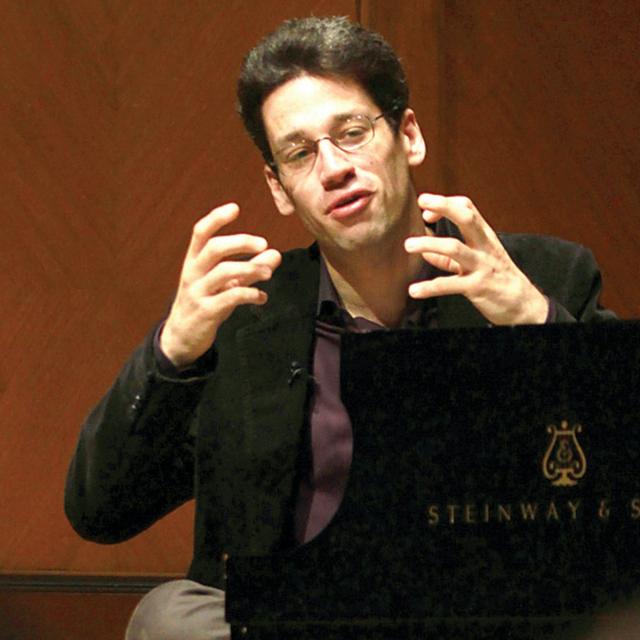
Welcome to Part 2 of Exploring Beethoven's Piano Sonatas! I'm delighted to launch another set of new lectures of this course as Part 2. As before, this class is meant for people of all levels of experience with Beethoven's music (including no experience at all!). Remember that you are able to watch the lectures as many times as you like, at whatever pace is comfortable for you.

Aug 10th 2026
5-12 Weeks
First Step Korean (Coursera) Coursera
Yonsei University

First Step Korean (Coursera)

This is an elementary-level Korean language course, consisting of 5 lessons with 4 units, and covers 4 skills: reading, writing, listening and speaking. The main topics include basic expressions used in everyday life, such as greetings, introducing yourself, talking about your family and a daily life and so on. Each lesson covers dialogues, pronunciation, vocabulary, grammar, quizzes and role-plays.

Aug 10th 2026
5-12 Weeks
The Art of Vocal Production (Coursera) Coursera
Berklee College of Music

The Art of Vocal Production (Coursera)

This course addresses recorded vocal performances and the technologies used to highlight and support them in modern record production and mixes. Most of us know that vocals serve as the focal point of modern recordings but many do not know the tools used or when the tools are used best in modern record production. The course begins with simple vocal placement in a mix, where you will also learn the fundamentals of compression and equalization. You’ll further study delays and reverbs before moving to advanced concepts in audio editing, synthetic processing, automatic & graphic pitch correction, time compression, time expansion, flex and elastic audio.

Aug 17th 2026
4 Weeks
Understanding the Music Business: What is Music Worth? (Coursera) Coursera
Vanderbilt University

Understanding the Music Business: What is Music Worth? (Coursera)

This course will examine the music industry in the United States, with the unique perspective gained by Vanderbilt University’s location in Nashville, TN. Nashville is a major center of music in the United States, and the music created here has a global reach, particularly in the country, rock, pop, singer-songwriter, and Americana genres. However, students will learn that the basic principles of recording, marketing, copyright, licensing, and live performance are the same, regardless of musical style or genre.

Aug 17th 2026
5-12 Weeks
Arranging for Songwriters (Coursera) Coursera
Berklee College of Music

Arranging for Songwriters (Coursera)

You've created a song. You wrote the lyrics, decided on the melody, and maybe even recorded a simple demo. Now what? If you have a basic knowledge of how to use a digital audio workstation (DAW) and are passionate about being a songwriter, this course will help you take your song from a simple recording on your phone to a fully arranged song ready for the recording studio.

Aug 10th 2026
4 Weeks
The Blues: Understanding and Performing an American Art Form (Coursera) Coursera
University of Rochester

The Blues: Understanding and Performing an American Art Form (Coursera)

The blues is an American art form and the most important musical form in jazz. Although there are other formal paradigms of the blues, such as 8-bar or 16-bar, this course focuses on different incarnations of the 12-bar blues. There are considerable differences between Early Jazz blues, Swing blues, Bebop blues, Modal blues, and Post Bop blues.

Aug 10th 2026
5-12 Weeks
Music for Wellness (Coursera) Coursera
Berklee College of Music

Music for Wellness (Coursera)

You love music. You listen to music all the time. Maybe you sing, play an instrument, or compose music. You don’t need to have musical talent to use music to enhance your well being, and even your health. Learn simple techniques to enrich your mind, body, and spirit through music. The methods can be applied in your daily life, particularly when you are feeling down or stressed out.

Aug 17th 2026
4 Weeks
History of Rock, Part Two (Coursera) Coursera
University of Rochester

History of Rock, Part Two (Coursera)

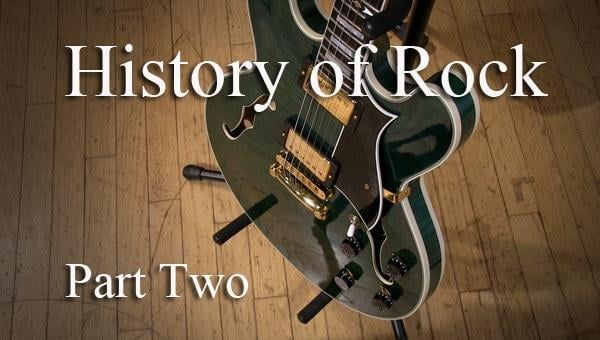
This course, part 2 of a 2-course sequence, examines the history of rock, primarily as it unfolded in the United States, from the early 1970s to the early 1990s. This course covers the music of Led Zeppelin, the Allman Brothers, Carole King, Bob Marley, the Sex Pistols, Donna Summer, Michael Jackson, Madonna, Prince, Metallica, Run-DMC, and Nirvana, and many more artists, with an emphasis both on cultural context and on the music itself. We will also explore how developments in the music business and in technology helped shape the ways in which styles developed.

Aug 3rd 2026
5-12 Weeks