Fundamentals of Music Theory (Coursera)

Fundamentals of Music Theory (Coursera)

This course will introduce students to the theory of music, providing them with the skills needed to read and write Western music notation, as well as to understand, analyse, and listen informedly. It will cover material such as pitEli Appleby-Donaldches and scales, intervals, clefs, rhythm, form, meter, phrases and cadences, and basic harmony.

Class Deals by MOOC List - Click here and see Coursera's Active Discounts, Deals, and Promo Codes.

This course covers the fundamentals of Western music theory, from the absolute basics to some more advanced concepts and, as such, is the perfect course for beginners and more experienced musicians alike.

Syllabus

WEEK 1: Pitches, Scales, Modes and Chords
WEEK 2: Keys, Minor Scales, Intervals and Clefs
WEEK 3: Rhythm and Form
WEEK 4: Harmony 1: Functional Harmony
WEEK 5: Harmony 2: Inversions, Cadences and Sequences
WEEK 6: Final Exam
Go to Class
MOOC List is learner-supported. When you buy through links on our site, we may earn an affiliate commission.

Related Courses

Piano Scales for Modern Music (Coursera) Coursera
Berklee College of Music

Piano Scales for Modern Music (Coursera)

Scales are an essential part of musical study and are a vital part of an effective practice routine. But as you develop your musicianship, scales can also lead to better improvisation and understanding of melodic structure. This course will provide you with a new look at practicing and using scales to guide your musical creativity. You will start by learning standard and non-standard fingering for scales commonly used in popular music, before using these scales to create new melodies. In addition to the examples covered in the course, you will also be given extra exercises and backing tracks to help you improve your playing and improvising.

Nov 16th 2026
4 Weeks
FL Studio Basics (Coursera) Coursera
Berklee College of Music

FL Studio Basics (Coursera)

FL Studio is one of the most powerful digital audio workstations (DAW) on the market today. This music software has come a long way since entering the market as “FruityLoops” at the turn of the century: It now has functions that can take your music project from a scratch track to a mastered mix, and even allows you to create visuals to accompany your audio.

Nov 16th 2026
4 Weeks
Art of the MOOC: Experiments with Sound (Coursera) Coursera
Duke University,Berlin University of the Arts - UdK

Art of the MOOC: Experiments with Sound (Coursera)

Students of this course may try their hand at their own sound interventions and musical compositions, or simply focus on learning more about diverse musical traditions, sonic experimentation, and acoustic phenomena in everyday life. Designed by artist and Duke professor, Pedro Lasch, and UdK composer Mathias Hinke, this course is also co-taught by scholar and musician Jace Clayton (DJ Rupture) and curator Candice Hopkins (Documenta 14).

Nov 16th 2026
5-12 Weeks
Introdução à Guitarra (Coursera) Coursera
Berklee College of Music

Introdução à Guitarra (Coursera)

Compreenda os fundamentos necessários para começar a tocar guitarra elétrica ou acústica (violão). Você aprenderá uma abordagem fácil para tocar rapidamente, por meio de uma combinação de exploração do instrumento, técnicas de execução e teoria musical básica.

Nov 9th 2026
5-12 Weeks
Introducción a la guitarra (Coursera) Coursera
Berklee College of Music

Introducción a la guitarra (Coursera)

Aprende los elementos esenciales necesarios para empezar a tocar la guitarra acústica o eléctrica. Aprenderás un enfoque fácil que te hará tocar rápidamente a través de una combinación de la exploración del instrumento, la técnica de ejecución y la teoría básica de la música.

Nov 16th 2026
5-12 Weeks
Teaching Popular Music in the Classroom (Coursera) Coursera
Berklee College of Music

Teaching Popular Music in the Classroom (Coursera)

Teaching Popular Music in the Classroom explores approaches to teaching popular music from culturally rich communities in the United States. Students in the course will learn teaching methods that engage youth with the basics of improvisation, technology, songwriting, arranging film score, and writing to the strengths of small bands. The course models how to integrate principles of authentic cultural relevance and positive youth development with contemporary music instruction, while providing tools for assessing and documenting learning and program progress.

Nov 16th 2026
4 Weeks
Understanding the Music Business: What is Music Worth? (Coursera) Coursera
Vanderbilt University

Understanding the Music Business: What is Music Worth? (Coursera)

This course will examine the music industry in the United States, with the unique perspective gained by Vanderbilt University’s location in Nashville, TN. Nashville is a major center of music in the United States, and the music created here has a global reach, particularly in the country, rock, pop, singer-songwriter, and Americana genres. However, students will learn that the basic principles of recording, marketing, copyright, licensing, and live performance are the same, regardless of musical style or genre.

Nov 9th 2026
5-12 Weeks
Intimacy of Creativity: Entering the Minds of Composers (Coursera) Coursera
The Hong Kong University of Science and Technology - HKUST

Intimacy of Creativity: Entering the Minds of Composers (Coursera)

Bright Sheng guides us through three works — by Brahms, Beethoven, and Sheng — for an intimate look inside the composer's mind. This course strives to give students a new appreciation of music, based on an understanding of the craft behind each work. This class is perfect for those wanting to gain a unique perspective on the creative process of music composition, while challenging traditional notions of how composers approach formal structure, melody, and harmony.

Nov 16th 2026
3 Weeks
Music as Biology: What We Like to Hear and Why (Coursera) Coursera
Duke University

Music as Biology: What We Like to Hear and Why (Coursera)

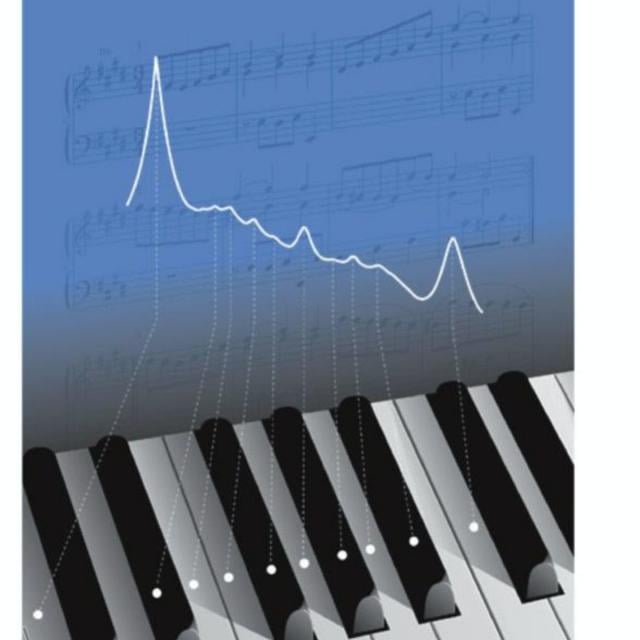
The course will explore the tone combinations that humans consider consonant or dissonant, the scales we use, and the emotions music elicits, all of which provide a rich set of data for exploring music and auditory aesthetics in a biological framework. Analyses of speech and musical databases are consistent with the idea that the chromatic scale (the set of tones used by humans to create music), consonance and dissonance, worldwide preferences for a few dozen scales from the billions that are possible, and the emotions elicited by music in different cultures all stem from the relative similarity of musical tonalities and the characteristics of voiced (tonal) speech.

Nov 16th 2026
5-12 Weeks
Songwriting: Writing the Lyrics (Coursera) Coursera
Berklee College of Music

Songwriting: Writing the Lyrics (Coursera)

There’s a songwriter lurking somewhere inside you, peeking around corners, wondering if it’s safe to come out. Now it is. This course is an invitation to let your inner songwriter step into the sunlight. All it takes is a simple “yes” and you’ll be climbing that windy hill, marveling at the view. If you haven’t written any or many songs, this course will show you an efficient, effective process for tailoring songs to express your ideas and emotions. If you have, you’ll look at your process differently, taking control of aspects of the process you may have not noticed.

Nov 2nd 2026
5-12 Weeks
Music and Social Action (Coursera) Coursera
Yale University

Music and Social Action (Coursera)

What is a musician’s response to the condition of the world? Do musicians have an obligation and an opportunity to serve the needs of the world with their musicianship? At a time of crisis for the classical music profession, with a changing commercial landscape, a shrinking audience base, and a contraction in the number of professional orchestras, how does a young musician construct a career today? Are we looking at a dying art form or a moment of reinvigoration?

Nov 2nd 2026
5-12 Weeks
Music Business Foundations (Coursera) Coursera
Berklee College of Music

Music Business Foundations (Coursera)

This course has been developed to provide students with the latest instruction on the best way for creators, consumers, and facilitators to navigate the resurgence of one of the world’s most exciting industries: the music business. Three things are clear about today’s music industry: The consumption of music is expanding at the greatest rate in history and from the most portals ever imagined, the cost of producing music is decreasing, and the number of artists creating and seeking to expose their work and develop careers through the Internet has increased dramatically.

Nov 16th 2026
4 Weeks