Electronic Music Performance Techniques (Coursera)

Electronic Music Performance Techniques (Coursera)

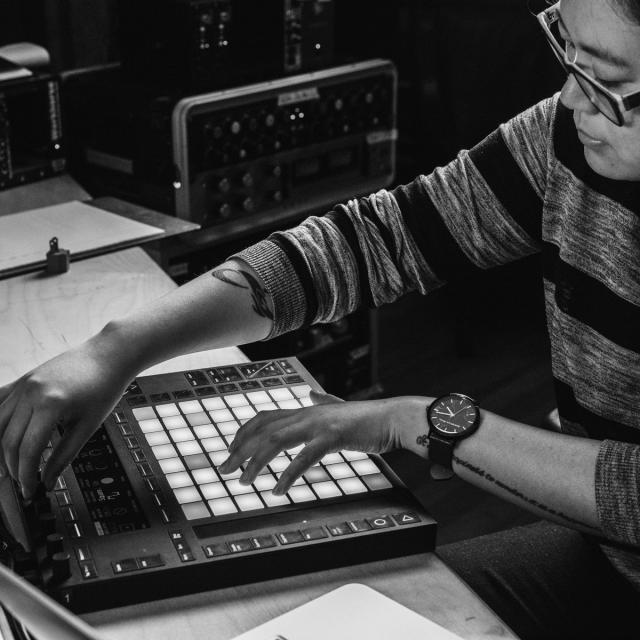
From the Moog analog synthesizers in the 1960s to the contemporary usage of computers, performance controllers, and mobile devices, Electronic Digital Instruments (EDIs) have long been capable of offering artists a new range of musical expression. In this one-of-a-kind course, you'll learn the essential skills you need to perform on an EDI.

Class Deals by MOOC List - Click here and see Coursera's Active Discounts, Deals, and Promo Codes.

Your instructor is EDI musician and Berklee College of Music's Electronic Production and Design professor Rishabh Rajan.
He will take you through the basics of EDI performance and give you pointers on how to build an arrangement on your EDI. Whether you have just ordered your first pad-controller or have already been experimenting with electronic music, this class will teach you the basics of performing and arranging on the EDI. You will start by learning how to build drum beats and read drum notation. Then you will create bass lines and harmonic accompaniment. Finally, you will learn how to live loop all of these elements and perform an arrangement for a live audience.
Course 4 of 4 in the Electronic Music Production Specialization.

Syllabus

WEEK 1
Welcome to Electronic Music Performance Techniques
Welcome to the course! Here we will cover all the details about the course and what you'll need to know to get the most out of your experience.
Drum Patterns
In this first lesson, we will practice several basic drum patterns as well as look at how to create more complex drum tracks for your original songs. We will also discuss how you can program a song into your EDI to discover new ideas. Finally, we will learn how to live loop drum patterns using Ableton Live.

WEEK 2
Harmonic Accompaniment
In this second lesson, we will look at how to play harmonic accompaniment on the EDI. We will play through several basic chord progressions and learn to play extended chords such as 7th's and 9th's. Finally, we will practice recording and looping harmonic parts.

WEEK 3
Melody and Bass Line
Now that we have learned some basics on the EDI, it is time to start building a composition. In this lesson we will discuss how to develop an interesting bass line as well as how to improvise melodies using the Minor Blues Scale. By the end of the lesson, you will be able to create your own bass line for your original composition and practice improvising melodies on top of it.

WEEK 4
Performing an Arrangement
In this lesson we will put together everything we have learned so far to create an arrangement to perform in front of an audience. We will discuss how to create our own sounds on Ableton and we will practice creating arrangements that build and entertain our audience. By the end of this lesson, you will be able to perform your own arrangement.

Go to Class
MOOC List is learner-supported. When you buy through links on our site, we may earn an affiliate commission.

Related Courses

Guitar for Beginners (Coursera) Coursera
Berklee College of Music

Guitar for Beginners (Coursera)

Grasp the essentials needed to begin playing acoustic or electric guitar. You'll learn an easy approach to get you playing quickly, through a combination of exploring the instrument, performance technique, and basic music theory. For students who have long thought about picking up the acoustic or electric guitar, this course will provide an easy-access foundation that will get you playing.

Oct 26th 2026
5-12 Weeks
20世纪西方音乐 Western Music in the 20th Century (Coursera) Coursera
Peking University

20世纪西方音乐 Western Music in the 20th Century (Coursera)

课程所涉不仅涵盖古典音乐如新古典主义、表现主义、民族主义等流派,也对爵士乐、摇滚乐与流行音乐在20世纪的风格情状投以深切关注;在将包括中国音乐在内的世界各国民族民间音乐纳入20世纪大背景予以研究探索之同时,关于大型综合艺术品例如歌剧、音乐剧、电影音乐的考察与分析,也设为专题,绝无偏废。

Oct 19th 2026
5-12 Weeks
Introduction to Italian Opera (Coursera) Coursera
Dartmouth College

Introduction to Italian Opera (Coursera)

This course gives us an introduction to Italian Opera right from its very beginning in Florence, Italy. You will understand how Mozart’s opera is the midpoint of opera. It explores how music tells the audience about the characters' thoughts through musical gestures. It also sheds light on the importance of close listening to understand opera thoroughly.

Oct 26th 2026
5-12 Weeks
Music as Biology: What We Like to Hear and Why (Coursera) Coursera
Duke University

Music as Biology: What We Like to Hear and Why (Coursera)

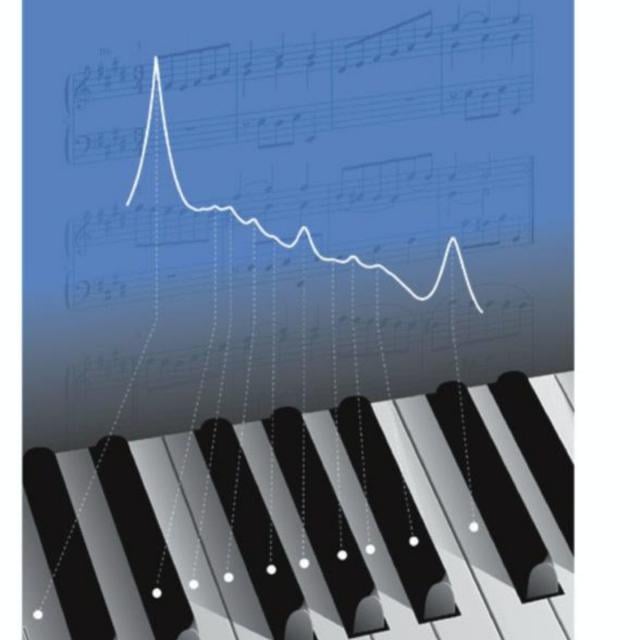
The course will explore the tone combinations that humans consider consonant or dissonant, the scales we use, and the emotions music elicits, all of which provide a rich set of data for exploring music and auditory aesthetics in a biological framework. Analyses of speech and musical databases are consistent with the idea that the chromatic scale (the set of tones used by humans to create music), consonance and dissonance, worldwide preferences for a few dozen scales from the billions that are possible, and the emotions elicited by music in different cultures all stem from the relative similarity of musical tonalities and the characteristics of voiced (tonal) speech.

Oct 19th 2026
5-12 Weeks
Fundamentals of Audio and Music Engineering: Part 1 Musical Sound & Electronics (Coursera) Coursera
University of Rochester

Fundamentals of Audio and Music Engineering: Part 1 Musical Sound & Electronics (Coursera)

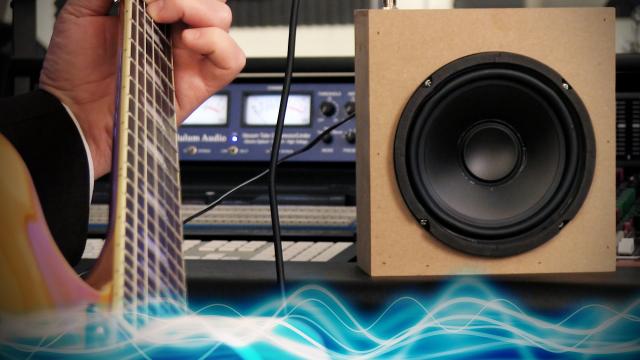
In this course students learn the basic concepts of acoustics and electronics and how they can applied to understand musical sound and make music with electronic instruments. Topics include: sound waves, musical sound, basic electronics, and applications of these basic principles in amplifiers and speaker design.

Oct 26th 2026
5-12 Weeks
Desarrollando tu musicalidad (Coursera) Coursera
Berklee College of Music,Inter-American Development Bank - IDB

Desarrollando tu musicalidad (Coursera)

Aprende los conceptos básicos y enfoques necesarios para entender, crear e interpretar música contemporánea. Esta obra fue financiada con una donación del Banco Inter-Americano de Desarrollo con recursos del Fondo Coreano para la Reducción de la Pobreza. Las opiniones expresadas en esta obra son exclusivamente de los autores y no necesariamente reflejan el punto de vista del Banco Interamericano de Desarrollo, de su Directorio Ejecutivo ni de los países que representa.

Oct 26th 2026
5-12 Weeks
Pro Tools Basics (Coursera) Coursera
Berklee College of Music

Pro Tools Basics (Coursera)

Producing music is an incredibly creative process, and knowing the tools of the trade is essential in order to transmit the musical ideas in your head into the DAW in a creative and uninhibited way. Whether you have used a computer to create music before, or you have been curious about production for years, this 4-week course will give you an introductory look into the world of Avid Pro Tools and Pro Tools First.

Oct 12th 2026
4 Weeks
Teaching Popular Music in the Classroom (Coursera) Coursera
Berklee College of Music

Teaching Popular Music in the Classroom (Coursera)

Teaching Popular Music in the Classroom explores approaches to teaching popular music from culturally rich communities in the United States. Students in the course will learn teaching methods that engage youth with the basics of improvisation, technology, songwriting, arranging film score, and writing to the strengths of small bands. The course models how to integrate principles of authentic cultural relevance and positive youth development with contemporary music instruction, while providing tools for assessing and documenting learning and program progress.

Oct 19th 2026
4 Weeks
In the Studio: Postwar Abstract Painting (Coursera) Coursera
The Museum of Modern Art

In the Studio: Postwar Abstract Painting (Coursera)

Want to know how some of the 20th century’s most celebrated artists made abstract paintings? This course offers an in-depth, hands-on look at the materials, techniques, and thinking of seven New York School artists, including Willem de Kooning, Yayoi Kusama, Agnes Martin, Barnett Newman, Jackson Pollock, Ad Reinhardt, and Mark Rothko. Through studio demonstrations and gallery walkthroughs, you’ll form a deeper understanding of what a studio practice means and how ideas develop from close looking, and you’ll gain a sensitivity to the physical qualities of paint.

Oct 26th 2026
5-12 Weeks
Exploring Beethoven's Piano Sonatas Part 4 (Coursera) Coursera
Curtis Institute of Music

Exploring Beethoven's Piano Sonatas Part 4 (Coursera)

Please join us for Part 4 of Exploring Beethoven's Piano Sonatas course, taught by Curtis faculty member and extraordinary concert artist, Jonathan Biss. This course is new and contains separate sets of lectures and sonatas that we not previously discussed. Specifically, in Part 4, we will cover Beethoven's Piano Sonatas Op. 2, No. 2, Op. 10, No. 3, Op. 28 and Op. 110.

Oct 23rd 2026
5-12 Weeks