Creating Sounds for Electronic Music (Coursera)

Creating Sounds for Electronic Music (Coursera)

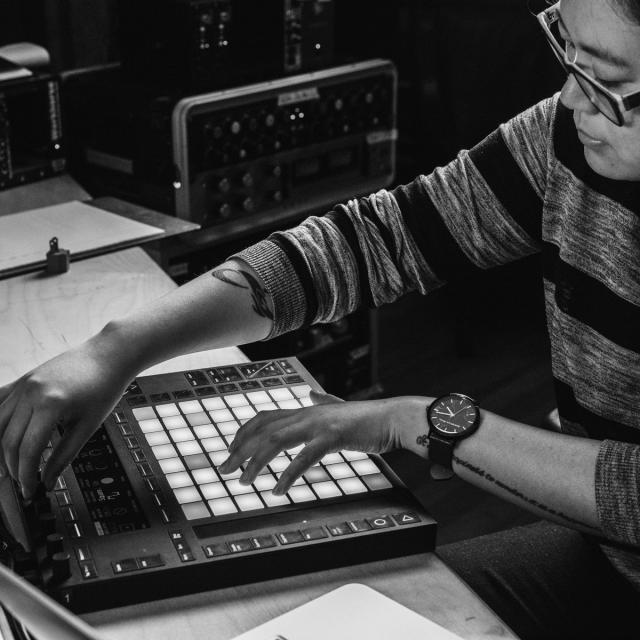
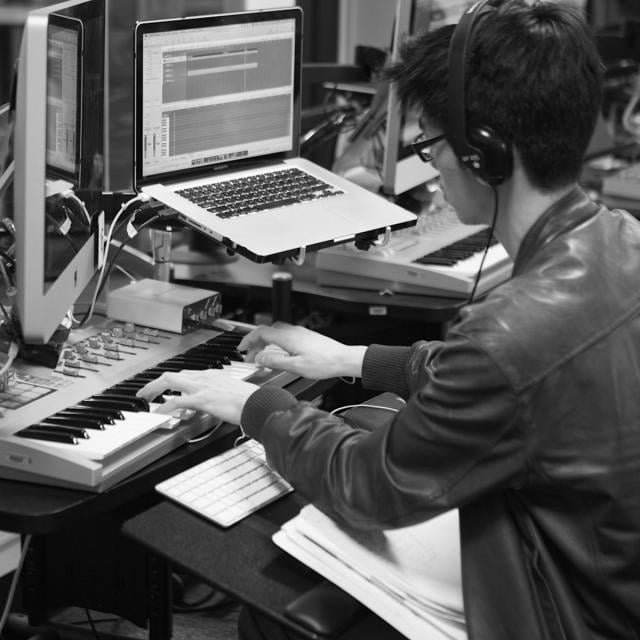
What you’ll achieve: In this project-centered course*, you will create sounds and use them in your own musical compositions. Whether you're an aspiring producer, composer, or hobbyist, this course will help you gain skills in music production and confidence using software synthesizers. Along with your classmates, you will create a massive database of designed sounds, or patches, to use in your compositions. As part of the course, you will work with a free version of FXpansion Strobe 2.

Class Deals by MOOC List - Click here and see Coursera's Active Discounts, Deals, and Promo Codes.

What you’ll need to get started:
This course is designed for learners who are familiar with music production basics, and who have access to some basic music production equipment. Specifically, you should have experience with a digital audio workstation that supports VST, AAX, or AU plugins (Introduction to Music Production or Pro Tools Basics are recommended if you do not have this experience). You will also need a MIDI keyboard or controller (such as an oxygen 8), a digital audio workstation, such as Pro Tools, and FXpansion Strobe 2 (a free 90-day demo will be provided for Coursera learners in this course).
What You Will Learn

  • Create custom synthesizer patches
  • Incorporate your custom patches into your electronic music
  • Improve your music through editing.

Course 3 of 4 in the Electronic Music Production Specialization.

Syllabus

WEEK 1
Welcome to Creating Sounds for Electronic Music!
Welcome to your Berklee course! Before you begin the course, we will cover all the details about the course and what you'll need to know to get the most out of your Berklee course.
Creating A Mock Up
This week, we'll start working in Strobe 2 and create a mock up of our song. We will focus on creating drum and bass patches to use in our songs. We'll also go over the form we will be using for our electronic etudes.

WEEK 2
Creating Draft 1
This week, we'll look at organ, lead, keys, and arpeggiator patches. We'll start researching and adding these patches to our etudes.

WEEK 3
Creating Draft 2
This week, we'll learn about pads, synths, unison, and chord patches. We'll research these patches and add them to our second draft. We'll also take a look at changing something drastic in our etudes.

WEEK 4
Creating Draft 3
This week, we'll create our third draft. We'll add special FX and texture to our etudes. We'll also expand on the 40-measure form and begin to develop our musical ideas further.

Go to Class
MOOC List is learner-supported. When you buy through links on our site, we may earn an affiliate commission.

Related Courses

Understanding the Music Business: What is Music Worth? (Coursera) Coursera
Vanderbilt University

Understanding the Music Business: What is Music Worth? (Coursera)

This course will examine the music industry in the United States, with the unique perspective gained by Vanderbilt University’s location in Nashville, TN. Nashville is a major center of music in the United States, and the music created here has a global reach, particularly in the country, rock, pop, singer-songwriter, and Americana genres. However, students will learn that the basic principles of recording, marketing, copyright, licensing, and live performance are the same, regardless of musical style or genre.

Jun 22nd 2026
5-12 Weeks
Music for Wellness (Coursera) Coursera
Berklee College of Music

Music for Wellness (Coursera)

You love music. You listen to music all the time. Maybe you sing, play an instrument, or compose music. You don’t need to have musical talent to use music to enhance your well being, and even your health. Learn simple techniques to enrich your mind, body, and spirit through music. The methods can be applied in your daily life, particularly when you are feeling down or stressed out.

Jun 22nd 2026
4 Weeks
Singing Popular Music (Coursera) Coursera
Berklee College of Music

Singing Popular Music (Coursera)

You've been studying the greats, working on improving your vocal skills, and building vocal technique. Now it's time to take the next step in your singing career to shine as a vocalist. Singing Popular Music provides you with the essential skills to define your own unique vocal style and sing healthfully. The course begins with devices to support and alter your sound including vowel quality, tone production, and breathing techniques.

Jun 22nd 2026
4 Weeks
Musicianship: Tensions, Harmonic Function, and Modal Interchange (Coursera) Coursera
Berklee College of Music

Musicianship: Tensions, Harmonic Function, and Modal Interchange (Coursera)

After a tremendous response from learners on Coursera, Berklee Online has created a Developing Your Musicianship specialization, and this course is the third course in the series. If you have a general understanding of music theory or if you have completed Developing Your Musicianship I and II, this course will continue to help you understand musical concepts, enabling you to create and perform contemporary music. Taught by Berklee College of Music professor George W. Russell, Jr., the course includes four lessons that delve into an intermediate level of harmony and ear training.

Jun 22nd 2026
4 Weeks
The Music of American English Pronunciation (Coursera) Coursera
University of California, Irvine

The Music of American English Pronunciation (Coursera)

In this third course of The Pronunciation of American English specialization, you will learn and practice the "music" of American English, the features of pronunciation such as stress, rhythm, and intonation that will help improve your listening comprehension as well as your ability to communicate more clearly. Each week you will receive practical advice from successful English learners and practice an effective technique called shadowing to improve your pronunciation of the musical features of English.

Jun 22nd 2026
4 Weeks
Aplicaciones musicales con Arduino (Coursera) Coursera
Universidad Nacional Autónoma de México

Aplicaciones musicales con Arduino (Coursera)

En este curso nos adentraremos en el terreno del hardware. Concretamente, aprenderemos a utilizar la placa de desarrollo de hardware de código abierto, llamada Arduino, enfocándonos en las aplicaciones que esta ofrece para la experimentación musical. De manera más específica, aprenderemos en este curso a construir nuestros propios generadores de sonido, y a partir de ello haremos instalaciones sonoras que nos permitirán expandir nuestra creatividad hacia el terreno de las cosas materiales, y ya no solo de los datos informáticos.

Jun 22nd 2026
4 Weeks
The Art of Music Production (Coursera) Coursera
Berklee College of Music

The Art of Music Production (Coursera)

Explore the art of record production and how to make recordings that other people will love listening to. This course will teach you how to make emotionally moving recordings on almost any recording equipment, including your phone or laptop. The emphasis is on mastering tangible artistic concepts; the gear you use is up to you. You will learn to develop the most important tool in the recording studio: your ears. You will learn to enhance every aspect of your own productions, both sonically and musically, by employing deeper listening skills.

Jun 15th 2026
4 Weeks
Pro Tools Basics (Coursera) Coursera
Berklee College of Music

Pro Tools Basics (Coursera)

Producing music is an incredibly creative process, and knowing the tools of the trade is essential in order to transmit the musical ideas in your head into the DAW in a creative and uninhibited way. Whether you have used a computer to create music before, or you have been curious about production for years, this 4-week course will give you an introductory look into the world of Avid Pro Tools and Pro Tools First.

Jun 22nd 2026
4 Weeks
How Music Can Change Your Life (Coursera) Coursera
University of Melbourne

How Music Can Change Your Life (Coursera)

Did you ever wonder how music works? This course provides free video, audio and journal resources that explain six basic principles about how music can influence individual and community health and wellbeing. From biology and neuroscience, to psychotherapy and politics, the ways we engage with music can make all the difference. Music has always played an integral role in the lives of individuals and communities all around the globe.

Jun 22nd 2026
5-12 Weeks
Jazz Improvisation (Coursera) Coursera
Berklee College of Music

Jazz Improvisation (Coursera)

Learn the basic concepts of improvisation from Gary Burton, one of the most renowned improvisers in the jazz world, including the mental, melodic, and harmonic processes that contribute to the instinctive skills that an improviser puts to use when taking a solo. While many people are fans of jazz and understand that musicians are often “making up” the notes they are playing during a performance, most people—often including musicians, themselves, who are beginning to learn improvising—aren’t clear about what exact processes take place to enable this to happen. The purpose of this course is to introduce the basic concepts of modern improvisation and how to go about mastering the different musical and mental skills involved.

Jun 15th 2026
5-12 Weeks
Audio Signal Processing for Music Applications (Coursera) Coursera
Stanford University,Universitat Pompeu Fabra

Audio Signal Processing for Music Applications (Coursera)

In this course you will learn about audio signal processing methodologies that are specific for music and of use in real applications. We focus on the spectral processing techniques of relevance for the description and transformation of sounds, developing the basic theoretical and practical knowledge with which to analyze, synthesize, transform and describe audio signals in the context of music applications.

Jun 15th 2026
5-12 Weeks
Songwriting: Writing the Lyrics (Coursera) Coursera
Berklee College of Music

Songwriting: Writing the Lyrics (Coursera)

There’s a songwriter lurking somewhere inside you, peeking around corners, wondering if it’s safe to come out. Now it is. This course is an invitation to let your inner songwriter step into the sunlight. All it takes is a simple “yes” and you’ll be climbing that windy hill, marveling at the view. If you haven’t written any or many songs, this course will show you an efficient, effective process for tailoring songs to express your ideas and emotions. If you have, you’ll look at your process differently, taking control of aspects of the process you may have not noticed.

Jun 15th 2026
5-12 Weeks