Jewish Diaspora in Modern China (Coursera)

Offered by Nanjing University,
Jewish Diaspora in Modern China (Coursera)

Jewish Diaspora in China is a unique experience for world Jewry, as China is the only country in Far East that has had Jews living in its society for over 1,000 years. Documentary evidence shows that Jews started to live in China no later than the Tang Dynasty (618–907). The famous Kaifeng Jewish community, which was established in Kaifeng, the Chinese capital of the Song Dynasty (960-1279), is but a best-known example.

Class Deals by MOOC List - Click here and see Coursera's Active Discounts, Deals, and Promo Codes.

However, the largest Jewish Diaspora in China appeared in modern times. In over 100 years, from the mid-19th century to the mid-20th century, about 40,000 Jews came to China and lived in newly-established major port cities such as Hong Kong, Shanghai, Tianjin, and Harbin. Jewish communities composed of these Jews became an essential part of the economic and social life of those modern Chinese cities. What brought such a large number of Jews to China? Where did these people come from? How did they arrive? Were they all in China at the same time, and were there any differences among them? What happened to them after they arrived? Where are they now? The story of Jews in modern China is certainly a fascinating and up-lifting one. This course will examine these questions and more.

Syllabus

WEEK 1
Introduction
This course, "Jewish Diaspora in Modern China," will give you an understanding of the major issues related to the history of Jews in China in Modern times.
Background: Jews and China
In this module, we will introduce pre-modern Chinese society, wars with Western Powers, and the Open Door Policy. We will also analyze major causes that brought Jews to China. In particular, we will focus on waves of migrating Sephardic and Ashkenazi Jews to China, which mark the beginning of the history of the Jewish diaspora in modern China.

WEEK 2
The Jewish Community in Shanghai
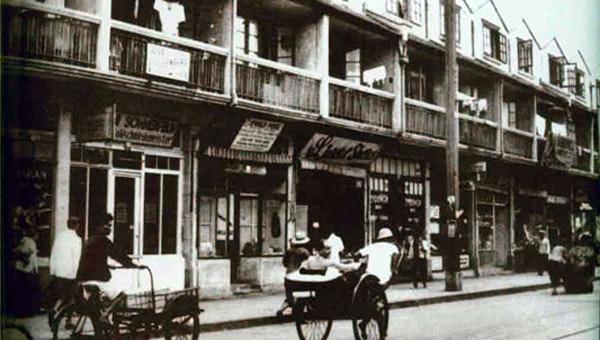
In this module, we will study four Jewish communities established in Shanghai from the second half of the 19th century to the mid-20th century, with a special focus on the Sephardic Jews and European Jewish refugees.

WEEK 3
The Jewish Community in Harbin
In this module, we will discuss Harbin as a newly established modern Chinese city. We will explore the Jewish communal life in the city from its leadership, various Zionist organizations, business, observance, and relations with adjacent Jewish communities in the region and in the country.

WEEK 4
The Jewish Community in Tianjin
In this module, we will focus on the Jewish communal life in the port city of Tianjin, tracing its beginnings, development, and decline. We will also introduce some well-known Jewish individuals living in the city.

WEEK 5
The Jewish Community in Hong Kong
In this module, we will explore the special status of Hong Kong as a center of Jewish life in China. We will trace the ups and downs of Jewish life in the city and the unique roles the Hong Kong Jewish Community played in the city-- the only Jewish community with a sustained, uninterrupted history in China over the past 160 years.

WEEK 6
Departure and Contributions
In this module, we will analyze the factors that spurred the departure of about 40,000 Jews from China. We will also discuss their contributions-- economic and cultural-- on Chinese society today.

WEEK 7
History Renewed and Impact
In this module, we will describe the re-establishment of Jewish communities in contemporary Chinese society, especially in Beijing and Shanghai, following the adoption of China's open-door policies and economic reforms in the 1980s. We will also discuss the impact of the re-establishment of Jewish communities on Chinese academia.

Go to Class
MOOC List is learner-supported. When you buy through links on our site, we may earn an affiliate commission.

Related Courses

Odesa: Jews in the Modern World (Coursera) Coursera
University of California, Santa Cruz

Odesa: Jews in the Modern World (Coursera)

In this course, Peter Kenez and Murray Baumgarten, both emeritus professors at UC Santa Cruz, tell the story of the Jews of the Black Sea port of Odesa. Kenez and Baumgarten include music, literature, and history in their analysis of a city like no other. The course is for anyone with an interest in the history and culture of the Jewish people.

Jun 15th 2026
5-12 Weeks
Shakespeare's The Merchant of Venice: Shylock (edX) EdX
HarvardX,Harvard University

Shakespeare's The Merchant of Venice: Shylock (edX)

An exploration of the magnetic and ambivalent character of Shylock in William Shakespeare’s The Merchant of Venice. In the first act of William Shakespeare’s The Merchant of Venice , the Jewish moneylender Shylock proposes a “merry sport” to the merchant Antonio: he will lend Antonio the money he needs if Antonio agrees to let Shylock take a pound of his flesh should he default. Shylock calls this contract a “merry bond,” and Shakespeare’s First Folio calls the play a comedy. But what does Shylock want from the bond, and how merry does the play ultimately prove?

Self Paced
Self-Paced
Literati China: Examinations, Neo-Confucianism, and Later Imperial China (edX) EdX
HarvardX,Harvard University

Literati China: Examinations, Neo-Confucianism, and Later Imperial China (edX)

Explore China’s imperial period, with a focus on the Song dynasty and the role of the exam system in government. Fundamental changes in government, the economy, and broader society took place between the 8th and 11th centuries in China. The state aristocracy gave way to new literati elite: educated men who sought to enter government through competitive examinations. A new kind of Confucianism also took shape, which prized the moral autonomy of individuals. With this, the later imperial period of China’s history begins.

Self Paced
Self-Paced
The History and Culture of Chinese Silk (FutureLearn) FutureLearn
University for the Creative Arts

The History and Culture of Chinese Silk (FutureLearn)

Delve into the origins and development of Chinese silk to understand its history, cultural heritage, and place in modern China. Unpack sericulture and silk craftsmanship in China. As one of the origins of textile culture, China is characterised by silk. The unique sericulture and silk craftsmanship from China is firmly embedded in its cultural heritage. In modern China, silk is not only a fibre material, but also permeates art, culture, economy, and even politics. On this three-week course, you’ll gain a solid understanding of the silk culture and art that characterises China from a material culture perspective.

Feb 27th 2023
3 Weeks
The Holocaust: an Introduction - Part 1 (FutureLearn) FutureLearn
Tel Aviv University

The Holocaust: an Introduction - Part 1 (FutureLearn)

Part 1 of 2. This course depicts the complex history of the Holocaust, highlighting its impact on our world today. The Holocaust was an inconceivable historical event, which forever robbed Western culture of its innocence. As civilized human beings, we fail to understand how events of such horror could have taken place, and how an idea so inhumanly warped could have spread like wildfire through an entire continent, instigating the systematic annihilation of millions of Jews.

No sessions available
3 Weeks
The Holocaust - An Introduction (I): Nazi Germany: Ideology, The Jews and the World (Coursera) Coursera
Tel Aviv University,Yad Vashem

The Holocaust - An Introduction (I): Nazi Germany: Ideology, The Jews and the World (Coursera)

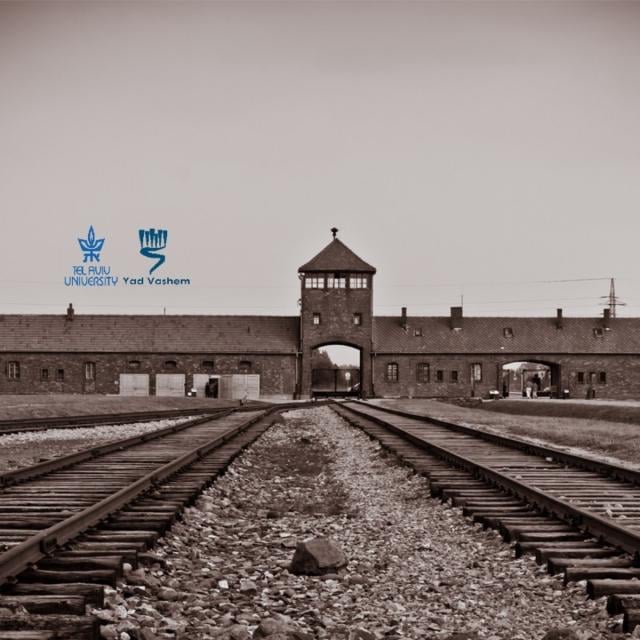
The Holocaust was an inconceivable historical event, which forever robbed Western culture of its innocence. As civilized human beings, we fail to understand how events of such horror could have taken place, and how an idea so inhumanly warped could have spread like wildfire through an entire continent, instigating the systematic annihilation of millions of Jews. This free online course was produced jointly by Tel Aviv University and Yad Vashem – the World Holocaust Remembrance Center. The course tracks the history of the Holocaust and has two parts.

Jul 26th 2026
3 Weeks
The Holocaust: The Destruction of European Jewry (Coursera) Coursera
University of California, Santa Cruz

The Holocaust: The Destruction of European Jewry (Coursera)

The Holocaust: The Destruction of European Jewry is an adaptation of an on-campus course that has been co-taught by Murray Baumgarten, Distinguished Professor of English and Comparative Literature (Literature Department), and Peter Kenez, Professor Emeritus (History Department), for over 20 years at UC Santa Cruz. In this course, you will explore the Holocaust from the overlapping perspectives of literature and history—through memoirs, historical documents, poetry, documentary footage, filmic representations, and novels.

Jul 27th 2026
5-12 Weeks
Creating Modern China: The Republican Period to the Present (edX) EdX
HarvardX,Harvard University

Creating Modern China: The Republican Period to the Present (edX)

Explore the birth of modern China with a focus on the time between the fall of the Qing and the end of World War II. What does it mean to be modern? What constitutes modern politics, modern institutions, a modern military, and modern infrastructure? In this period of great excitement and experimentation, the country is asking itself: How do you become modern and remain true to the Chinese national identity?

Self Paced
Self-Paced
Research for Impact (Coursera) Coursera
University of Cape Town,Oxfam International

Research for Impact (Coursera)

In this course, you will learn more about the Research for Impact approach - a set of principles and practices that will help you to make your research more impactful. Traditionally, the goals and outcomes of research projects were to contribute knowledge and communicate this knowledge through academic publications and journal articles. But If we truly want our research to have an impact, we need to do research differently. Research that influences change in policy, practice, behaviour and attitudes.

Aug 24th 2026
5-12 Weeks
Oriental Beliefs: Between Reason and Traditions (edX) EdX
LouvainX,Université Catholique de Louvain - UCL

Oriental Beliefs: Between Reason and Traditions (edX)

Explore the spiritual and magical beliefs of cultures, from ancient Egypt to modern Japan, as we discuss gods, the universe, cosmos, dreams and so much more! This course takes a journey through the world of beliefs as they have developed in a great variety of cultures, ranging from Ancient Egypt, the Near East to Central Asia, India, China, and the Far East.

No sessions available
5-12 Weeks
China and Communism (edX) EdX
HarvardX,Harvard University

China and Communism (edX)

Explore the Maoist period of China, from the Communist Party to the death of Mao and the reopening of China. How did the Communists conquer China? What role does culture play? What are the successes and failures of the Chinese Communist Party after seizing power in 1949? What constitutes liberation?

Self Paced
Self-Paced