The Holocaust: an Introduction - Part 1 (FutureLearn)

Offered by Tel Aviv University,
The Holocaust: an Introduction - Part 1 (FutureLearn)

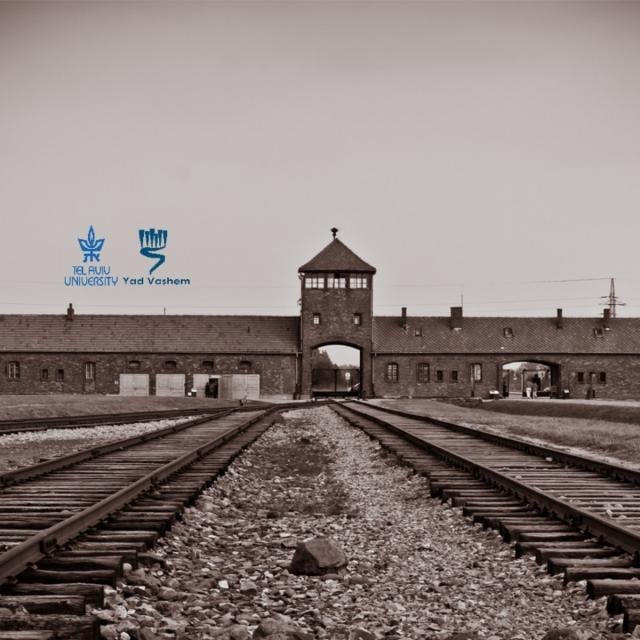
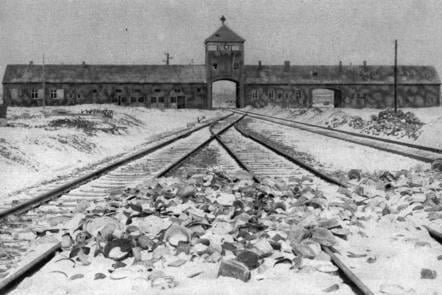
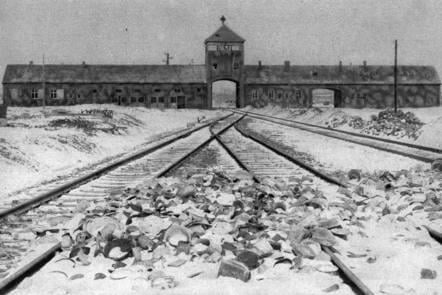
Part 1 of 2. This course depicts the complex history of the Holocaust, highlighting its impact on our world today. The Holocaust was an inconceivable historical event, which forever robbed Western culture of its innocence. As civilized human beings, we fail to understand how events of such horror could have taken place, and how an idea so inhumanly warped could have spread like wildfire through an entire continent, instigating the systematic annihilation of millions of Jews.

Class Deals by MOOC List - Click here and see FutureLearn's Active Discounts, Deals, and Promo Codes.

This free online course was produced jointly by Tel Aviv University and Yad Vashem – the World Center for Holocaust Research. The course tracks the history of the Holocaust and has two parts. The Holocaust: an Introduction - Part 1 is the first of the two courses and covers the following themes in its three weeks:

Week 1: From Hatred to Core Ideology
We will try to delve into Nazi ideology and the special place of Jews and Judaism in it. We will also discuss how the National Socialist Party converted the German Democracy of the Weimar Republic into a totalitarian regime within a short period of time, and its meaning for Jews and non-Jewish citizens.

Week 2: The World and the Jews in World War II
We will try to examine the broader contexts of the Holocaust and to place it, as part of World War 2. In this meeting we will also refer to the vital Jewish world to be found under various Nazi occupations and influences.

Week 3: The Isolation Abyss - the Perspective of the Individual
We will try to reveal different aspects of Jewish life in the face of the badge of shame, ghettos and segregation, as well as the formation of individual, societies’ and leader’s reactions in the face of a consistent policy of dispossession and discrimination.

Once you’ve completed this course, you can continue your learning with The Holocaust: an Introduction - Part 2.
This online course is offered in an innovative, multi-level format, comprising:

  • Comprehensive lectures by leading researchers from Tel Aviv University and Yad Vashem.
  • A wealth of voices and viewpoints presented by guest lecturers.
  • Numerous documents, photos, testimonies and works of art from the time of the Holocaust.
  • Novel learning experience: Crowdsourcing – involving the learners themselves in the act of collecting and shaping information, via unique, exciting online assignments.

Go to Class
MOOC List is learner-supported. When you buy through links on our site, we may earn an affiliate commission.

Related Courses

Oriental Beliefs: Between Reason and Traditions (edX) EdX
LouvainX,Université Catholique de Louvain - UCL

Oriental Beliefs: Between Reason and Traditions (edX)

Explore the spiritual and magical beliefs of cultures, from ancient Egypt to modern Japan, as we discuss gods, the universe, cosmos, dreams and so much more! This course takes a journey through the world of beliefs as they have developed in a great variety of cultures, ranging from Ancient Egypt, the Near East to Central Asia, India, China, and the Far East.

No sessions available
5-12 Weeks
Rome: a Virtual Tour of the Ancient City (FutureLearn) FutureLearn
University of Reading

Rome: a Virtual Tour of the Ancient City (FutureLearn)

Explore the architecture and history of Rome, walking around a 3D digital model of the ancient city, with this free online course. Explore ancient Rome through a unique, historically accurate 3D model. Take a guided tour around ancient Rome with expert Professor Matthew Nicholls, using his detailed and award-winning 3D digital model of the city.

Self Paced
5-12 Weeks
The Scientific Revolution: Understanding the Roots of Modern Science (FutureLearn) FutureLearn
University of Groningen

The Scientific Revolution: Understanding the Roots of Modern Science (FutureLearn)

Learn about the seventeenth-century Scientific Revolution and its role in shaping the modern Western world. How did the science of today come about? What constitutes ‘modern’ science? How does science relate to religion? Answer these questions and more with this course that travels back in time to the seventeenth-century Scientific Revolution to explore the roots of modern science.

Self Paced
3 Weeks
Arch of Titus: Rome and the Menorah (Coursera) Coursera
Yeshiva University

Arch of Titus: Rome and the Menorah (Coursera)

The Arch of Titus: Rome and the Menorah explores one of the most significant Roman monuments to survive from antiquity, from the perspectives of Roman, Jewish and later Christian history and art. The Arch of Titus commemorates the destruction of Jerusalem by the emperor Titus in 70 CE, an event of pivotal importance for the history of the Roman Empire, of Judaism, of Christianity and of modern nationalism. Together with your guide, Professor Steven Fine, you will examine ancient texts and artifacts, gaining skills as a historian as you explore the continuing significance of the Arch of Titus from antiquity to the very present.

Aug 31st 2026
5-12 Weeks
Poetry and the Holocaust (FutureLearn) FutureLearn
Yad Vashem

Poetry and the Holocaust (FutureLearn)

Explore personal accounts of the Holocaust through poetry and discover how poems can help you understand events of the past. Study Holocaust poetry to better comprehend this dark period in history. On this course, you’ll understand the events of the Holocaust and World War II through poetry which underlines the individual experience.

Available Now
3 Weeks
Hadrian's Wall: Life on the Roman Frontier (FutureLearn) FutureLearn
Newcastle University

Hadrian's Wall: Life on the Roman Frontier (FutureLearn)

Explore the archaeology of the most heavily fortified frontier in the Roman Empire, its people and their lives. Hadrian’s Wall stretches over 73 miles (117 km), from coast to coast in what is now Northern England. The Wall, complemented by a sophisticated system of outposts and coastal watch stations, offers a remarkable glimpse of ancient society. In addition to housing one of the largest concentrations of Roman soldiers anywhere in the Empire’s provinces, Hadrian’s frontier system was home to an incredibly cosmopolitan array of civilians. This six week course offers a comprehensive introduction to Hadrian’s Wall and its people and raises fascinating issues concerning colonisation, cultural transformation, immigration, integration and imperialism.

Self Paced
5-12 Weeks
Early Modern Scottish Palaeography: Reading Scotland's Records (FutureLearn) FutureLearn
University of Glasgow

Early Modern Scottish Palaeography: Reading Scotland's Records (FutureLearn)

Travel back in time through Scottish history by examining early modern Scottish handwriting. Explore Scottish history and learn more about using historical sources. Palaeography is the study of ancient handwriting and a vital skill in the historian’s toolkit. It is essential when conducting research on early modern Scotland – a period of profound political, religious and social change the effects of which can still be felt today.

Self Paced
3 Weeks
Jewish Diaspora in Modern China (Coursera) Coursera
Nanjing University

Jewish Diaspora in Modern China (Coursera)

Jewish Diaspora in China is a unique experience for world Jewry, as China is the only country in Far East that has had Jews living in its society for over 1,000 years. Documentary evidence shows that Jews started to live in China no later than the Tang Dynasty (618–907). The famous Kaifeng Jewish community, which was established in Kaifeng, the Chinese capital of the Song Dynasty (960-1279), is but a best-known example.

No upcoming session
5-12 Weeks
Religion, Conflict and Peace (edX) EdX
HarvardX,Harvard University

Religion, Conflict and Peace (edX)

Explore the diverse and complex roles that religions play in both promoting and mitigating violence. In this course, we will explore a series of contemporary conflicts in different regions of the world with a special focus on identifying and analyzing the diverse and complex roles that religions play in both promoting and mitigating violence in each context.

Self Paced
Self-Paced
The Holocaust - An Introduction (I): Nazi Germany: Ideology, The Jews and the World (Coursera) Coursera
Tel Aviv University,Yad Vashem

The Holocaust - An Introduction (I): Nazi Germany: Ideology, The Jews and the World (Coursera)

The Holocaust was an inconceivable historical event, which forever robbed Western culture of its innocence. As civilized human beings, we fail to understand how events of such horror could have taken place, and how an idea so inhumanly warped could have spread like wildfire through an entire continent, instigating the systematic annihilation of millions of Jews. This free online course was produced jointly by Tel Aviv University and Yad Vashem – the World Holocaust Remembrance Center. The course tracks the history of the Holocaust and has two parts.

Aug 23rd 2026
3 Weeks