EdX

Introduction to Seismology 地震概论 (edX)

Offered by Peking University,
Introduction to Seismology 地震概论 (edX)

本课程简要介绍了地震学的基本概念以及研究的方法。
The course provides a brief introduction to basic concepts and research methods of seismology.

Class Deals by MOOC List - Click here and see EdX's Active Discounts, Deals, and Promo Codes.

本课程是素质教育通识课程,具有典型的自然科学课程的特征。课程将简明扼要地介绍地震学的基本概念以及研究的方法,内容包括地震学史、地震仪原理与地震图、地震波的传播理论、地球内部结构、勘探地震学、地震预报、临震措施和地震学最新进展。通过本课程的学习, 将会提升学生的自然科学素质,增强学生的抗震减灾意识以及提升学生的临震逃生能力。作为完成课程学习的要求,学生需要熟悉有关章节的内容,独立且正确地完成课后练习,积极参与课程论坛讨论和其他活动。课程成绩将由在线小测验和期末考试组成,其中在线小测验占40%,期末考试占60%,总分达到60分可以获得课程完成证书。

What you'll learn:
点击上方绿色按钮报名。

  • 内容包括地震学史、地震仪原理与地震图、地震波的传播理论、地球内部结构、勘探地震学、地震预报、临震措施和地震学最新进展
  • 地震学的基本概念以及研究的方法
  • 学生会提升自己的自然科学素质,增强学生的抗震减灾意识以及提升学生的临震逃生能力
  • Seismology research methods, history of seismology, and earthquake seismograph theory
  • Internal structure of the earth, earthquake prediction and seismic wave propagation
  • Enhancing earthquake relief awareness and safety
Go to Class
MOOC List is learner-supported. When you buy through links on our site, we may earn an affiliate commission.

Related Courses

Synthetic Aperture Radar: Hazards (edX) EdX
University of Alaska Fairbanks,AlaskaX

Synthetic Aperture Radar: Hazards (edX)

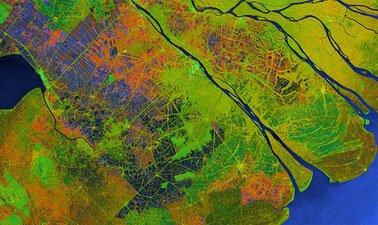
This course focuses on the applications of Synthetic Aperture Radar (SAR) remote sensing for disaster monitoring. Learn about weather and illumination-independent SAR remote sensing technology, and explore its applications to natural hazards including earthquakes, volcanic eruptions, and flooding.

Self Paced
Self-Paced
Tropical Coastal Ecosystems (edX) EdX
University of Queensland,UQx

Tropical Coastal Ecosystems (edX)

Take the challenge and understand problems and solutions to managing tropical coastal ecosystems. Do you want to develop the skills and knowledge needed to help preserve tropical coastal ecosystems? These habitats provide goods and services for hundreds of millions of people but human activities have led to their global decline.

Self Paced
Self-Paced
Evaluating Problems (Coursera) Coursera
Macquarie University

Evaluating Problems (Coursera)

The second course of the specialization EVALUATING PROBLEMS will show you how humans think and how to utilize different disciplinary approaches to tackle problems more effectively. It advances your knowledge of your own field by teaching you to look at it in new ways. EVALUATING PROBLEMS is constructed in the following way: Week I. “Thinking about Thinking” – How problem solving evolved in nature, how the mechanics of our brains work, and the psychological biases that can emerge when we think. Week II. “Philosophy, Science, and Problem Solving” – How humans have historically approached problem solving, from ancient times to the present. Week III. “Approaching Problems in the Natural Sciences” – How people in the natural sciences deconstruct problems. Week IV. “Statistics and Problem Solving” – How statistics can be used to evaluate problems and think critically. Week V. “Approaching Problems in the Humanities” – How people in the social sciences and humanities deconstruct problems. Week VI. “Evaluating the Anthropocene” – How to evaluate the problems of the Anthropocene.

Jan 13th 2025
5-12 Weeks
Precalculus: Mathematical Modeling (Coursera) Coursera
Johns Hopkins University

Precalculus: Mathematical Modeling (Coursera)

This course helps to build the foundational material to use mathematics as a tool to model, understand, and interpret the world around us. This is done through studying functions, their properties, and applications to data analysis. Concepts of precalculus provide the set of tools for the beginning student to begin their scientific career, preparing them for future science and calculus courses. This course is designed for all students, not just those interested in further mathematics courses.

Nov 2nd 2026
4 Weeks
Water and Wastewater Treatment Engineering: Biochemical Technology (edX) EdX
Tsinghua University,TsinghuaX

Water and Wastewater Treatment Engineering: Biochemical Technology (edX)

Learn the basic principles and characteristics of biochemical technology in water and wastewater treatment engineering. Biochemical technology in water and wastewater treatment engineering is essential in the field of water treatment. In this environmental studies course you will learn the basic principles and characteristics of biochemical technology.

Self Paced
Self-Paced
Planetary Boundaries (edX) EdX
SDGAcademyX,SDG Academy

Planetary Boundaries (edX)

Can our planet continue to support the current scope of human activity? A thriving global society relies on the stability of the Earth and its resilience across oceans, forests, waterways, biodiversity, the atmosphere and more. So how do we shape sustainability at a global scale? The boundaries set by the planet’s natural resources, the resilience of those resources, and the human activities that impact sustainability all come into play.

Self Paced
Self-Paced
Climate Change: The Science and Global Impact (edX) EdX
SDGAcademyX,SDG Academy

Climate Change: The Science and Global Impact (edX)

We need to understand the science behind global warming to avoid the most damaging and irreversible climate change impacts on people and planet. Climate change is arguably the greatest challenge of our time. Human activity has already warmed the planet by one degree Celsius relative to pre-industrial times, and we are feeling the effects through record heat waves, droughts, wildfires and flooding.

Self Paced
Self-Paced
Foundational Field Skills for Earth and Environmental Sciences (edX) EdX
University of Canterbury,UCx

Foundational Field Skills for Earth and Environmental Sciences (edX)

This course focusses on the proficiency of fundamental field skills required for most graduate degrees and entry-level jobs in the earth and environmental sciences. The course combines instructional demonstrations and scaffolded learning activities in the New Zealand outdoors. This course focusses on your proficiency of field skills and contextual knowledge within earth and environmental sciences. Each section focuses on a specific skill set and represents a way of acknowledging achievements or skill acquisition at a granular level.

Self Paced
Self-Paced
Energy Supply Systems for Buildings (edX) EdX
Delft University of Technology,DelftX

Energy Supply Systems for Buildings (edX)

Discover how to convert natural resources into heat, cold and electricity, what the capabilities of renewable systems are, how to match energy supply with buildings’ energy demand, and what that means for energy efficiency and carbon emissions. In this course, you will discover the supply side of buildings’ energy chain.

Self Paced
Self-Paced
Climate Change Science and Negotiations (edX) EdX
SDGAcademyX,SDG Academy

Climate Change Science and Negotiations (edX)

Humanity is up against a tight timeline to address climate change. Learn how we can deeply decarbonize the global energy systems, and put the world on a 2°C pathway. In this course, learn solutions to mitigate the effects of the global greenhouse gas emissions causing temperature rise, and how to apply these solutions in different national contexts improvements.

Self Paced
Self-Paced
Creating a Pro-Renewables Environment (edX) EdX
Imperial College London,ImperialX

Creating a Pro-Renewables Environment (edX)

Understand the policy, regulatory and fiscal measures that can incentivise renewable power and drive cleaner investment along the entire electricity supply chain. This course provides the tools needed to build a low-carbon power sector around the world. By diving into the perspective of different players in the power sector - from investors through to utilities, regulators and project developers - you will be able to choose the right strategies, policies and other levers needed to incentivise a cleaner power mix in your own context.

Self Paced
Self-Paced
3D GIS (edX) EdX
University of Alaska Fairbanks,AlaskaX

3D GIS (edX)

Take your maps into the third dimension: Learn GIS concepts and tools to visualize, analyze, and interpret spatial data in 3D. Reveal patterns that can lead to better decision making. Maps are graphic representations of reality and help us understand and navigate the world around us. Maps can incorporate third dimension through contours, hillshading (3D modeling), and profile views.

Self Paced
Self-Paced