Introduction to Horses (BHI)

Offered by Box Hill Institute,
Introduction to Horses (BHI)

This course is an introduction to horses, demonstrating basic tasks that you would carry out on a daily basis with a horse. This course can help you to form your decision to enter the wonderful world of horses.

Did you know that the Equine Industry is one of the largest industries in Australia, with the first horses to arrive in Australia in 1788. The Equine Industry is diverse with many opportunities to be involved, whether in Australia or anywhere around the world.
A career in the equine industry offers a vast array of opportunity:

  • The chance to learn new skills and knowledge that will last a lifetime.
  • The chance to engage with many people worldwide with one interest in common.
  • The chance to continue to learn about these remarkable animals while earning a living.
Go to Class
MOOC List is learner-supported. When you buy through links on our site, we may earn an affiliate commission.

Related Courses

The Horse Course: Introduction to Basic Care and Management (Coursera) Coursera
University of Florida

The Horse Course: Introduction to Basic Care and Management (Coursera)

There are over 100 million horses, donkeys and mules in the world today and owners of these animals can be found on almost every continent and in almost every society. The Horse Course will cover many unique aspects of equine ownership and touch upon the science behind many of today’s management practices.

Jun 8th 2026
5-12 Weeks
Introduction to Animal Behaviour (edX) EdX
Wageningen University,WageningenX

Introduction to Animal Behaviour (edX)

Explore the amazing range and complexity of wild animal behaviour. Discover how animals learn, communicate, find food, avoid predators, and interact socially. Do you want to understand how and why animals behave the way they do, and how we test hypotheses about behaviour scientifically? This biology and life sciences course provides an introduction to the complexities of wild animal behaviour, and how it is studied.

Self Paced
Self-Paced
Animals and Institutions (Coursera) Coursera
University of Colorado Boulder

Animals and Institutions (Coursera)

This course explores animals within the context of the functional relationships that sociologists call “institutions.” We first examine the use of animals in laboratory science. We then examine the controversial transformation of animals into “livestock” and "meat." We also explore the perspectives of people committed to rejecting the construction and use of animals as food.

Jun 15th 2026
4 Weeks
One Health: Connecting Humans, Animals and the Environment (FutureLearn) FutureLearn
University of Basel

One Health: Connecting Humans, Animals and the Environment (FutureLearn)

BBecome familiar with One Health, a promising concept, and the effective solutions it provides for urgent health problems. Expand how you address health issues, learning from top One Health experts. In today’s globalised world, old diseases persist and new illnesses spread faster than ever thanks to interconnected ecosystems and the close ties between humans and animals.

Oct 9th 2023
5-12 Weeks
Animal Advocacy Introductory Course (Animal Advocacy Careers) Other Providers
Animal Advocacy Careers

Animal Advocacy Introductory Course (Animal Advocacy Careers)

This online course will walk you through some of the key considerations involved in working to help animals and will help you plan your next steps. it will provide you with the knowledge that you need to start working out which career path will enable you to maximise your positive impact for animals. You will be supported to use this knowledge in creating a career plan and working out which actions you should take next.

Nov 15th 2021
13-24 Weeks
Genetic Models for Animal Breeding (edX) EdX
Wageningen University,WageningenX

Genetic Models for Animal Breeding (edX)

Understand the genetic and statistic principles that enable responsible animal breeding. Animal breeding involves the selective breeding of domestic animals with the intention to improve desirable (and heritable) qualities in the next generation. This course introduces the steps required to design a program for breeding animals and teaches the genetic and statistical concepts that are needed to build a solid breeding program.

Self Paced
Self-Paced
Le bien-être des animaux d'élevage (FUN) FUN
VetAgro Sup

Le bien-être des animaux d'élevage (FUN)

Le bien-être des animaux est une préoccupation sociétale désormais majeure. Mais de quoi parle-t-on quand on fait référence au bien-être animal? Qu’est-ce qu’est réellement le bien-être animal ? Est-il le même pour tous les animaux ? De quoi dépend-il ? Le bien-être d'un animal en plein air est-il forcément toujours meilleur à celui d’un animal en bâtiment ? Suffit-il de s’occuper d’un animal pour qu’il soit bien ? Peut-on vraiment évaluer le bien-être des animaux, objectivement et scientifiquement ou est-ce purement subjectif ? Enfin, peut-on vraiment l’améliorer, comment et quels sont les avantages pour les animaux et pour les humains ? Toutes ces questions sont importantes quand on parle du bien-être des animaux, et notamment des animaux d’élevage ! L’objectif du MOOC « le bien-être des animaux d’élevage » est d’apporter des réponses à ces différentes questions.

No sessions available
5-12 Weeks
Global Health at the Human-Animal-Ecosystem Interface (Coursera) Coursera
University of Geneva

Global Health at the Human-Animal-Ecosystem Interface (Coursera)

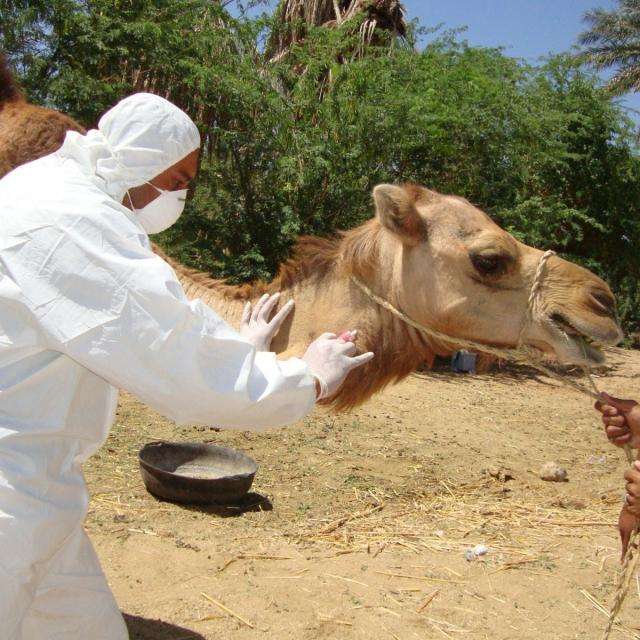
The University of Geneva, Institute Pasteur, University of Montreal and Centre Virchow-Villermé/University Paris Descartes welcome you to this new MOOC on "Global Health at the Human-Animal-Ecosystem Interface"! Over the next 5 weeks, you will explore and learn about some of the major and current Global Health Challenges at the Human-Animal-Ecosystem Interface: zoonotic emerging infections (e.g. Ebola, Nipah, MERS, Avian Influenza), antimicrobial resistance, neglected tropical diseases (e.g. rabies, leishmaniasis, zoonotic TB), snakebite and other human-animal conflicts etc.

Jun 1st 2026
5-12 Weeks