EdX

Introduction to Animal Behaviour (edX)

Introduction to Animal Behaviour (edX)

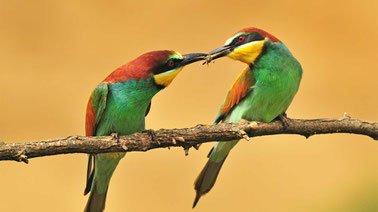
Explore the amazing range and complexity of wild animal behaviour. Discover how animals learn, communicate, find food, avoid predators, and interact socially. Do you want to understand how and why animals behave the way they do, and how we test hypotheses about behaviour scientifically? This biology and life sciences course provides an introduction to the complexities of wild animal behaviour, and how it is studied.

Class Deals by MOOC List - Click here and see EdX's Active Discounts, Deals, and Promo Codes.

Over six weeks, learners will explore the various behaviours animals adopt in order to meet the challenges of their daily lives. We begin with how animals learn and communicate with each other, then move on to discuss how they find food, avoid predators, choose their mates, and rear their offspring.

This course is aimed at anyone looking to broaden their understanding of animal behaviour beyond nature documentaries or a typical high school education. No previous knowledge is required, only curiosity and enthusiasm for the subject.
This course is part of the Animal Behaviour in Science and Conservation Professional Certificate.

What you'll learn:

  • Key concepts to understand animal behaviour
  • The fascinating range and complexity of behaviour in animals
  • How scientific hypotheses are developed and tested
  • How animals learn and communicate
  • Animals' reproductive behaviour
  • How animals function socially

Syllabus

Week 1: The science of animal behaviour
An introduction to key concepts for studying animal behaviour, including evolution, natural selection, anthropomorphism, and the scientific method.

Week 2: Learning, cognition and development
How animals learn to adjust their behaviour to their environment, and how they use their mental abilities to solve practical problems.

Week 3: Communication
An introduction to the various means animals use to send signals to each other, and how these signals are influenced by the environment and social context.

Week 4: Finding food and avoiding predators
How animals find and exploit food resources, and how they avoid becoming food themselves.

Week 5: Mating systems and parental care
The complexities of creating the next generation, from finding and competing for a mate to rearing offspring.

Week 6: Living in groups
The costs and benefits of living with others, how complex social groups arise, and why some animals forego reproduction to help others breed.

Go to Class
MOOC List is learner-supported. When you buy through links on our site, we may earn an affiliate commission.

Related Courses

Design Thinking: Ideation, Iteration and Communication (edX) EdX
Rochester Institute of Technology,RITx

Design Thinking: Ideation, Iteration and Communication (edX)

Learn how ideas transform into solutions through iteration and validation along with best practices for communicating your solution to stakeholders. Designing a successful and innovative solution requires creative ideas and their iteration. As critical phases of the design thinking process, ideation and iteration are often what distinguish design thinking from traditional or linear problem-solving approaches.

Self Paced
Self-Paced
Algorithms and Data Structures Capstone (edX) EdX
University of California, San Diego,UC San DiegoX

Algorithms and Data Structures Capstone (edX)

Synthesize your knowledge of algorithms and biology to build your own software for solving a biological challenge. Building a fully-fledged algorithm to assemble genomes from DNA fragments on a real dataset is an enormous challenge with major demand in the multi-billion dollar biotech industry. In this capstone project, we will take the training wheels off and let you design your own optimized software program for genome sequencing.

Self Paced
Self-Paced
Cell Biology: Mitochondria (edX) EdX
HarvardX,Harvard University

Cell Biology: Mitochondria (edX)

A human-centered approach to the fundamentals of cell biology with a focus on the power plants of the cell - mitochondria. The cell is a powerful case study to help us explore the functional logic of living systems. All organisms, from single-celled algae to complex multicellular organisms like us, are made up of cells. In this course, you will learn the how and why of biology by exploring the function of the molecular components of cells, and how these cellular components are organized in a complex hierarchy.

Self Paced
Self-Paced
Finding your voice as a playwright (edX) EdX
University of Cambridge

Finding your voice as a playwright (edX)

Learn to deepen your creative practice as a playwright, as well as develop professionally transferable writing skills and communication expertise. This course will broaden your understanding of how to start a career successfully as a professional dramatist, as well as offer you insights in how to maximise and enjoy the processes of your personal creativity.

Self Paced
Self-Paced
China’s First Empires and the Rise of Buddhism (edX) EdX
HarvardX,Harvard University

China’s First Empires and the Rise of Buddhism (edX)

Learn about the Qin and Han dynasties, and how Buddhism and ideas of self-realization influenced the medieval period. This course, the second in a collection on Chinese history and culture, addresses how the Qin dynasty conquered China and established a new system of government and how the Han dynasty built a stable, centralized empire that lasted for hundreds of years. We cover the early history of Buddhism in China and how the rising feudal aristocracy responded to the loss of empire by looking inward.

Self Paced
Self-Paced
Principles of Biochemistry (edX) EdX
HarvardX,Harvard University

Principles of Biochemistry (edX)

This introduction to biochemistry explores the molecules of life, starting at simple building blocks and culminating in complex metabolism. Principles of Biochemistry integrates an introduction to the structure of macromolecules and a biochemical approach to cellular function. Topics addressing protein function will include enzyme kinetics, the characterization of major metabolic pathways and their interconnection into tightly regulated networks, and the manipulation of enzymes and pathways with mutations or drugs.

Self Paced
Self-Paced
Negotiation Skills and Effective Communication (edX) EdX
Tecnológico de Monterrey,TecdeMonterreyX

Negotiation Skills and Effective Communication (edX)

It analyzes the “social” perspective of a negotiation and its impact on successful agreements, as well as the risks of ignoring it, or disregarding its applicability. The course integrates the most recent advances in the development of negotiation skills, based on modern life complexities, in a simple and direct way.

Self Paced
Self-Paced
Business Communications (edX) EdX
The University of British Columbia,UBCx

Business Communications (edX)

Learn how to communicate effectively in a business setting: understand diverse audiences and build sound arguments. This course will sharpen your writing, presentation, and interpersonal communication skills to help you succeed in the business world. You will learn a range of successful practices and guidelines that have been derived from both research and experience.

Self Paced
Self-Paced
Fundamentos de Comunicaciones Ópticas (edX) EdX
Universitat Politècnica de València,UPValenciaX

Fundamentos de Comunicaciones Ópticas (edX)

Se tratan conceptos básicos de las comunicaciones ópticas como el guiado, los modos, la atenuación o la dispersión y el diseño de sistemas. Este curso está destinado a estudiantes universitarios de la rama de las Tecnologías de la Información y las Comunicaciones que quieran conocer los mecanismos fundamentales de las comunicaciones por fibra óptica.

Self Paced
Self-Paced