EdX

Introduction to Geochemistry (edX)

Offered by Kyoto University, KyotoUx,
Introduction to Geochemistry (edX)

The goal of the course is to apply chemical principles to understand the natural (non-living) world around us and appreciate its complexity. Chemistry, often referred to as the central science, concerns matter and the transformations it can undergo. While many aspects of chemistry can be applied to solving various problems relevant to our society, chemistry also offers a convenient framework to understand the complexity of the natural world surrounding us.

Class Deals by MOOC List - Click here and see EdX's Active Discounts, Deals, and Promo Codes.

The goal of this course is to apply chemical principles to understand the natural (non-living) world around us and appreciate its complexity.

The chemical principles usually covered in general chemistry, undergraduate inorganic chemistry, and physical chemistry enable us to examine many aspects of the Earth. We will look at the formation of the elements, and describe the reason for the different abundances, and what this means for the Earth’s composition. We will also look at how isotopes can be used as chemical tracers and “clocks”, leading us to insight on the various processes of the Earth, and even our own bodies. Finally, we will see how geochemistry can help us understand, or even combat the many environmental and technological problems that we face.

What you’ll learn:

  • How the Earth’s elements are formed
  • What determines the elements’ abundances and distribution on Earth
  • How can we identify the climate millions of years ago
  • How to use isotopes to identify what we eat
  • How can we classify something as general as “rocks”, and explain the diversity
  • How geochemistry can help be applied to solve environmental/technological problems

Syllabus

Week 1: The formation and distribution of elements in space
Nucleosynthesis I
Nucleosynthesis II
The elements today: chondrites

Week 2: Mineralogy: Just a “rock”?
Silicate minerals
Igneous rocks
Metamorphic rocks

Week 3: Distribution of elements on Earth: Igneous processes
What’s a trace element?
Magma and melting
Melting and crystallization

Week 4: Where the fun begins: Radiogenic isotope chemistry
Dating methods
Tracing methods

Week 5: Stable isotope chemistry I (Basics)
Equilibrium fractionation processes, geothermometry
Kinetic fractionation processes, precipitation
Biological processes

Week 6: Stable isotopes II (Paleoclimatology)
Milankovitch cycles
Paleoclimatology and CO2 levels

Week 7: Geochemistry and our Future
Terraforming and CO2
Helium as a resource
Go to Class
MOOC List is learner-supported. When you buy through links on our site, we may earn an affiliate commission.

Related Courses

Moons (FutureLearn) FutureLearn
The Open University

Moons (FutureLearn)

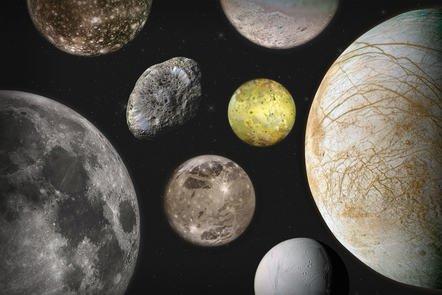
Explore the many moons of our Solar System. Find out what makes them special and ask whether we send humans to our Moon again. Discover the amazing diversity of moons in our Solar System. There are lots of moons in our Solar System. The Earth is the only planet with just a single moon. Some are bigger than ours. Many are much smaller. Some moons have ongoing volcanic eruptions. Others have rivers of liquid methane. A small handful may even be home to primitive life. This online course will allow you to explore the rich diversity of moons in our Solar System.

Mar 4th 2024
5-12 Weeks
Planet Earth ... and You! (Coursera) Coursera
University of Illinois at Urbana-Champaign

Planet Earth ... and You! (Coursera)

Earthquakes, volcanoes, mountain building, ice ages, landslides, floods, life evolution, plate motions—all of these phenomena have interacted over the vast expanses of deep time to sculpt the dynamic planet that we live on today. Planet Earth presents an overview of several aspects of our home, from a geological perspective. We begin with earthquakes—what they are, what causes them, what effects they have, and what we can do about them. We will emphasize that plate tectonics—the grand unifying theory of geology—explains how the map of our planet's surface has changed radically over geologic time, and why present-day geologic activity—including a variety of devastating natural disasters such as earthquakes—occur where they do. We consider volcanoes, types of eruptions, and typical rocks found there.

Jun 29th 2026
5-12 Weeks
Planet Earth: Understanding and Protecting our Environment (FutureLearn) FutureLearn
University of Leeds

Planet Earth: Understanding and Protecting our Environment (FutureLearn)

Learn about the physical geography of Earth and discover how to use this knowledge to protect our natural environment. Discover the Earth’s natural systems and how human activity affects them. On this two-week course from the University of Leeds, you will discover the processes of the hydrosphere, the geosphere, and the biosphere and explore the impact of human activity and climate change on our planet.

Jun 29th 2026
2 Weeks
Origens da Vida no Contexto Cósmico (Coursera) Coursera
Universidade de São Paulo, Brasil

Origens da Vida no Contexto Cósmico (Coursera)

Origens da vida no contexto cósmico é um curso desenvolvido no Instituto de Astronomia, Geofísica e Ciências Atmosféricas da Universidade de São Paulo, com o objetivo de apresentar os mais recentes avanços científicos na compreensão deste intrigante assunto. É um curso com formato multidisciplinar que o levará a compreender melhor os aspectos envolvidos no surgimento de vida na Terra e no possível surgimento de vida em outros planetas.

Jun 8th 2026
4 Weeks
Climate Change: The Science (edX) EdX
The University of British Columbia,UBCx

Climate Change: The Science (edX)

Master the basics of climate science so you can better understand the news, evaluate scientific evidence, and explain global warming to anyone. Do you want to talk about climate change from an informed perspective? Are you interested in how global warming works? Climate change is the biggest challenge of our time, and climate science is critical to finding solutions. How can we make the best decisions about our present and future? By taking this course, you can be part of the global conversation.

No sessions available
5-12 Weeks
Climate Change Science and Negotiations (edX) EdX
SDGAcademyX,SDG Academy

Climate Change Science and Negotiations (edX)

Humanity is up against a tight timeline to address climate change. Learn how we can deeply decarbonize the global energy systems, and put the world on a 2°C pathway. In this course, learn solutions to mitigate the effects of the global greenhouse gas emissions causing temperature rise, and how to apply these solutions in different national contexts improvements.

Self Paced
Self-Paced
Journey Conversations: Weaving Knowledge and Action (Coursera) Coursera
Yale University

Journey Conversations: Weaving Knowledge and Action (Coursera)

Journey of the Universe weaves together the discoveries of the evolutionary sciences together with humanities such as history, philosophy, art, and religion. This course draws on the Journey of the Universe Conversations, a series of 20 interviews with scientists and environmentalists. The first 10 interviews are with scientists and historians who deepen our understanding of the evolutionary process of universe, Earth, and humans.

Jun 22nd 2026
5-12 Weeks
Natural Attenuation of Groundwater Contaminants: New Paradigms, Technologies, and Applications (Coursera) Coursera
Rice University

Natural Attenuation of Groundwater Contaminants: New Paradigms, Technologies, and Applications (Coursera)

Cleaning up the large number of groundwater contamination sites is a significant and complex environmental challenge. The environmental industry is continuously looking for remediation methods that are both effective and cost-efficient. Over the past 10 years there have been amazing, important developments in our understanding of key attenuation processes and technologies for evaluating natural attenuation processes, and a changing institutional perspective on when and where Monitored Natural Attenuation (MNA) may be applied.

Jun 8th 2026
5-12 Weeks
The Worldview of Thomas Berry: The Flourishing of the Earth Community (Coursera) Coursera
Yale University

The Worldview of Thomas Berry: The Flourishing of the Earth Community (Coursera)

Thomas Berry (1914-2009) was a historian of world religions and an early voice awakening moral sensibilities to the environmental crisis. He is known for articulating a “new story” of the universe that explores the implications of the evolutionary sciences and cultural traditions for creating a flourishing future. This course investigates Berry’s life and thought in relation to the Journey of the Universe project.

Jun 22nd 2026
5-12 Weeks
Religious Symbols of the World (edX) EdX
Seoul National University,SNUx

Religious Symbols of the World (edX)

This course is the third and final course in the series following “Understanding Religious Symbolism” and “Myths, Rituals, and Cosmos.” Through the theories and patterns that you learned in these three courses, I hope that you will be able to interpret the various religious phenomena in different cultures, and through this gain a better understanding of culture and human beings.

Self Paced
Self-Paced
Sensing Planet Earth – From Core to Outer Space (edX) EdX
Chalmers University of Technology,ChalmersX

Sensing Planet Earth – From Core to Outer Space (edX)

Will this year be the hottest year ever? What is the current rate of global sea level rise? How fast is the rain forest disappearing? … Learn about the essential tools for measuring and monitoring our planet. In this course, we will take you on a virtual journey covering different Earth observation tools. In the course modules, we cover the most essential measurement tools for solid Earth, the atmosphere, and the biosphere. Our experts will give you first-hand insights why, where, and how those techniques are applied and they will show you how sensors work in space, on aircrafts, and on the ground.

Apr 3rd 2023
5-12 Weeks