Dog Emotion and Cognition (Coursera)

Offered by Duke University,
Dog Emotion and Cognition (Coursera)

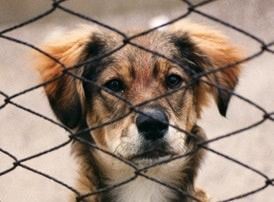
Dog Emotion and Cognition will introduce you to the exciting new study of dog psychology, what the latest discoveries tell us about how dogs think and feel about us, and how we can use this new knowledge to further strengthen our relationship with our best friends.

Class Deals by MOOC List - Click here and see Coursera's Active Discounts, Deals, and Promo Codes.

Syllabus

WEEK 1 - Course Information
Dog Emotion and Cognition is a course designed to introduce the exciting new science of dog psychology to any level of dog enthusiast. In learning about dogs you will be introduced to evolutionary and cognitive theory, learn about experimental methodology, see how dogs compare to other species, and even have the chance to try some of the cognitive games you learn about with your own dog. The course is a great introduction to the field of animal cognition and animal behavior but is also relevant to anyone interested in human evolution or even dog training. When you finish you will think about your dog in a new way, will be ready to apply your new knowledge, and will be prepared to take higher level classes in the evolutionary or cognitive sciences.

WEEK 2 - The Paradox of a Best Friend That Evolved From Our Worst Enemy
This module will provide an introduction to cognitive psychology and evolution while having direct application to your dog. At the beginning of each lecture, Dr. Hare will suggest an optional reading from his book The Genius of Dogs. Dr. Hare discusses how our evolutionary relationship with dogs is a puzzle. He describes the meaning of cognition and what it looks like with modern research on animals. Last, he discusses what Dognition is and how can be used like a laboratory for the class.

WEEK 3 - How Biology Studies Cognitive Evolution
In this module, Dr. Hare describes how the internal processes of the mind are studied through experiments. He explains how animal problem solving is best explained as scientists work toward better understanding the topic. Next, he describes the ecological approach to cognition through an evolutionary lens, which involves Tinbergen's four levels of analysis.

WEEK 4 - Dogs Are Cognitively Remarkable
In this module, Dr. Hare describes how dogs are cognitively remarkable. He begins by explaining theory of mind, which, when viewed through the ecological approach, suggests that social problem solving drove primate and human cognitive evolution. Next, he describes how good dogs are at understanding communicative intentions, especially compared to apes. Dr. Hare has three hypotheses to explain the remarkable communication found in domestic dogs.

WEEK 5 - Evolutionary Accidents and Survival of the Friendliest
In this module, Dr. Hare explores three of his research studies he's done with foxes, New Guinea Singing Dogs, as well as research on wolves. He describes how early dog-wolves may actually be a product of natural selection rather than artificial selection, contrary to popular belief. He introduces a hypothesis called Survival of the Friendliest, which may explain how dogs, bonobos, and modern species evolved in contrast to close relatives, such as wolves and chimpanzees. Last, he relates the high level of social tolerance of these species to human by looking at human self-domestication.

WEEK 6 - Problems That Dogs Can and Cannot Solve
In this module, you will learn about the genius of dogs. Brilliant examples of the canine mind will be explored. Dogs seem to be capable of inferential reasoning using the "principle of exclusion" as well as learning new words by imitating humans. Next, Dr. Hare discusses dog's abilities to understand physical problem solving compared to other species (hint, this isn't most dog's strong suit). Last, he will discuss how dogs are not cooperative breeders, do have a relaxed social system, and are excellent hunting companions for humans.

WEEK 7 - Finding Your Dog's Genius
In this module, Dr. Hare will discuss the common myths of breed differences and what research (including citizen science Dognition data) has actually been done to understand potential differences between breeds. You will also listen to Dr. Hare debunk "aggressive dog breed" stereotypes by learning about the literature and studies that have been done on dog aggression. He poses an interesting question about the actual culprit for the dog aggression problem, which is not even a dog! Next, he will explain how important understanding dog cognition is to training strategies. Dr. Hare will discuss how, unfortunately, not all cultures love dogs, and some see them as food and pests. He suggests ways that humans can live with dogs for mutual benefit. Taking all that you've learned into account, Dr. Hare then discusses how Dognition is revolutionizing what we know about dogs and how beneficial it could be to your relationship with your dog as well as for science!

WEEK 8 - Final Exam
The final exam covering topics from all modules.

Go to Class
MOOC List is learner-supported. When you buy through links on our site, we may earn an affiliate commission.

Related Courses

Advanced Neurobiology I (Coursera) Coursera
Peking University

Advanced Neurobiology I (Coursera)

Hello everyone! Welcome to advanced neurobiology! Neuroscience is a wonderful branch of science on how our brain perceives the external world, how our brain thinks, how our brain responds to the outside of the world, and how during disease or aging the neuronal connections deteriorate. We’re trying to understand the molecular, cellular nature and the circuitry arrangement of how nervous system works.

Jun 1st 2026
5-12 Weeks
Introduction to Biology: Biodiversity (Coursera) Coursera
Rice University

Introduction to Biology: Biodiversity (Coursera)

In this course we will examine the incredible variety of life that inhabits this planet including microorganisms, plants, and animals. For each of the major groups we’ll learn about their characteristics, functions, and how they came into existence as well as some of the roles they play in the natural world, and how they’re relevant to people. We’ll also take a close look at us humans and consider what we know about our origins and what might become of us in the future.

Jun 8th 2026
5-12 Weeks
Paleontology: Early Vertebrate Evolution (Coursera) Coursera
University of Alberta

Paleontology: Early Vertebrate Evolution (Coursera)

Paleontology: Early Vertebrate Evolution is a four-lesson course teaching a comprehensive overview of the origin of vertebrates. Students will explore the diversity of Palaeozoic lineages within a phylogenetic and evolutionary framework .This course examines the evolution of major vertebrate novelties including the origin of fins, jaws, and tetrapod limbs. Students also explore key Canadian fossil localities, including the Burgess Shale (British Columbia), Miguasha (Quebec), and Man On The Hill (Northwest Territories).

Jun 10th 2026
4 Weeks
Chimpanzee Behavior and Conservation (Coursera) Coursera
Duke University

Chimpanzee Behavior and Conservation (Coursera)

Chimpanzees are one of our closest living relatives, yet almost nothing was known about their behavior in the wild until Jane Goodall started her groundbreaking study of the chimpanzees of Gombe, Tanzania in 1960. This study continues today, following the same chimpanzee families that Jane Goodall first encountered over 55 years ago. Guided by three course instructors who have lived and worked with the Gombe chimpanzees, you will learn how Goodall’s early discoveries changed our view of human uniqueness.

Jun 8th 2026
5-12 Weeks
Agroforestry II: Major Systems of the World (Coursera) Coursera
University of Florida

Agroforestry II: Major Systems of the World (Coursera)

Welcome to Agroforestry II: Major Systems of the World. A focused exploration of agroforestry practices from around the world. This is the second module of the five-module course covering the various aspects of agroforestry including the global distribution of the practices, their underlying principles, and major scientific advances during the past nearly five decades, presented by leading experts in the field.

Jun 8th 2026
2 Weeks
Pensamiento Científico (Coursera) Coursera
Universidad Nacional Autónoma de México

Pensamiento Científico (Coursera)

¿El pensamiento científico es sólo para científicos? Su utilidad va mucho más allá, ayudando a las personas a tomar mejores decisiones todos los días. El objetivo de este curso es fomentar en pensamiento científico en los alumnos para ayudarles a tomar mejores decisiones profesionales, personales y sociales.

Jun 8th 2026
5-12 Weeks
Genetics and Society: A Course for Educators (Coursera) Coursera
American Museum of Natural History

Genetics and Society: A Course for Educators (Coursera)

How have advances in genetics affected society? What do we need to know to make ethical decisions about genetic technologies? This course includes the study of cloning, genetic enhancement, and ownership of genetic information. Course participants will acquire the tools to explore the ethics of modern genetics and learn how to integrate these issues into their classrooms.

Jun 1st 2026
4 Weeks
Bioinformatic Methods II (Coursera) Coursera
University of Toronto

Bioinformatic Methods II (Coursera)

Large-scale biology projects such as the sequencing of the human genome and gene expression surveys using RNA-seq, microarrays and other technologies have created a wealth of data for biologists. However, the challenge facing scientists is analyzing and even accessing these data to extract useful information pertaining to the system being studied. This course focuses on employing existing bioinformatic resources – mainly web-based programs and databases – to access the wealth of data to answer questions relevant to the average biologist, and is highly hands-on.

Jun 8th 2026
5-12 Weeks
Introduction to Biology: Ecology (Coursera) Coursera
Rice University

Introduction to Biology: Ecology (Coursera)

Ecology is all about connections. In this course, we’ll see how interdependent every living thing is and how people are impacting the natural world. Like all sciences, ecology isn’t just a list of known facts– it’s also a process. I love telling stories, and I’ve included many stories about how we’ve come to know what we know about ecology through observations and experiments.

Jun 8th 2026
4 Weeks