EdX

Introduction to Engineering Mathematics with Applications (edX)

Introduction to Engineering Mathematics with Applications (edX)

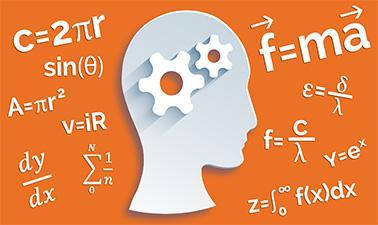
Learn basic engineering mathematics and how to apply basic mathematics to solve engineering problems. The goal of this mathematics course is to provide high school students and college freshmen an introduction to basic mathematics and especially show how mathematics is applied to solve fundamental engineering problems.

Class Deals by MOOC List - Click here and see EdX's Active Discounts, Deals, and Promo Codes.

The aim of the course is to show the students why mathematics is important in an engineering career by demonstrating how simple engineering problems can be mathematically described and methodically analyzed to find a solution.
A number of applied examples from various engineering disciplines will be introduced, analyzed and solved.

What you'll learn:

  • Numbers, Fractions, Units
  • Linear Equations of one variable and Equation of a Line
  • Quadratic Equations
  • Trigonometry
  • 2D Vectors
  • Complex Numbers
  • Sinusoids
  • Systems of Linear Equations
  • Derivatives
  • Integrals
  • Differential Equations
Go to Class
MOOC List is learner-supported. When you buy through links on our site, we may earn an affiliate commission.

Related Courses

Calculus 1B: Integration (edX) EdX
MIT,MITx

Calculus 1B: Integration (edX)

Discover the integral---what it is and how to compute it. See how to use calculus to model real world phenomena. Part 2 of 3. How long should the handle of your spoon be so that your fingers do not burn while mixing chocolate fondue? Can you find a shape that has finite volume, but infinite surface area? How does the weight of the rider change the trajectory of a zip line ride? These and many other questions can be answered by harnessing the power of the integral.

Sep 14th 2022
13-24 Weeks
Quantum Detectors (edX) EdX
Purdue University,PurdueX

Quantum Detectors (edX)

Learn about quantum sensors and devices that extract maximal information from the world around us. Classical detectors and sensors are ubiquitous around us from heat sensors in cars to light detectors in a camera cell phone. Leveraging advances in the theory of noise and measurement, an important paradigm of quantum metrology has emerged. Here, ultra-precision measurement devices collect maximal information from the world around us at the quantum limit.

Feb 12th 2024
5-12 Weeks
Engineering the Space Shuttle (edX) EdX
MIT,MITx

Engineering the Space Shuttle (edX)

Learn all about the world’s first reusable spacecraft - the Space Shuttle - from the very people who designed, built, and operated it for 30 years. This course examines how the Space Shuttle was designed and how its design was influenced by economics and politics. The course goes into detail on many of the Shuttle’s subsystems (e.g. rocket engines, thermal protection, aerodynamics, environmental control and life support, communications, etc.) and explains how the Shuttle was operated (launch, mission control, payloads, etc.). The course also uses the Space Shuttle to present the fundamentals of Systems Engineering.

Feb 16th 2022
5-12 Weeks
An Introduction to Evidence-Based Undergraduate STEM Teaching (edX) EdX
CornellX,Cornell University

An Introduction to Evidence-Based Undergraduate STEM Teaching (edX)

Learn how to implement evidence-based teaching strategies in your university classroom as well as effective methods for assessing teaching and learning. This course is designed to provide future STEM faculty, graduate students and post-doctoral fellows with an introduction to effective teaching strategies and the research that supports them.

Jun 17th 2024
5-12 Weeks
Calculus 1C: Coordinate Systems & Infinite Series (edX) EdX
MIT,MITx

Calculus 1C: Coordinate Systems & Infinite Series (edX)

Master the calculus of curves and coordinate systems; approximate functions with polynomials and infinite series. Part 3 of 3. How did Newton describe the orbits of the planets? To do this, he created calculus. But he used a different coordinate system more appropriate for planetary motion. We will learn to shift our perspective to do calculus with parameterized curves and polar coordinates. And then we will dive deep into exploring the infinite to gain a deeper understanding and powerful descriptions of functions.

Feb 15th 2023
13-24 Weeks
Railway Engineering: An Integral Approach (edX) EdX
Delft University of Technology,DelftX

Railway Engineering: An Integral Approach (edX)

Discover the science and complexity behind the exciting world of metro, tram and railway systems. Have you ever wondered what it takes to get your train on the right platform at the scheduled time every day? Understanding the complexity behind today’s sophisticated railway systems will give you a better insight into how this safe and reliable transportation system works. We will show you the many factors which are involved and how multiple people, behind the scenes, have a daily task that enables you to get from home to work. Journey with us into the world of rail - a complex system that connects people, cities and countries.

Apr 10th 2024
5-12 Weeks
Introduction to Quantum Transport (edX) EdX
Purdue University,PurdueX

Introduction to Quantum Transport (edX)

This course introduces the non-equilibrium Green’s function (NEGF) method widely used to describe quantum effects in nanoscale devices, along with its applications to spintronic devices. This course introduces the Schrödinger equation, using the tight-binding method to discuss the concept of bandstructure and E(k) relations, followed by an introduction to the NEGF method with simple illustrative examples. Concept of spinors is introduced along with the application of the NEGF method to spintronic devices.

Feb 12th 2024
5-12 Weeks
Fundamentos de Mecánica para Ingeniería (edX) EdX
Universitat Politècnica de València,UPValenciaX

Fundamentos de Mecánica para Ingeniería (edX)

Estudiaremos la cinemática y la dinámica del punto, los conceptos de trabajo y potencia y la energía mecánica. Se aborda el estudio del universo físico analizando objetos en movimiento. Se definen y analizan todas las magnitudes y leyes físicas que permiten describir geométrica y causalmente el movimiento de cuerpos representados por un punto.

Self Paced
Self-Paced
Multivariable Calculus 1: Vectors and Derivatives (edX) EdX
MIT,MITx

Multivariable Calculus 1: Vectors and Derivatives (edX)

We live in a multivariable world. Explore the derivative in higher dimensions and learn how to apply it to solve real world problems. Part 1 of 3. Variables are all around us: temperature, altitude, location, profit, color, and countless others. Multivariable Calculus is the tool of choice to shed light on complex relationships between 2, 3, or hundreds of variables simultaneously.

Feb 16th 2022
13-24 Weeks