EdX

文物精品与文化中国:农业与制造业 | Relics in Chinese History - Part 1: Agriculture and Manufacturing (edX)

文物精品与文化中国:农业与制造业 | Relics in Chinese History - Part 1: Agriculture and Manufacturing (edX)

Discover manufacturing and agriculture’s role in the history of China as we explore Chinese culture through artifacts and relics. 本课程以精品文物作引子,将学术界探索中华文明的过程作为线索,介绍古代中国在造船、玉器等诸多领域的杰出成就

Class Deals by MOOC List - Click here and see EdX's Active Discounts, Deals, and Promo Codes.

Chinese archaeology is one of the fastest growing and most exciting fields of study in China. With a wealth of cultural relics unearthed this past century, the world’s fascination with China’s rich history has been renewed.
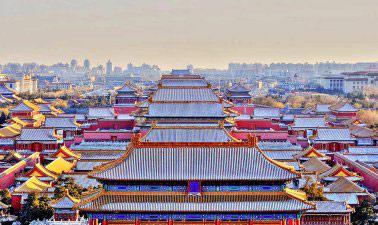
In this part 1 of a three-part series, this Chinese history course will examine unique cultural relics identified by scholars as important to Chinese civilization. We will focus on agriculture, textiles, architecture, painted pottery, jade articles, bronze ware, shipbuilding and more. We will ignite your curiosity as we explore how these treasures reveal China’s past, and guide the future of Chinese culture.
中国考古学是以往100年中发展最为迅速的领域之一,大批珍贵文物的出土,不断刷新人们对文化中国的认识。本课程以4-6件(组)精品文物作引子,将学术界探索中华文明的过程作为线索,介绍古代中国在造船、玉器等诸多领域的杰出成就,其中不乏学术前沿的考古发现与研究成果,内容精彩纷呈,雅俗共赏,学生可以藉此获得对文化中国全方位的、直观而深入的认识。
What you'll learn:

  • History of Chinese agriculture and its impact on Chinese culture
  • The development of Chinese manufacturing
  • Chinese history through archeological excavations

Go to Class
MOOC List is learner-supported. When you buy through links on our site, we may earn an affiliate commission.

Related Courses

Manufacturing Process Control II (edX) EdX
MIT,MITx

Manufacturing Process Control II (edX)

Learn how to control process variation, including methods to design experiments that capture process behavior and understand means to control variability. As part of the Principles of Manufacturing MicroMasters program, this course will build on statistical process control foundations to add process modeling and optimization.Building on formal methods of designed experiments, the course develops highly applicable methods for creating robust processes with optimal quality.

Oct 17th 2023
5-12 Weeks
Literati China: Examinations, Neo-Confucianism, and Later Imperial China (edX) EdX
HarvardX,Harvard University

Literati China: Examinations, Neo-Confucianism, and Later Imperial China (edX)

Explore China’s imperial period, with a focus on the Song dynasty and the role of the exam system in government. Fundamental changes in government, the economy, and broader society took place between the 8th and 11th centuries in China. The state aristocracy gave way to new literati elite: educated men who sought to enter government through competitive examinations. A new kind of Confucianism also took shape, which prized the moral autonomy of individuals. With this, the later imperial period of China’s history begins.

Self Paced
Self-Paced
Supply Chains for Manufacturing: Inventory Analytics (edX) EdX
MIT,MITx

Supply Chains for Manufacturing: Inventory Analytics (edX)

Learn about effective supply chain strategies for companies that operate globally, with emphasis on how to plan and integrate supply chain components into a coordinated system. This course was formerly known as Supply Chains for Manufacturing I. A supply chain entails two or more parties that are linked together by material, information and money flows.

Mar 6th 2024
5-12 Weeks
A Global History of Architecture (edX) EdX
MIT,MITx

A Global History of Architecture (edX)

Learn about humanity’s rich architectural history on this journey around the globe – from 100,000 BCE to ca. 1,600 CE. How do we understand architecture? One way of answering this question is by looking through the lens of history, beginning with First Societies and extending to the 16th century. This course in architectural history is not intended as a linear narrative, but rather aims to provide a more global view, by focusing on different architectural "moments."

Oct 18th 2023
5-12 Weeks
China’s First Empires and the Rise of Buddhism (edX) EdX
HarvardX,Harvard University

China’s First Empires and the Rise of Buddhism (edX)

Learn about the Qin and Han dynasties, and how Buddhism and ideas of self-realization influenced the medieval period. This course, the second in a collection on Chinese history and culture, addresses how the Qin dynasty conquered China and established a new system of government and how the Han dynasty built a stable, centralized empire that lasted for hundreds of years. We cover the early history of Buddhism in China and how the rising feudal aristocracy responded to the loss of empire by looking inward.

Self Paced
Self-Paced
Creating Modern China: The Republican Period to the Present (edX) EdX
HarvardX,Harvard University

Creating Modern China: The Republican Period to the Present (edX)

Explore the birth of modern China with a focus on the time between the fall of the Qing and the end of World War II. What does it mean to be modern? What constitutes modern politics, modern institutions, a modern military, and modern infrastructure? In this period of great excitement and experimentation, the country is asking itself: How do you become modern and remain true to the Chinese national identity?

Self Paced
Self-Paced
Western and Chinese Art: Masters and Classics (edX) EdX
Tsinghua University,TsinghuaX

Western and Chinese Art: Masters and Classics (edX)

From da Vinci to Zhang Xu, Wu Daozi and Warhol, explore immortal works of Western and Chinese art and gain an appreciation of culture, history and civilization. Throughout human history, art has served as a window into current events, traditions, societies and culture. And, Chinese and Western civilizations have produced some of the most famous artworks by world-renowned artists.

Self Paced
Self-Paced
International Politics in the Korean Peninsula (edX) EdX
Seoul National University,SNUx

International Politics in the Korean Peninsula (edX)

Explore the genesis, expansion, projection and challenges of the Chinese World Order in China and East Asia. This course is divided into three parts. First, you’ll learn how the Chinese World Order emerged in the ancient world, focusing on the concept of the "heavenly mandate" (天命) as the ultimate source of political power.

Self Paced
Self-Paced
English for Doing Business in Asia - Speaking (edX) EdX
The Hong Kong University of Science and Technology - HKUST,HKUSTx

English for Doing Business in Asia - Speaking (edX)

Introducing strategies for developing your spoken English communication skills in the context of doing business in Asia. The use of English for doing business in multinational settings is a fact of life for many business people. As Asian economies expand and become more involved in the global economy, a lingua franca – a language used to communicate among groups of people who do not share a mother tongue – is needed to exchange information.

Self Paced
Self-Paced
Chinese Language in Culture: Level 1 (edX) EdX
MIT,MITx

Chinese Language in Culture: Level 1 (edX)

Learn both cultural competence and language proficiency for successful participation in Mandarin-speaking societies. This subject is the first of a series that forms an introduction to modern standard Chinese, commonly called Mandarin, the language with the largest number of native speakers in the world. It is the official language of Mainland China and Taiwan, and one of the official languages of Singapore.The course presupposes no prior background in the language.

Apr 21st 2022
5-12 Weeks
Feeding a Hungry Planet: Agriculture, Nutrition and Sustainability (edX) EdX
SDGAcademyX,SDG Academy

Feeding a Hungry Planet: Agriculture, Nutrition and Sustainability (edX)

How do we create a healthy and sustainable diet for the growing world population? Agriculture is more than waving fields of wheat; our ability to grow food from existing natural resources – and without decimating those resources – is key to sustainably feeding the world. In this course, learn about food security worldwide, the effects of malnutrition, how we manage ecosystems that provide food resources and more.

Self Paced
Self-Paced