Challenging Forensic Science: How Science Should Speak to Court (Coursera)

Challenging Forensic Science: How Science Should Speak to Court (Coursera)

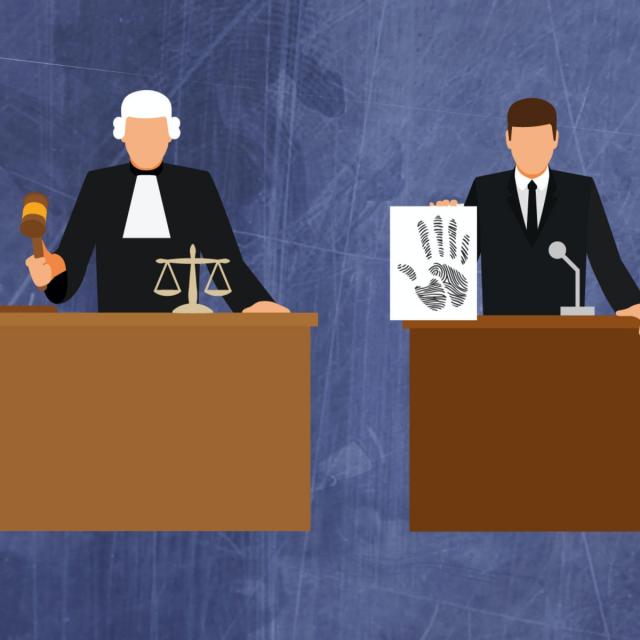
The aim of this course is to promote critical thinking with regard to forensic science. Today, in general, most people are dazzled by the technical possibilities offered by forensic science. They somewhat live in the illusion that forensic evidence is fool proof and brings factual findings with 100% certainty.

Class Deals by MOOC List - Click here and see Coursera's Active Discounts, Deals, and Promo Codes.

This course – given by specialists in the field – goes beyond the conventional image that is promoted through TV series such as CSI. It alerts (without alarming) the public on the limits of the techniques in order to promote a sound administration of forensic science in the criminal justice system. It allows participants to understand the importance of probabilistic reasoning in forensic science, because uncertainty is a constitutive part of forensic science. The course is constructed as a series of causes célèbres that could or have led to miscarriages of justice. Some of these cases have been part of case reviews carried out at the School of Criminal Justice of the University of Lausanne.

Syllabus

WEEK 1
What is the "DNA" of a good forensic report ?
This first week will set the scene for the course. You will meet the instructors; learn about their background, teaching, research and casework activities. The School of Criminal Justice (University of Lausanne) will be shortly presented through a virtual visit, followed by the course objectives. The recent ENFSI guideline for evaluative reporting, used throughout the course, will be presented. ENFSI stands for the set of the good principles for writing forensic reports to be used in a court of law. The whole course aims at contrasting the practice as observed in notorious cases with the good practice promoted by the ENFSI guideline. Hence, we will start by setting out some reporting criteria that are essential to bring reliable evidence in court and explain the principles of interpretation (based on the concept of likelihood ratio) that should govern the production of any forensic evidence. The application of these principles leads to a defined way whereby the forensic scientist is entitled to speak to court.

WEEK 2
Elementary: source is not activity!
There is a general misconception that a piece of forensic evidence is sufficient to clinch the outcome of a case. This module aims at showing that the reality is more subtle and is intrinsically linked to the concept of hierarchy of propositions.
Cases based on DNA and gunshot residue (GSR) evidence will be analysed and discussed. First, through the Weller case we will demonstrate the DNA findings providing information towards the source of the DNA may not be at the core of the issue in the case. More and more the source of the DNA is not challenged, but how the DNA got there is.

WEEK 3
DNA is not the magic bullet
Based on international cases (Knox, Jama, Anderson and Scott) we will illustrate the potentials aspects that one needs to consider when assessing the value of DNA found in small quantity. You will be shown how one performs DNA analysis and what type of results can be produced. We will apply the ENFSI and the ISFG guidelines for evaluative reporting in the case at hand and see if the principles advocated allow avoiding misleading evidence. We will compare the situations where large quantities of blood are found to cases where low template DNA is recovered. You will learn to contrast these two situations and discover what type of results can be expected and what methods allow a balanced and robust interpretation. This first part of the course will demonstrate that very sensitive techniques require robust interpretation methods.
In the second part of the course, you will understand that with trace quantities, stringent control procedures are needed on the crime scene and in the laboratory. Indeed, pollution (or so-called contamination) is an aspect one needs to take into account. Cases (for example in Australia, the USA and England) have shown that the traces from the crime scene can be polluted at the hospital, by paramedics or in the laboratory. It is thus essential to consider this possibility, especially when DNA is the central (and only) element supporting the allegation of a person’s involvement in a crime. How to take into consideration the possibility of error/contamination when assessing the results will be presented.

WEEK 4
Trials by Numbers or Numbers on Trial
This week will be dedicated to how forensic scientists should convey the value of their results. From our white room dedicated to photography, we will study famous cases - including the Dreyfus case- and see how statistics can be misused. It will allow us to discuss how statistical values ought to be presented in court. A statistician (Phil Dawid) and a legal scholar (David Kaye) will be interviewed.
The second essential topic we will present will be on fallacious reasoning, and in particular on what has been coined, more than thirty years ago, the prosecutors fallacy. Bill Thompson, the first to have described this fallacious argument used in court will be another of our guest interviewees.

WEEK 5
The wonderland of certainty
This week will be present the Dallagher case involving earprints, the Mayfield and the McKie cases involving fingerprints. We want to make you understand what is at stake when an expert decides to conclude to an identification. You will understand through this week that identification is not the duty of the forensic scientist and that it is a decision that must be taken by the Court. We also want to highlight the possible causes for wrong identification. And yes they do occur, even with fingerprints! We will have the privilege to listen to interviews of persons closely involved in these cases: The father of Shirley McKie as well as Brandon Mayfield and her daughter Sharia.
Go to Class
MOOC List is learner-supported. When you buy through links on our site, we may earn an affiliate commission.

Related Courses

Alternative Mobility Narratives (Coursera) Coursera
University of Amsterdam,EIT Urban Mobility

Alternative Mobility Narratives (Coursera)

Ready to imagine a radically different mobility future? This course is about the stories that we tell ourselves about why and how we move. By critically examining our current narratives, we help you think about mobility in a new way. Using systems dynamics modelling, we explore how a mobility innovation (of your choice) impacts our mobility system as a whole, for better or for worse. This course will invite you to reflect on our mainstream mobility narrative built on engineering and economics. But warning: you may end up never looking at mobility in the same way again!

Jun 15th 2026
5-12 Weeks
Mindware: Critical Thinking for the Information Age (Coursera) Coursera
University of Michigan

Mindware: Critical Thinking for the Information Age (Coursera)

Most professions these days require more than general intelligence. They require in addition the ability to collect, analyze and think about data. Personal life is enriched when these same skills are applied to problems in everyday life involving judgment and choice. This course presents basic concepts from statistics, probability, scientific methodology, cognitive psychology and cost-benefit theory and shows how they can be applied to everything from picking one product over another to critiquing media accounts of scientific research. Concepts are defined briefly and breezily and then applied to many examples drawn from business, the media and everyday life.

Jun 15th 2026
4 Weeks
Writing in the Sciences (Coursera) Coursera
Stanford University

Writing in the Sciences (Coursera)

This course teaches scientists to become more effective writers, using practical examples and exercises. Topics include: principles of good writing, tricks for writing faster and with less anxiety, the format of a scientific manuscript, peer review, grant writing, ethical issues in scientific publication, and writing for general audiences.

Jun 15th 2026
5-12 Weeks
English and Academic Preparation - Grad Track (Coursera) Coursera
Rice University

English and Academic Preparation - Grad Track (Coursera)

The English and Academic Preparation – Grad Track course is for students with a (minimum) advanced level of English. It is designed to help international students strengthen their English while developing academic skills necessary for success in graduate studies at an American university. Ideally, prospective students have completed or are near completion of a bachelor’s degree in their country and would like to come to the United States to study for a master’s or doctorate degree.

Jun 15th 2026
4 Weeks
Collaborate Effectively for Professional Success (Coursera) Coursera
IBM

Collaborate Effectively for Professional Success (Coursera)

Collaboration is not just the act of working together. It goes beyond that. Through collaboration, you can accomplish much more than what you would if you worked alone. Having the skills to communicate with the people you are working with and being able to work as a team towards your goal are just some of the skills you will learn in this course to help you collaborate effectively in the workplace.

Jun 15th 2026
1 Week
Introduction to Systems Biology (Coursera) Coursera
Icahn School of Medicine at Mount Sinai

Introduction to Systems Biology (Coursera)

This course will introduce the student to contemporary Systems Biology focused on mammalian cells, their constituents and their functions. Biology is moving from molecular to modular. As our knowledge of our genome and gene expression deepens and we develop lists of molecules (proteins, lipids, ions) involved in cellular processes, we need to understand how these molecules interact with each other to form modules that act as discrete functional systems.

Jun 15th 2026
5-12 Weeks
Experiments and Variations in Bipedalism (Coursera) Coursera
Dartmouth College

Experiments and Variations in Bipedalism (Coursera)

This course will help you learn how fossils give us an insight into how the early members of our lineage walked bipedally. The four million years old bone of Australopithecus anamensis is the oldest undisputed evidence for bipedalism in our lineage. Similarly, Lucy’s, who was Australopithecus afarensis, fossil also helped scientists discover a lot about how bipedalism evolved over time.

Jun 15th 2026
4 Weeks
Economics: Society, Markets, and [In]equality (Coursera) Coursera
Parsons School of Design, The New School

Economics: Society, Markets, and [In]equality (Coursera)

Thinking critically about today's economy can help you understand the world around you. Economics: Society, Markets, and [In]equality will pique your curiosity and inspire you to learn more about the power dynamics that determine how people and resources are valued, how goods move around the world, and how we manage our planet and the future.

Jun 20th 2026
5-12 Weeks
Making Sense of the News: News Literacy Lessons for Digital Citizens (Coursera) Coursera
University of Hong Kong,The State University of New York

Making Sense of the News: News Literacy Lessons for Digital Citizens (Coursera)

Never before has the need for News Literacy been more urgent. As news consumers are bombarded with a constant stream of fake news, propaganda, hoaxes, rumors, satire, and advertising — that often masquerade as credible journalism — it is becoming more and more difficult to distinguish fact from fiction. While the public’s faith in the news media erodes, purveyors of misinformation have helped give rise to troubling cultural trends and alarming political movements.

Jun 15th 2026
5-12 Weeks
XR in Healthcare Education and Clinical Practice (Coursera) Coursera
Imperial College London

XR in Healthcare Education and Clinical Practice (Coursera)

This course is designed to teach you about Extended Reality (XR) and its use in healthcare education and clinical practice. Using lessons from experts in the field and different use cases, this course shows you how to use this innovative technology in a way that creates sustainable and accessible real-world use.

Jun 15th 2026
4 Weeks
Human Decision Making and its Biases (Coursera) Coursera
Fractal Analytics

Human Decision Making and its Biases (Coursera)

This course discusses the biases and limitations of the human brain ,strategies to overcome these biases, and critically analyzes data while making decisions and recommendations. Analyzing data effectively and objectively is a long journey and the first step is to be aware of these biases, prejudices and perceptions.

Jun 15th 2026
4 Weeks