EdX

Quantitative Biology Workshop (edX)

Offered by MIT, MITx,
Quantitative Biology Workshop (edX)

A workshop-style introduction to tools used in biological research. Discover how to analyze data using computational methods. Do you have an interest in biology and quantitative tools? Do you know computational methods but do not realize how they apply to biological problems? Do you know biology but do not understand how scientists really analyze complicated data? 7.QBWx: Quantitative Biology Workshop is designed to give learners exposure to the application of quantitative tools to analyze biological data at an introductory level.

Class Deals by MOOC List - Click here and see EdX's Active Discounts, Deals, and Promo Codes.

The Biology Department of MIT has run this workshop-style course as part of a one-week outreach program for students from other universities. With 7.QBWx, we can give more learners from around the world the chance to discover quantitative biology. We hope that this series of workshops encourages learners to explore new interests and take more biology and computational courses.

We expect that learners from 7.00x Introduction to Biology – The Secret of Life or an equivalent course can complete this workshop-based course without a background in programming. The course content will introduce programming languages but will not teach any one language in a comprehensive manner. The content of each week varies. We want learners to have an introduction to multiple languages and tools to find a topic that they would want to explore more. We recommend that learners try to complete each week to find what interests them the most.
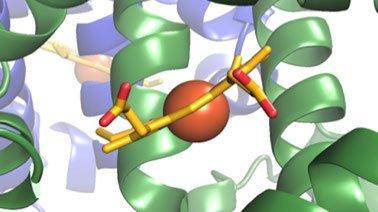
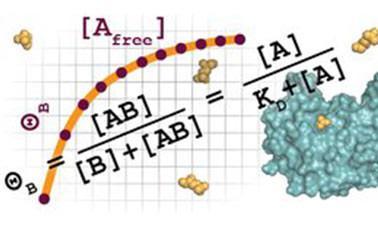
This workshop includes activities on the following biological topics: population biology, biochemical equilibrium and kinetics, molecular modeling of enzymes, visual neuroscience, global and single-cell gene expression, development, and genomics. The tools and programming languages include MATLAB, PyMOL, Python, and R. This course does not require learners to download MATLAB. All MATLAB activities run and are graded within the edX platform. We do recommend that participants download a few other free tools for the activities so that they learn how to use the same tools and programs that scientists use.

What you'll learn:

  • Apply quantitative methods to biological problems
  • Define computational vocabulary
  • Write Python, MATLAB, and R code to analyze biological data
  • Examine any protein structure in PyMOL
  • Analyze how to answer a scientific question through a step-by-step thought process.

Prerequisites:
7.00x Introduction to Biology or similar (biochemistry, molecular biology, and genetics). Programming experience is not required. An introduction to MATLAB, Python, and R is included.


Go to Class
MOOC List is learner-supported. When you buy through links on our site, we may earn an affiliate commission.

Related Courses

Tropical Coastal Ecosystems (edX) EdX
University of Queensland,UQx

Tropical Coastal Ecosystems (edX)

Take the challenge and understand problems and solutions to managing tropical coastal ecosystems. Do you want to develop the skills and knowledge needed to help preserve tropical coastal ecosystems? These habitats provide goods and services for hundreds of millions of people but human activities have led to their global decline.

Self Paced
Self-Paced
Cell Biology: Mitochondria (edX) EdX
HarvardX,Harvard University

Cell Biology: Mitochondria (edX)

A human-centered approach to the fundamentals of cell biology with a focus on the power plants of the cell - mitochondria. The cell is a powerful case study to help us explore the functional logic of living systems. All organisms, from single-celled algae to complex multicellular organisms like us, are made up of cells. In this course, you will learn the how and why of biology by exploring the function of the molecular components of cells, and how these cellular components are organized in a complex hierarchy.

Self Paced
Self-Paced
Introduction to Linear Models and Matrix Algebra (edX) EdX
HarvardX,Harvard University

Introduction to Linear Models and Matrix Algebra (edX)

Learn to use R programming to apply linear models to analyze data in life sciences. Matrix Algebra underlies many of the current tools for experimental design and the analysis of high-dimensional data. In this introductory data analysis course, we will use matrix algebra to represent the linear models that commonly used to model differences between experimental units. We perform statistical inference on these differences. Throughout the course we will use the R programming language.

Self Paced
Self-Paced
Técnicas Cuantitativas y Cualitativas para la Investigación (edX) EdX
Universitat Politècnica de València,UPValenciaX

Técnicas Cuantitativas y Cualitativas para la Investigación (edX)

El curso pretende acercar al alumno al método científico y, en concreto, cómo éste se aplica al estudio y análisis de los métodos de casos. El curso que se propone es ideal para investigadores y alumnos que se encuentren cursando trabajos de fin de grado, trabajos de fin de máster o realizando tesis, así como todos aquellos del área de la administración que quieran realizar un análisis cuantitativo o cualitativo en sus estudios.

Self Paced
Self-Paced
How to analyze a microbiome (edX) EdX
KU Leuven University,KULeuvenX

How to analyze a microbiome (edX)

Learn common analysis techniques to make sense of microbial sequencing data. Microorganisms play a major role in the biosphere and within our bodies, but only a tiny fraction has been cultured so far. Microbiome data, that is the genetic information of microorganisms, is therefore an important window into the hidden microbial world.

Self Paced
Self-Paced
Basics of Statistical Inference and Modelling Using R (edX) EdX
University of Canterbury,UCx

Basics of Statistical Inference and Modelling Using R (edX)

Learn why a statistical method works, how to implement it using R and when to apply it and where to look if the particular statistical method is not applicable in the specific situation. Basics of Statistical Inference and Modelling Using R is part one of the Statistical Analysis in R professional certificate.

Self Paced
Self-Paced
Case Studies in Functional Genomics (edX) EdX
HarvardX,Harvard University

Case Studies in Functional Genomics (edX)

Perform RNA-Seq, ChIP-Seq, and DNA methylation data analyses, using open source software, including R and Bioconductor. We will explain how to perform the standard processing and normalization steps, starting with raw data, to get to the point where one can investigate relevant biological questions.

Self Paced
Self-Paced
Observation Theory: Estimating the Unknown (edX) EdX
Delft University of Technology,DelftX

Observation Theory: Estimating the Unknown (edX)

Learn how to estimate parameters from observational data for real-world engineering applications and assess the quality of the results. Are you an engineer, scientist or technician? Are you dealing with measurements or big data, but are you unsure about how to proceed? This is the course that teaches you how to find the best estimates of the unknown parameters from noisy observations. You will also learn how to assess the quality of your results.

Self Paced
Self-Paced
Principles of Biochemistry (edX) EdX
HarvardX,Harvard University

Principles of Biochemistry (edX)

This introduction to biochemistry explores the molecules of life, starting at simple building blocks and culminating in complex metabolism. Principles of Biochemistry integrates an introduction to the structure of macromolecules and a biochemical approach to cellular function. Topics addressing protein function will include enzyme kinetics, the characterization of major metabolic pathways and their interconnection into tightly regulated networks, and the manipulation of enzymes and pathways with mutations or drugs.

Self Paced
Self-Paced
Essential Human Biology: Cells and Tissues (edX) EdX
University of Adelaide,AdelaideX

Essential Human Biology: Cells and Tissues (edX)

An introduction to the human body's most fundamental building blocks and their behaviours in health and disease. Are you preparing for a health-related career, or planning to study in the health sciences? Perhaps you're just keen to learn more about the wonders of the human body? Our bodies are amazing but complex biological machines. This course will provide you with an outstanding foundation of knowledge in human anatomy and physiology.

Self Paced
Self-Paced