Immunology: Autoimmunity, Allergy, and Transplants (Coursera)

Immunology: Autoimmunity, Allergy, and Transplants (Coursera)

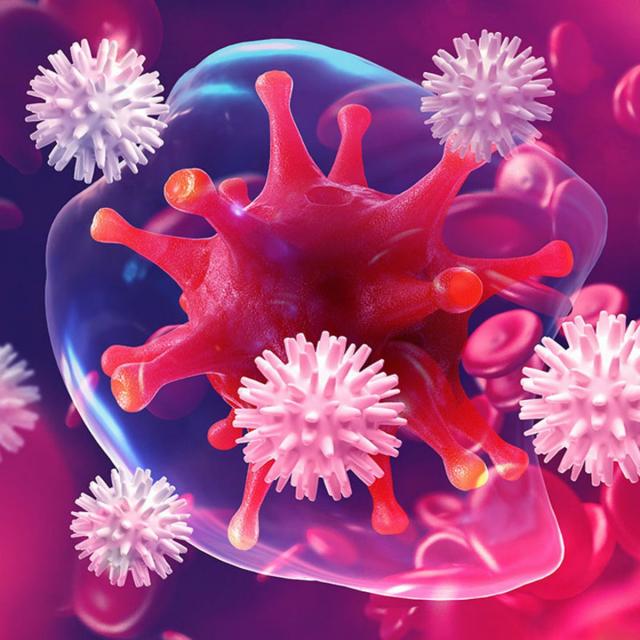
In this course, you will explore the mechanisms and immune responses involved in autoimmune diseases and in hyper-responsive phenomena, such as asthma. You will examine in detail the potential causes and factors behind an overactive immune system and the disorders that might ensue if the response is not adequately controlled. you will also analyse the effects of overactive immune response in transplant rejection.

Class Deals by MOOC List - Click here and see Coursera's Active Discounts, Deals, and Promo Codes.

Course 3 of 5 in the Immunology: The Immune System and its Failures Specialization.

What You Will Learn

  • In this course, you will learn about the consequences of the imbalance between the effector and regulatory immune responses.
  • You will also take a closer look at the potential mechanisms behind autoimmunity in the context of common autoimmune conditions.
  • You will examine the exaggerated/unnecessary immune reactions to innocuous particles, observed in allergies and hypersensitivity reactions in asthma.

Syllabus

WEEK 1
Introduction to autoimmunity
Autoimmunity, characterised by self-aggression by the immune system, is a series of highly complex and multifactorial conditions which result from uncontrolled immune responses. In module one, you will explore the mechanisms involved in autoimmunity, investigate autoimmune disease types and discuss novel treatments.

WEEK 2
Systemic lupus erythematosus (SLE)
In the company of our world-wide expert, module two will present a common autoimmune condition, systemic lupus erythematosus in more details. Together, you will explore the causes and risks factors at the origin of the condition, you will focus on the immune origins of the diseases and touch on the impact of environmental factors.

WEEK 3
Haematological autoimmune conditions
In module three, you will explore two autoimmune conditions affecting specific blood components. Using these two conditions, our expert will illustrate their causative immune dysregulation, their pathogenesis, and current treatment strategies. Finally, the course will illustrate additional autoimmune blood condition and detail their immunological cause.

WEEK 4
Asthma and allergic reactions
Asthma and allergic diseases constitute the most common chronic inflammatory disorders, particularly in children, with constantly increasing prevalence in Westernised countries. Module four will explore these complex conditions. The interactions between genetic and environmental factors as well as the involvement of immune players, notably the cells subsets that are involved, and the research that is being conducted to develop novel treatment strategies.

WEEK 5
Antibody-mediated transplant rejection
Module 5, last one in this course, will focus on transplantation and the role of the immune system in this life-saving intervention. By exploring the involvement of both innate and adaptive immune cells and molecules, your will ultimately better understand the therapeutic measures taken to ultimately prevent graft rejection.
Go to Class
MOOC List is learner-supported. When you buy through links on our site, we may earn an affiliate commission.

Related Courses

Non-Communicable Diseases in Humanitarian Settings (Coursera) Coursera
University of Copenhagen

Non-Communicable Diseases in Humanitarian Settings (Coursera)

NCDs are the leading cause of death in almost every region of the world, and place a huge burden on individuals, families and societies. Humanitarian settings have a negative effect on the levels of disease, and the possibility of treatment. The importance of NCDs in global health is acknowledged by their inclusion in the Sustainable Development Goals, which call for a reduction of a third in premature mortality from NCDs by 2030. However, NCDs have until recently received little attention in humanitarian settings, leaving prevention, care and treatment needs largely unaddressed among some of the most vulnerable populations. According to the World Health Organization, 70 percent of global deaths are due to NCDs.

Jun 1st 2026
3 Weeks
COVID-19 Training for Healthcare Workers (Coursera) Coursera
StanfordOnline

COVID-19 Training for Healthcare Workers (Coursera)

COVID-19 is rapidly spreading across the globe and all providers must be prepared to recognize, stabilize and treat patients with novel coronavirus infection. Following completion of this short course physicians, nurses, and other healthcare professionals will have a unified, evidenced-based approach to saving the lives of patients with COVID-19, including those who are critically ill.

May 18th 2026
1 Week
Strategies for Assisted Living Communities during COVID-19 (Coursera) Coursera
Johns Hopkins University

Strategies for Assisted Living Communities during COVID-19 (Coursera)

SARS-CoV-2, the virus that causes COVID-19, poses a high risk for assisted living communities due to residents’ age, health status, and communal living environment. The COVID-19 response has largely focused on nursing homes, leaving assisted living communities in the United States with fragmented guidance on how to respond to COVID-19 challenges. This course provides comprehensive instruction and resources for administrators and direct-care staff of assisted living communities.

May 25th 2026
1 Week
Building on the SIR Model (Coursera) Coursera
Imperial College London

Building on the SIR Model (Coursera)

The other two courses in this specialisation require you to perform deterministic modelling - in other words, the epidemic outcome is predictable as all parameters are fully known. However, this course delves into the many cases – especially in the early stages of an epidemic – where chance events can be influential in the future of an epidemic.

Jun 1st 2026
4 Weeks
Rastreamento de contato da COVID-19 (Coursera) Coursera
Johns Hopkins University

Rastreamento de contato da COVID-19 (Coursera)

A crise da COVID-19 criou uma necessidade sem precedentes de rastreamento de contato em todo o país, exigindo que milhares de pessoas aprendessem rapidamente as principais habilidades. As qualificações para os cargos de rastreamento de contato diferem em todo o país e no mundo, com alguns novos cargos abertos a indivíduos com diploma de ensino médio ou equivalente.

Jun 1st 2026
1 Week
Ebola: Essential knowledge for health professionals (Coursera) Coursera
University of Amsterdam,Universiteit Utrecht

Ebola: Essential knowledge for health professionals (Coursera)

March 2014 marked the starting point of the largest outbreak of Ebola virus disease in history. Although the disease seems to be on a decrease, we are not there yet and new outbreaks will surely emerge. New efforts to combat the outbreak are necessary. This is why we developed this online course about Ebola, targeted at health professionals across the world. In this course you will cover the fundamental knowledge any health professional should have with expected or confirmed cases or a general interest in the Ebola disease.

Jun 1st 2026
5-12 Weeks
Infectious Disease Modeling in Practice (Coursera) Coursera
Johns Hopkins University

Infectious Disease Modeling in Practice (Coursera)

Mathematical modeling is an increasingly widespread tool for understanding infectious disease transmission and informing public health decision making. This course provides an in depth overview of the practical uses of mathematical modeling for a range of diseases and scenarios. We cover the basic principles of infectious disease models, how models are adapted to be specific to the disease and question of interest, and important assumptions of different models.

May 25th 2026
3 Weeks
Epidemiology: The Basic Science of Public Health (Coursera) Coursera
University of North Carolina

Epidemiology: The Basic Science of Public Health (Coursera)

Often called “the cornerstone” of public health, epidemiology is the study of the distribution and determinants of diseases, health conditions, or events among populations and the application of that study to control health problems. By applying the concepts learned in this course to current public health problems and issues, students will understand the practice of epidemiology as it relates to real life and makes for a better appreciation of public health programs and policies. This course explores public health issues like cardiovascular and infectious diseases – both locally and globally – through the lens of epidemiology.

May 25th 2026
5-12 Weeks
Virology and Epidemiology in the Time of COVID-19 (Coursera) Coursera
American Museum of Natural History

Virology and Epidemiology in the Time of COVID-19 (Coursera)

This course covers the science and social impacts of viral infectious diseases. We will begin by covering the basics: what a virus is, the structural and functional diversity of viruses, and how viruses use our bodies and the bodies of other organisms to replicate. Then we will dive into the human response: how our immune systems work to protect us from pathogenic viruses and how we use science and social systems to fend off viruses through vaccines and public health measures.

May 25th 2026
5-12 Weeks
Epidemics (Coursera) Coursera
University of Hong Kong

Epidemics (Coursera)

“If history is our guide, we can assume that the battle between the intellect and will of the human species and the extraordinary adaptability of microbes will be never-ending.” Despite all the remarkable technological breakthroughs that we have made over the past few decades, the threat from infectious diseases has significantly accelerated. In this course, we will learn why this is the case by looking at the fundamental scientific principles underlying epidemics and the public health actions behind their prevention and control in the 21st century.

May 25th 2026
5-12 Weeks
Foundations of Public Health Practice: Health Protection (Coursera) Coursera
Imperial College London

Foundations of Public Health Practice: Health Protection (Coursera)

The Health Protection course is the fourth instalment of the wider Foundations of Public Health Practice specialisation from Imperial College London's Global Master of Public Health (MPH). The scope and content of this course has been developed from the ground up by a combined team of academics and practitioners drawing on decades of real-world public health experience as well as deep academic knowledge. Through short video lectures, practitioner interviews and a wide range of interactive activities, learners will be immersed in the world of public health practice.

Jun 1st 2026
3 Weeks
Immunology: Adaptive Immune System (Coursera) Coursera
Imperial College London

Immunology: Adaptive Immune System (Coursera)

In this course, you will learn about the role of immune responses of the adaptive (acquired) immune system which provides specialised immunity against pathogens. Guided by our researchers in the Department of Immunity and Inflammation, we will take a closer look at the lymphocyte subsets and mechanisms involved in this delayed finely tuned response occurring days to weeks after the initial exposure to microbial antigens.

Jun 1st 2026
5-12 Weeks