Infectious Disease Modeling in Practice (Coursera)

Infectious Disease Modeling in Practice (Coursera)

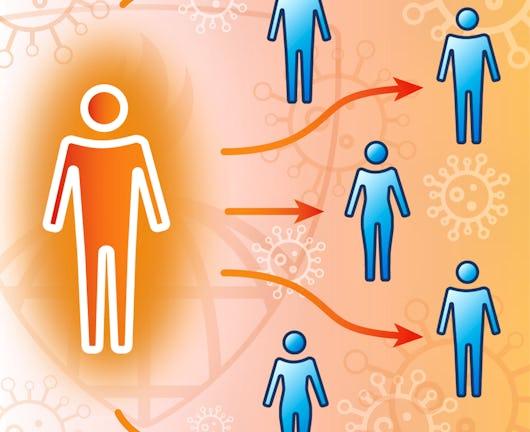
Mathematical modeling is an increasingly widespread tool for understanding infectious disease transmission and informing public health decision making. This course provides an in depth overview of the practical uses of mathematical modeling for a range of diseases and scenarios. We cover the basic principles of infectious disease models, how models are adapted to be specific to the disease and question of interest, and important assumptions of different models.

Class Deals by MOOC List - Click here and see Coursera's Active Discounts, Deals, and Promo Codes.

We will discuss how data informs models, how models can be used to interpret data, uncertainty in model results, and pros and cons of different modeling and analytic approaches. In each module we focus on a use case for models: evaluating potential control strategies, quantifying and comparing the transmission rate of infections, and for forecasting future disease burden.
Learners will get the most out of this course if they are familiar with the basics of infectious disease epidemiology and some university level mathematics background. Those who are interested in a more basic overview of model uses in public health decision-making without the requirement for any mathematics background are recommended to view our companion course, Infectious Disease Transmission Models for Decision Makers. Learners who have a stronger quantitative background and are interested in learning to construct models themselves are suggested to consider the Infectious Disease Modeling Specialization developed by Imperial College London.

Syllabus

The Basics of Building Infectious Disease Transmission Models
Inferring Infectious Disease Transmission Rates from Outbreak Data
Prediction of Infectious Disease: Forecasting and Scenario Projection
Go to Class
MOOC List is learner-supported. When you buy through links on our site, we may earn an affiliate commission.

Related Courses

Immunology: Immune Failures and Cancer Immunology (Coursera) Coursera
Imperial College London

Immunology: Immune Failures and Cancer Immunology (Coursera)

Our immune system is a powerful network. It protects us from external threats, such as harmful substances and pathogenic agents, as well as cellular changes which could lead to diseases. Complications emerge when our natural defences do not function properly, which can result in immune disorders. These can take the form of less severe issues such as insect allergy. Others are more harmful, such as auto aggressive immune reactions, that lead to localised or systemic tissue damage.

Jun 15th 2026
4 Weeks
Interventions and Calibration (Coursera) Coursera
Imperial College London

Interventions and Calibration (Coursera)

This course covers approaches for modelling treatment of infectious disease, as well as for modelling vaccination. Building on the SIR model, you will learn how to incorporate additional compartments to represent the effects of interventions, such the effect of vaccination in reducing susceptibility. You will learn about ‘leaky’ vaccines and how to model them, as well as different types of vaccine and treatment effects.

Jun 15th 2026
4 Weeks
Strategies for Senior Housing Communities during COVID-19 (Coursera) Coursera
Johns Hopkins University

Strategies for Senior Housing Communities during COVID-19 (Coursera)

SARS-CoV-2, the virus that causes COVID-19, poses a high risk for senior housing communities and the people who live and work there. The COVID-19 response has largely focused on nursing homes, leaving independent living communities serving older adults in the United States with fragmented guidance on how to respond to COVID-19 challenges. This course provides comprehensive instruction and resources for property owners and managers, senior housing staff, service coordinators and providers, community housing leaders, and other senior housing stakeholders to build upon their emergency preparedness and response strategies related to COVID-19. The course lectures, interviews, and assignments are largely geared toward federally-subsidized, multifamily senior housing providers, but the material is relevant for all senior housing providers. **Free enrollment available until December 31, 2021. Valid for one enrollment per person.**

Jun 22nd 2026
1 Week
Strategies for Assisted Living Communities during COVID-19 (Coursera) Coursera
Johns Hopkins University

Strategies for Assisted Living Communities during COVID-19 (Coursera)

SARS-CoV-2, the virus that causes COVID-19, poses a high risk for assisted living communities due to residents’ age, health status, and communal living environment. The COVID-19 response has largely focused on nursing homes, leaving assisted living communities in the United States with fragmented guidance on how to respond to COVID-19 challenges. This course provides comprehensive instruction and resources for administrators and direct-care staff of assisted living communities.

Jun 22nd 2026
1 Week
Measuring and Maximizing Impact of COVID-19 Contact Tracing (Coursera) Coursera
Johns Hopkins University

Measuring and Maximizing Impact of COVID-19 Contact Tracing (Coursera)

This course aims to provide managers and developers of contact tracing programs guidance on the most important indicators of performance of a contact tracing program, and a tool that can be used to project the likely impact of improvements in specific indicators. Students who complete the course will be proficient in using the Contact Tracing Evaluation and Strategic Support Application (ConTESSA) to estimate the impact of their contact tracing program on transmission and strategizing about how to increase their program’s impact.Free enrollment available until December 31, 2020. Valid for one enrollment per person.

Jun 15th 2026
1 Week
Validity and Bias in Epidemiology (Coursera) Coursera
Imperial College Business School

Validity and Bias in Epidemiology (Coursera)

Epidemiological studies can provide valuable insights about the frequency of a disease, its potential causes and the effectiveness of available treatments. Selecting an appropriate study design can take you a long way when trying to answer such a question. However, this is by no means enough. A study can yield biased results for many different reasons. This course offers an introduction to some of these factors and provides guidance on how to deal with bias in epidemiological research.

Jun 22nd 2026
4 Weeks
Stories of Infection (Coursera) Coursera
Stanford University

Stories of Infection (Coursera)

This course introduces learners to a variety of infectious diseases using a patient-centered, story-based approach. Through illustrated, short videos, learners will follow the course of each patient’s illness, from initial presentation to resolution. Integrating the relevant microbiology, pathophysiology and immunology, this course aims to engage and entice the learner towards future studies in microbiology, immunology and infectious diseases.

Jun 22nd 2026
5-12 Weeks
Confronting Gender Based Violence: Global Lessons for Healthcare Workers (Coursera) Coursera
Johns Hopkins University

Confronting Gender Based Violence: Global Lessons for Healthcare Workers (Coursera)

This course introduces participants from the healthcare sector to gender based violence (GBV), including global epidemiology of GBV; health outcomes; seminal research; and clinical best practices for GBV prevention, support, and management. A core curriculum is supplemented by lectures that contextualize the content with specific examples and programs from around the world.

Jun 22nd 2026
4 Weeks
The Influence of Social Context on Health (Coursera) Coursera
University of Michigan

The Influence of Social Context on Health (Coursera)

Why are some groups healthier than others, and how do these differences emerge and persist over the life course? How do social policies (e.g., housing, transportation, employment) relate to health and health inequalities? Why are there health disparities even in countries that have free universal health care? This course will address conceptual models for understanding health disparities in the US and internationally, how population science identifies the main sources of these disparities, and how public health can inform policy efforts to address these disparities.

Jun 22nd 2026
4 Weeks
COVID-19 Contact Tracing (Coursera) Coursera
Johns Hopkins University

COVID-19 Contact Tracing (Coursera)

The COVID-19 crisis has created an unprecedented need for contact tracing across the country, requiring thousands of people to learn key skills quickly. The job qualifications for contact tracing positions differ throughout the country and the world, with some new positions open to individuals with a high school diploma or equivalent.

Jun 22nd 2026
1 Week
Building on the SIR Model (Coursera) Coursera
Imperial College London

Building on the SIR Model (Coursera)

The other two courses in this specialisation require you to perform deterministic modelling - in other words, the epidemic outcome is predictable as all parameters are fully known. However, this course delves into the many cases – especially in the early stages of an epidemic – where chance events can be influential in the future of an epidemic.

Jun 15th 2026
4 Weeks