COVID-19 Training for Healthcare Workers (Coursera)

Offered by StanfordOnline,
COVID-19 Training for Healthcare Workers (Coursera)

COVID-19 is rapidly spreading across the globe and all providers must be prepared to recognize, stabilize and treat patients with novel coronavirus infection. Following completion of this short course physicians, nurses, and other healthcare professionals will have a unified, evidenced-based approach to saving the lives of patients with COVID-19, including those who are critically ill.

Class Deals by MOOC List - Click here and see Coursera's Active Discounts, Deals, and Promo Codes.

100% off - Original price: €42
Sale price: €0 with 100 percent off
Free enrollment available until December 31, 2021. Valid for one enrollment per person.

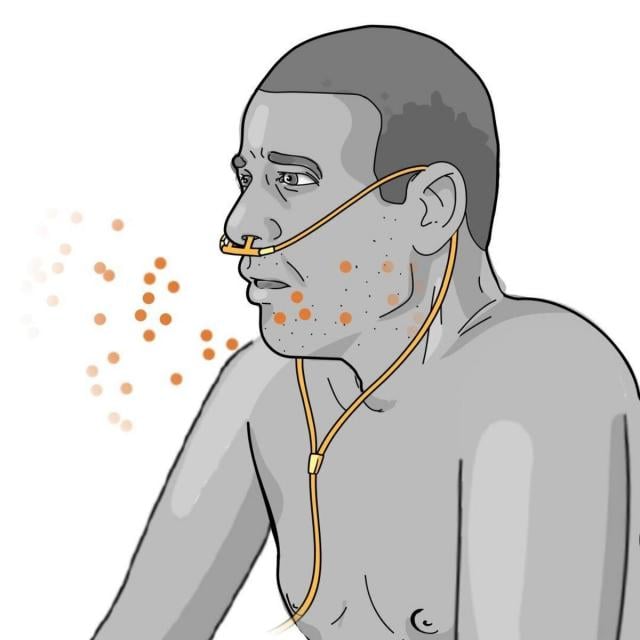
Learning modules are broken into short videos presented in a richly illustrated and compelling manner. The course is self paced and providers can schedule their learning to fit with their schedules. Topics include symptoms and signs in patients with COVID-19, early stabilization of patients, preventing the need for intubation, and ventilator management. The best evidence and guidelines are summarized while accompanying handouts provide written learning points and links to online resources. Simple infographics are available for providers to utilize within their care facilities to educate and promote optimal care across their entire institution.

What You Will Learn

  • Learn key features of COVID-19 and common presenting symptoms.
  • Prevent COVID-19 transmission to healthcare providers and other individuals.
  • Assess and give immediate care to patients in acute respiratory distress to prevent worsening.
  • Provide advanced management and stabilization of patients in severe respiratory distress, including early ventilator management.

Syllabus

WEEK 1
Module 1: COVID-19 Key Features and PPE
In this module, you will learn the clinical signs of COVID-19 infection in patients and how to properly use personal protective equipment to reduce the risk of COVID-19 exposure.
Module 2: Clinical Assessment of COVID-19 Patients
In this module, you will learn how to evaluate any sick patient including those with respiratory distress.
Module 3: Diagnostic Assessment of COVID-19 Patients
In this module, you will learn to use bedside diagnostic ultrasound to evaluate COVID-19 patients as well as the utility of other common diagnostic tests.
Module 4: Early Treatment of the Dyspneic COVID-19 Patient
In this module, you will learn about positioning, different types of oxygen therapy, and therapeutics for patients with suspected COVID-19.
Module 5: Advanced Treatment of the Severely Dyspneic COVID-19 Patient
In this module, you will learn advanced airway management techniques including bag mask ventilation, endotracheal intubation, and the use of medications in intubated patients.
Module 6: Initial Ventilator Management and Troubleshooting in COVID-19 Patients
In this module, you will learn how to initiate ventilator management and identify complications in intubated COVID-19 patients.

Go to Class
MOOC List is learner-supported. When you buy through links on our site, we may earn an affiliate commission.

Related Courses

Interprofessional Healthcare Informatics (Coursera) Coursera
University of Minnesota

Interprofessional Healthcare Informatics (Coursera)

Interprofessional Healthcare Informatics is a graduate-level, hands-on interactive exploration of real informatics tools and techniques offered by the University of Minnesota and the University of Minnesota's National Center for Interprofessional Practice and Education. We will be incorporating technology-enabled educational innovations to bring the subject matter to life. Over the 10 modules, we will create a vital online learning community and a working healthcare informatics network.

Aug 17th 2026
5-12 Weeks
Evidence-based Toxicology (Coursera) Coursera
Johns Hopkins University

Evidence-based Toxicology (Coursera)

Welcome to the Evidence-based Toxicology (EBT) course. In medicine and healthcare, evidence-based medicine has revolutionized the way that information is evaluated transparently and objectively. Over the past ten years, a movement in North America and Europe has attempted to translate this revolution to the field of toxicology.

Aug 17th 2026
5-12 Weeks
Epidemiology: The Basic Science of Public Health (Coursera) Coursera
University of North Carolina

Epidemiology: The Basic Science of Public Health (Coursera)

Often called “the cornerstone” of public health, epidemiology is the study of the distribution and determinants of diseases, health conditions, or events among populations and the application of that study to control health problems. By applying the concepts learned in this course to current public health problems and issues, students will understand the practice of epidemiology as it relates to real life and makes for a better appreciation of public health programs and policies. This course explores public health issues like cardiovascular and infectious diseases – both locally and globally – through the lens of epidemiology.

Aug 17th 2026
5-12 Weeks
Curanderismo: Global & Cultural Influences of Traditional Healing (Coursera) Coursera
University of New Mexico

Curanderismo: Global & Cultural Influences of Traditional Healing (Coursera)

As the last of four courses on Curanderismo, the art of Hispanic/Latino traditional medicine, this course focuses specifically on traditional healing using different techniques of many countries around the world. As an educational and cultural platform, this course will share a number of traditional global perspectives.

Aug 17th 2026
5-12 Weeks
Feeding the World (Coursera) Coursera
University of Pennsylvania

Feeding the World (Coursera)

This course will explore the concepts driving current food production science (population growth, urbanization, emerging affluence, resource constraints, and underlying biological limits) with the main focus on livestock production. Each of the major food animal species (dairy, swine, beef, and poultry) will be covered in terms of their universal life cycles, constraints to production and emerging societal issues.

Aug 17th 2026
5-12 Weeks
The Brain and Space (Coursera) Coursera
Duke University

The Brain and Space (Coursera)

This course is about how the brain creates our sense of spatial location from a variety of sensory and motor sources, and how this spatial sense in turn shapes our cognitive abilities. Knowing where things are is effortless. But “under the hood,” your brain must figure out even the simplest of details about the world around you and your position in it.

Aug 17th 2026
5-12 Weeks
Diabetes - a Global Challenge (Coursera) Coursera
University of Copenhagen

Diabetes - a Global Challenge (Coursera)

Diabetes and obesity are growing health problems in rich and poor countries alike. With this course you will get updated on cutting-edge diabetes and obesity research including biological, genetic and clinical aspects as well as prevention and epidemiology of diabetes and obesity. All lectures are provided by high-profile scientists from one the world's leading universities in diabetes research.

Aug 17th 2026
5-12 Weeks
Fixing Healthcare Delivery 2.0: Advanced Lean (Coursera) Coursera
University of Florida

Fixing Healthcare Delivery 2.0: Advanced Lean (Coursera)

Lean or Toyota Production System (TPS) is responsible for revolutionizing the auto industry by creating highly reliable and safe cars and trucks. In this course healthcare providers, administrators, engineers, and healthcare professional students will be taught how to apply the principles and tools of Lean to health care. They will learn how to identify and remove of waste, design standardized work, apply 5S, map Value streams, create process maps, conduct rapid improvement events (RIEs), level workflow, use A3 forms and Paredo charts, apply error proofing, and create effective visual controls.

Aug 17th 2026
5-12 Weeks
Preventing Chronic Pain: A Human Systems Approach (Coursera) Coursera
University of Minnesota

Preventing Chronic Pain: A Human Systems Approach (Coursera)

Chronic pain is at epidemic levels and has become the highest-cost condition in health care. This course uses both creative and experiential learning to better understand chronic pain conditions and how they can be prevented through self-management in our cognitive, behavioral, physical, emotional, spiritual, social, and environmental realms.

Aug 17th 2026
5-12 Weeks
Stories of Infection (Coursera) Coursera
Stanford University

Stories of Infection (Coursera)

This course introduces learners to a variety of infectious diseases using a patient-centered, story-based approach. Through illustrated, short videos, learners will follow the course of each patient’s illness, from initial presentation to resolution. Integrating the relevant microbiology, pathophysiology and immunology, this course aims to engage and entice the learner towards future studies in microbiology, immunology and infectious diseases.

Aug 17th 2026
5-12 Weeks
HPV-Associated Oral and Throat Cancer: What You Need to Know (Coursera) Coursera
Icahn School of Medicine at Mount Sinai

HPV-Associated Oral and Throat Cancer: What You Need to Know (Coursera)

This course, offered by the Department of Otolaryngology – Head and Neck Surgery at the Icahn School of Medicine at Mount Sinai, is designed to inform primary care physicians and otolaryngologists (general and head and neck surgeons), as well as medical students, residents, nurses, physician assistants, medical assistants, about HPV-associated oral and throat cancers. It is also applicable to individuals who wish to broaden their knowledge and vernacular about this disease process, especially those who may have been diagnosed with HPV and/or HPV-associated oropharyngeal cancers.

Aug 17th 2026
5-12 Weeks