Humphry Davy: Laughing Gas, Literature, and the Lamp (FutureLearn)

Humphry Davy: Laughing Gas, Literature, and the Lamp (FutureLearn)

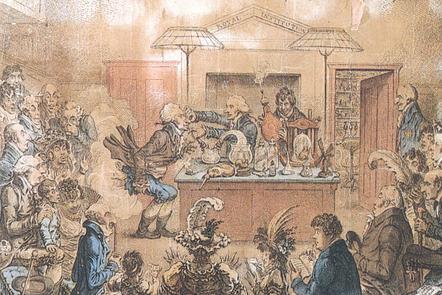
Discover Humphry Davy and his contribution to science and the arts. Before culture was divided into the sciences and the arts there was a chemist who was also a poet. Sir Humphry Davy (1778-1829) is one of the best known men of science of the nineteenth century: he was the first person to inhale nitrous oxide; he isolated nine chemical elements; and he invented the miners’ safety lamp known as the Davy lamp. This course will consider Davy’s life and career using manuscript sources held at the Royal Institution of Great Britain.

Class Deals by MOOC List - Click here and see FutureLearn's Active Discounts, Deals, and Promo Codes.

We will read Davy’s letters, his poetry and even recreate some of his most famous experiments!

What topics will you cover?

  • The key moments of Humphry Davy’s early life and career
  • The importance of lecturing at the Royal Institution of Great Britain
  • The purpose of different kinds of writing from poetry, to letters, notebooks, and published scientific writing
  • The significance of Davy’s scientific achievements
  • The safety lamp controversy
  • The relationship between Davy and Michael Faraday

What will you achieve?
By the end of the course, you'll be able to...

  • Explore key aspects of Davy’s life, career, and the times in which he lived
  • Investigate the relationships that can exist between science and the creative arts
  • Identify the role that science can play in society
  • Assess the cultural and political function of science
  • Explore Davy's different modes of communication (e.g. poetry, lectures, scientific writings) and reflect upon their differences

Who is the course for?
This course is open to anyone with an interest in history, particularly the history of science and medicine, or with an interest in poetry. No prior knowledge of Humphry Davy’s life and times is required.
Go to Class
MOOC List is learner-supported. When you buy through links on our site, we may earn an affiliate commission.

Related Courses

Poetry: How to Read a Poem (FutureLearn) FutureLearn
University of York

Poetry: How to Read a Poem (FutureLearn)

Discover what poetry can tell us about human emotion and learn key ideas and techniques for understanding and interpreting verse. Dive into the wonderful world of poetry and learn how to analyse a poem. Humans have communicated their thoughts, ideas, and feelings through poetry throughout history. At its best, it tells us new truths about the human experience. However, it’s often presented as hard to understand without expert knowledge. On this course, you’ll build your confidence in reading and enjoying poetry.

Self Paced
4 Weeks
Shakespeare: Context and Stagecraft (FutureLearn) FutureLearn
King's College London

Shakespeare: Context and Stagecraft (FutureLearn)

Explore Shakespeare’s stagecraft through three of his most well-known plays: Romeo and Juliet, The Merchant of Venice and Macbeth. Study fascinating theatrical and social contexts that shaped Shakespeare’s plays. On this course, you’ll explore the language, themes, and contexts of three of Shakespeare’s most widely studied and frequently performed plays.

Self Paced
2 Weeks
The Many Faces of Dementia (FutureLearn) FutureLearn
University College London

The Many Faces of Dementia (FutureLearn)

Gain a unique insight into dementia through the stories, symptoms and science behind four less common diagnoses. Explore key issues in dementia care and research, through four less common forms. Dementia is one of the foremost priorities in global health and is estimated to affect over 44 million people worldwide.

Self Paced
4 Weeks
How to Read French Poetry (FutureLearn) FutureLearn
Manchester Grammar School

How to Read French Poetry (FutureLearn)

Learn how to read poetry in French, developing a poetry toolkit to better understand poetic language, poetic form, tone, and more. Explore top tips for reading poetry in French to improve reading comprehension. There is a long and rich tradition of poetry in the French language. From verse playwrights like Racine and Molière, to symbolists like Charles Baudelaire and Paul Verlaine, to surrealists like Jacques Prévert and Andre Breton, and beyond.

Sep 27th 2021
5-12 Weeks
William Wordsworth: Poetry, People and Place (FutureLearn) FutureLearn
Lancaster University

William Wordsworth: Poetry, People and Place (FutureLearn)

Explore the influence of the Lake District on Wordsworth with this free online course, filmed at his home, Dove Cottage, Grasmere. Explore the great poetry of William Wordsworth and his writing process. This free online course will explore the great poetry of William Wordsworth, with an emphasis on his writing process and the inspirational landscape of the Lake District. This course is presented in association with the Wordsworth Trust, Grasmere.

Mar 21st 2022
4 Weeks
UFOs: Scanning the Skies Teach-Out (FutureLearn) FutureLearn
University of Michigan

UFOs: Scanning the Skies Teach-Out (FutureLearn)

Explore possible explanations for UFO sightings as you delve into fascinating accounts of unidentified flying objects. Unpack the myths and facts surrounding UFOs. Following the release of the U.S. Pentagon UFO report, there has been a surge of interest in unidentified aerial phenomena (UAPs). People across the world are gripped by the history of UFOs and the stories told by those who have witnessed them.

Feb 7th 2022
2 Weeks
Snow: What It Is and Why It Matters (FutureLearn) FutureLearn
Luleå University of Technology

Snow: What It Is and Why It Matters (FutureLearn)

Explore the science of snow – how it forms, its different types, and how it can best be used. Learn all about snow from cold weather experts in Sweden. Snow can affect every aspect of life, from transport systems to business operations; that’s why it’s crucial to understand what exactly snow is, how it forms, and how we can manage it.

Oct 25th 2021
2 Weeks
Reading Macondo: the Works of Gabriel García Márquez (FutureLearn) FutureLearn
Universidad de los Andes

Reading Macondo: the Works of Gabriel García Márquez (FutureLearn)

Explore why the author of One Hundred Years of Solitude is one of the 20th century’s leading writers in this free online course. Gabriel García Márquez is a Colombian writer, who won the Literature Nobel Prize in 1982. He has been recognised as one of the world’s leading writers in the second half of the 20th century. His works have been translated into many languages, been adapted for TV and film, and inspired many subsequent works of art.

No sessions available
5-12 Weeks
Virtual Work Experience and Exploring the Veterinary Profession (FutureLearn) FutureLearn
The University of Nottingham

Virtual Work Experience and Exploring the Veterinary Profession (FutureLearn)

Learn what it takes to become a vet and explore the challenges of the vet profession to decide if it's the right career for you. Get virtual vet work experience before embarking on a veterinary degree. The COVID-19 pandemic means that many potential vet students cannot undertake animal handling work experience. On this course, you’ll get insight into the reality of life as a vet so that you can make an informed decision before embarking on a veterinary degree course.

Feb 1st 2021
2 Weeks
Samuel Johnson’s Rasselas: An Introduction (FutureLearn) FutureLearn
Ralston College

Samuel Johnson’s Rasselas: An Introduction (FutureLearn)

Explore the humane realism of Samuel Johnson in a deep dive into his only novel with Theodore Dalrymple as your guide. Explore the humane realism of Samuel Johnson in a deep dive into his only novel. Learn from Theodore Dalrymple. Theodore Dalrymple, the pseudonym of Anthony Daniels, is an English cultural critic of great distinction. He has written extensively on culture, its contemporary neglect, and its enduring potential.

Jan 24th 2022
5-12 Weeks