Much Ado about Nothing: in Performance (FutureLearn)

Much Ado about Nothing: in Performance (FutureLearn)

Explore how Much Ado about Nothing is performed and interpreted, from original stagings to the modern day, with this free course.

Class Deals by MOOC List - Click here and see FutureLearn's Active Discounts, Deals, and Promo Codes.

Shakespeare’s much loved play, Much Ado about Nothing, is read and studied all over the world. But it was written to be staged, and can only be fully appreciated and understood through performance.
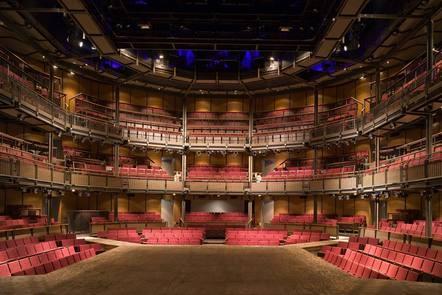
In this free online course, the Royal Shakespeare Company (RSC), the University of Birmingham’s Shakespeare Institute and the Shakespeare Birthplace Trust will welcome you to Stratford-upon-Avon - the home of William Shakespeare and the Royal Shakespeare Theatre.

Learn from actors, academics and an RSC director
Learning from actors, academics and the director of the RSC’s current production, the course will explore Much Ado about Nothing in performance, with a different area of focus for each of its four weeks:

  • Week 1: Dr Nick Walton from the Shakespeare Birthplace Trust will discuss original performance conditions, looking at how Much Ado about Nothing was staged in Shakespeare’s time; how his role as an actor shaped his writing; and how he reflects the age in which he lived.
  • Week 2: Dr Abigail Rokison from the Shakespeare Institute will look at the different ways in which the play has been interpreted for the stage throughout the 20th and 21st centuries, focussing on how the darker side of Much Ado about Nothing has been explored.
  • Week 3: Christopher Luscombe, Director of the RSC’s current production of Much Ado about Nothing, will discuss his role, as he worked on the play from initial rehearsals to its culmination on the Royal Shakespeare Theatre stage.
  • Week 4: Michelle Terry and Edward Bennett, who play Beatrice and Benedick in the current production, will discuss their approach as actors, and how they use the text to create performances with depth, coherence and energy.

Interpret Much Ado about Nothing (Love’s Labour’s Won)
By the end of the course, you’ll feel confident in commenting analytically on the interpretations and staging choices made in the RSC’s current production of Much Ado about Nothing. This sets the play in a new era, just after World War 1, and sees it performed as Love’s Labour’s Won - a title possibly attributed to it during Shakespeare’s lifetime.
This course is an excellent accompaniment to the production, which can be watched: on DVD from the RSC; in production at the Chichester Festival Theatre 24 September 2016 – 29 October 2016; and at the Theatre Royal Haymarket in London from 9 December 2016 – 18 March 2017.
Go to Class
MOOC List is learner-supported. When you buy through links on our site, we may earn an affiliate commission.

Related Courses

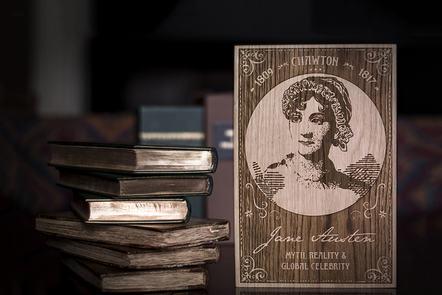
Jane Austen: Myth, Reality and Global Celebrity (FutureLearn) FutureLearn
University of Southampton

Jane Austen: Myth, Reality and Global Celebrity (FutureLearn)

Discover the fascinating story of author Jane Austen, from her own life in Hampshire to what she means to a global audience today. Jane Austen went from being a moderately successful anonymous novelist in her own time to a global celebrity in ours. On this course you will explore how that happened, exploring Austen’s own literary influences, and her reputation over time.

Self Paced
3 Weeks
A-level Study Boost: Unseen Poetry and the Creative Process (FutureLearn) FutureLearn
University of Reading

A-level Study Boost: Unseen Poetry and the Creative Process (FutureLearn)

Discover effective techniques to analyse unseen poetry and learn about the creative writing process. Improve your skills in analysis and creative writing. What do you do when you encounter a poem for the first time? How can the process of writing poetry help you to enjoy and understand the written word in new ways? On this course, you’ll explore strategies for close reading and creative writing using a poem called ‘Patagonia’ by Kate Clanchy as a case study.

No sessions available
2 Weeks
Online Games: Literature, New Media, and Narrative (Coursera) Coursera
Vanderbilt University

Online Games: Literature, New Media, and Narrative (Coursera)

Intended for both newcomers who are curious about video games and experienced gamers who want to reflect on their passion, this course will explore what happens to stories, paintings, and films when they become the basis of massively multiplayer online games. The Lord of the Rings trilogy—the novels, films, and video game—are our central example of how “remediation” transforms familiar stories as they move across media.

Aug 24th 2026
5-12 Weeks
The American Renaissance: Classic Literature of the 19th Century (edX) EdX
DartmouthX

The American Renaissance: Classic Literature of the 19th Century (edX)

Explore the writings of famous American authors from Ralph Waldo Emerson and Harriet Beecher Stowe to Mark Twain, and examine the historic role Dartmouth College played in their formation. What is the American Renaissance? How did Dartmouth help foster the formation of the American Renaissance and its reevaluation and reinvention in the twentieth? Why should we, as twenty-first century readers, concern ourselves with this literature?

Self Paced
4 Weeks
Humphry Davy: Laughing Gas, Literature, and the Lamp (FutureLearn) FutureLearn
Lancaster University,Royal Institution - RI

Humphry Davy: Laughing Gas, Literature, and the Lamp (FutureLearn)

Discover Humphry Davy and his contribution to science and the arts. Before culture was divided into the sciences and the arts there was a chemist who was also a poet. Sir Humphry Davy (1778-1829) is one of the best known men of science of the nineteenth century: he was the first person to inhale nitrous oxide; he isolated nine chemical elements; and he invented the miners’ safety lamp known as the Davy lamp. This course will consider Davy’s life and career using manuscript sources held at the Royal Institution of Great Britain.

Oct 9th 2023
4 Weeks
Poetry: How to Read a Poem (FutureLearn) FutureLearn
University of York

Poetry: How to Read a Poem (FutureLearn)

Discover what poetry can tell us about human emotion and learn key ideas and techniques for understanding and interpreting verse. Dive into the wonderful world of poetry and learn how to analyse a poem. Humans have communicated their thoughts, ideas, and feelings through poetry throughout history. At its best, it tells us new truths about the human experience. However, it’s often presented as hard to understand without expert knowledge. On this course, you’ll build your confidence in reading and enjoying poetry.

Self Paced
4 Weeks
Samuel Johnson’s Rasselas: An Introduction (FutureLearn) FutureLearn
Ralston College

Samuel Johnson’s Rasselas: An Introduction (FutureLearn)

Explore the humane realism of Samuel Johnson in a deep dive into his only novel with Theodore Dalrymple as your guide. Explore the humane realism of Samuel Johnson in a deep dive into his only novel. Learn from Theodore Dalrymple. Theodore Dalrymple, the pseudonym of Anthony Daniels, is an English cultural critic of great distinction. He has written extensively on culture, its contemporary neglect, and its enduring potential.

Jan 24th 2022
5-12 Weeks
Literature and Mental Health: Reading for Wellbeing (FutureLearn) FutureLearn
The University of Warwick

Literature and Mental Health: Reading for Wellbeing (FutureLearn)

Find out how poems, plays and novels can help us understand and cope with deep emotional strain in this free online course. The great 18th century writer Dr Samuel Johnson, who suffered from severe bouts of depression, said “the only end of writing is to enable the reader better to enjoy life or better to endure it.” This free online course will explore how enjoying literature can help us to endure life.

No sessions available
5-12 Weeks
Fairy Tales: Meanings, Messages, and Morals (FutureLearn) FutureLearn
The University of Newcastle, Australia

Fairy Tales: Meanings, Messages, and Morals (FutureLearn)

Build your skills in literary analysis and creative writing by exploring the meaning of fairy tales. Discover the fascinating circumstances and meanings behind fairy tales. On this course, you will look deeper into the enchanting and surprisingly dark themes of several well-known European fairy tales. What were the authors thinking? What were the cultural and personal concerns that have shaped these stories? What are the readers being asked to believe?

No sessions available
3 Weeks
Literature of the English Country House (FutureLearn) FutureLearn
The University of Sheffield

Literature of the English Country House (FutureLearn)

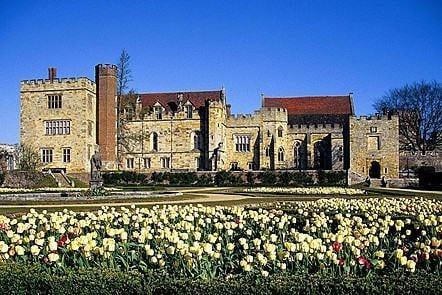
Take a journey through the literature of English country houses from the time of Thomas More to Oscar Wilde. Trace the history and context of country house literature. Through the course you will investigate and discuss the role and representation of the English country house in literature, and learn how to build your own authoritative interpretation of these texts.

Feb 8th 2021
5-12 Weeks
Gabriel García Márquez: Power, History and Love (FutureLearn) FutureLearn
Universidad de los Andes

Gabriel García Márquez: Power, History and Love (FutureLearn)

Identify the author’s contributions to world literature through the study of three of his obsessions: power, history and love. In this course you will be able to identify Colombian writer Gabriel García Márquez’s narrative contributions to world literature through the study of three of the author’s obsessions: power, history and love.

No sessions available
5-12 Weeks