Poetry: How to Read a Poem (FutureLearn)

Offered by University of York,
Poetry: How to Read a Poem (FutureLearn)

Discover what poetry can tell us about human emotion and learn key ideas and techniques for understanding and interpreting verse. Dive into the wonderful world of poetry and learn how to analyse a poem. Humans have communicated their thoughts, ideas, and feelings through poetry throughout history. At its best, it tells us new truths about the human experience. However, it’s often presented as hard to understand without expert knowledge. On this course, you’ll build your confidence in reading and enjoying poetry.

Class Deals by MOOC List - Click here and see FutureLearn's Active Discounts, Deals, and Promo Codes.

Whether you’re a poetry fanatic or you’re eager to learn, you’ll learn tools for approaching the study of poetry, ways to express your appreciation of poetry, and ways to find new riches in your favourite poems.
This course will also give you guidance on developing your own poetic voice when writing verse.

Syllabus

Week 1: Introductions and Foundations
Week 2: Poetic Form
Week 3: Intertextuality
Week 4: Writing (about) Poetry

What will you achieve?
By the end of the course, you‘ll be able to...

  • Identify different poetic forms, techniques and genres
  • Debate how poems create their effects, and describe how a given poem works in a way that is effective, accessible and compelling
  • Engage with some key critical and theoretical arguments about poetry, intertextuality and literature
  • Reflect on the social and cultural dynamics that inform poems and inspire and influence poets
  • Develop an understanding of the place of contemporary poetry in a long poetic tradition
  • Apply these insights to improve and develop your own critical and creative writing, if you wish to do so

Who is the course for?
This course is designed for poetry and literature lovers everywhere and anyone who wants to develop and expand their writing skills.
It is suitable for keen poetry readers as well as those just getting started on their journey.
The course will be especially useful for A-level (and equivalent) students who want to know what it’s like to study English at a university level.


Go to Class
MOOC List is learner-supported. When you buy through links on our site, we may earn an affiliate commission.

Related Courses

Shakespeare: Context and Stagecraft (FutureLearn) FutureLearn
King's College London

Shakespeare: Context and Stagecraft (FutureLearn)

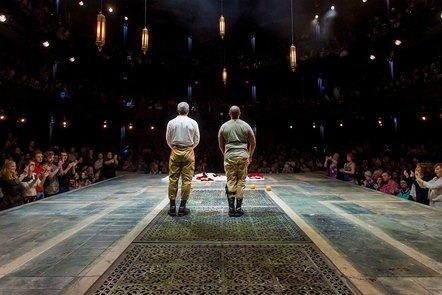
Explore Shakespeare’s stagecraft through three of his most well-known plays: Romeo and Juliet, The Merchant of Venice and Macbeth. Study fascinating theatrical and social contexts that shaped Shakespeare’s plays. On this course, you’ll explore the language, themes, and contexts of three of Shakespeare’s most widely studied and frequently performed plays.

Self Paced
2 Weeks
So You Think You Know Tango? (Coursera) Coursera
Emory University

So You Think You Know Tango? (Coursera)

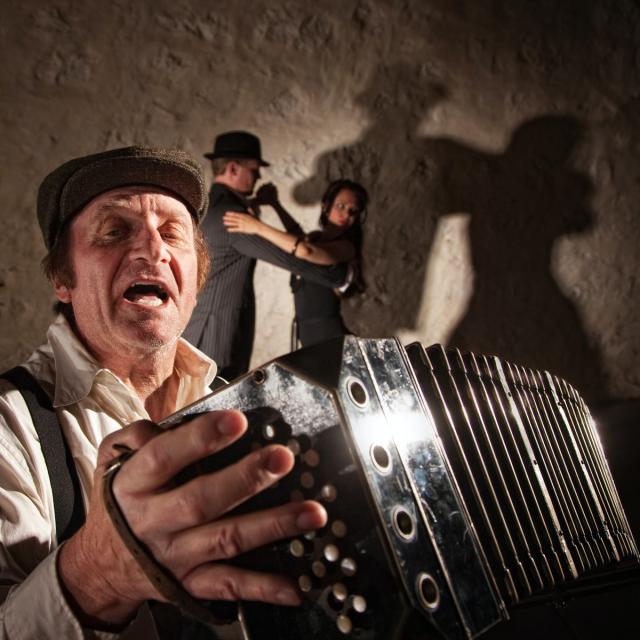
How well do you think you know tango? This two-week mini-course is designed for music lovers, musicians, and dancers who are interested in learning more about the Argentine Tango. It will explore the many dimensions of the Argentine Tango music, including its origins, popularization during the Golden Age, dissemination abroad, evolution into an artistic music-dance form, and adoption by Argentine and international art-music composers to date.

Oct 26th 2026
2 Weeks
Writing and Disseminating Grey Literature (Coursera) Coursera
Indian Institute for Human Settlements

Writing and Disseminating Grey Literature (Coursera)

If you are a researcher, academic, student, development sector professional or a practitioner who is keen to reach the research-based knowledge you have created to a wider audience, this course is for you. Vast amounts of knowledge are produced by educational and research institutions through rigorous research and fieldwork. Yet, there is a dearth of access to this knowledge among non-academic communities (which includes practitioners, policymakers, and citizens) due to the language used. Researchers can bring visibility to grey literature if they engage with alternate public writing forms.

Oct 19th 2026
5-12 Weeks
Shakespeare's Language: Revealing Meanings and Exploring Myths (FutureLearn) FutureLearn
Lancaster University

Shakespeare's Language: Revealing Meanings and Exploring Myths (FutureLearn)

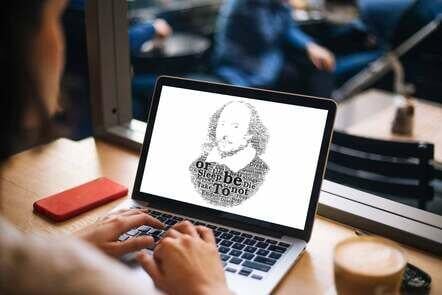
Demystify renowned Shakespeare myths and get introduced to corpus-based methods for analysing his use of language in context. Debunk and discover common myths surrounding the language of William Shakespeare. William Shakespeare is a global phenomenon, yet there is actually relatively little work specifically devoted to his language, and even less deploying the latest techniques from linguistics.

Jul 12th 2021
4 Weeks
How to Read French Poetry (FutureLearn) FutureLearn
Manchester Grammar School

How to Read French Poetry (FutureLearn)

Learn how to read poetry in French, developing a poetry toolkit to better understand poetic language, poetic form, tone, and more. Explore top tips for reading poetry in French to improve reading comprehension. There is a long and rich tradition of poetry in the French language. From verse playwrights like Racine and Molière, to symbolists like Charles Baudelaire and Paul Verlaine, to surrealists like Jacques Prévert and Andre Breton, and beyond.

Sep 27th 2021
5-12 Weeks
A-level Study Boost: Unseen Poetry and the Creative Process (FutureLearn) FutureLearn
University of Reading

A-level Study Boost: Unseen Poetry and the Creative Process (FutureLearn)

Discover effective techniques to analyse unseen poetry and learn about the creative writing process. Improve your skills in analysis and creative writing. What do you do when you encounter a poem for the first time? How can the process of writing poetry help you to enjoy and understand the written word in new ways? On this course, you’ll explore strategies for close reading and creative writing using a poem called ‘Patagonia’ by Kate Clanchy as a case study.

No sessions available
2 Weeks
Leer a Macondo: La obra de Gabriel García Márquez (FutureLearn) FutureLearn
Universidad de los Andes

Leer a Macondo: La obra de Gabriel García Márquez (FutureLearn)

Explorar por qué el autor de Cien años de Soledad es uno de los escritores más importantes del siglo XX. Gabriel García Márquez es un escritor colombiano que ganó el premio Nobel de Literatura en 1982 y ha sido reconocido como uno de los escritores más importantes del siglo XX. Sus obras han sido traducidas a más de 35 idiomas, han sido adaptadas para televisión y cine y han inspirado múltiples obras de arte.

No sessions available
5-12 Weeks
The Talmud: A Methodological Introduction (Coursera) Coursera
Northwestern University

The Talmud: A Methodological Introduction (Coursera)

The Talmud is one of the richest and most complicated works of literature the world has ever known. Since being composed around 1500 years ago it has inspired not only religious reverence but significant intellectual engagement. In this course learners will be introduced to the unique characteristics of this text and the challenges that inhere in studying it while studying a chapter of the Talmud.

Oct 19th 2026
5-12 Weeks
Reading Macondo: the Works of Gabriel García Márquez (FutureLearn) FutureLearn
Universidad de los Andes

Reading Macondo: the Works of Gabriel García Márquez (FutureLearn)

Explore why the author of One Hundred Years of Solitude is one of the 20th century’s leading writers in this free online course. Gabriel García Márquez is a Colombian writer, who won the Literature Nobel Prize in 1982. He has been recognised as one of the world’s leading writers in the second half of the 20th century. His works have been translated into many languages, been adapted for TV and film, and inspired many subsequent works of art.

No sessions available
5-12 Weeks
Literature and Mental Health: Reading for Wellbeing (FutureLearn) FutureLearn
The University of Warwick

Literature and Mental Health: Reading for Wellbeing (FutureLearn)

Find out how poems, plays and novels can help us understand and cope with deep emotional strain in this free online course. The great 18th century writer Dr Samuel Johnson, who suffered from severe bouts of depression, said “the only end of writing is to enable the reader better to enjoy life or better to endure it.” This free online course will explore how enjoying literature can help us to endure life.

No sessions available
5-12 Weeks