The Horse Course: Introduction to Basic Care and Management (Coursera)

Offered by University of Florida,
The Horse Course: Introduction to Basic Care and Management (Coursera)

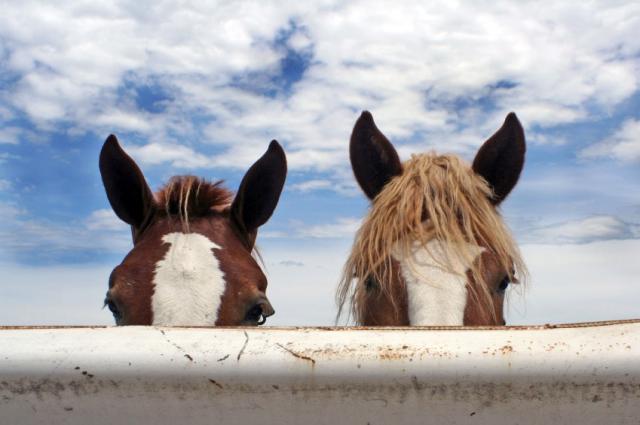
There are over 100 million horses, donkeys and mules in the world today and owners of these animals can be found on almost every continent and in almost every society. The Horse Course will cover many unique aspects of equine ownership and touch upon the science behind many of today’s management practices.

Class Deals by MOOC List - Click here and see Coursera's Active Discounts, Deals, and Promo Codes.

Syllabus

WEEK 1
Introduction to The Horse Course
Welcome to Week 1 of The Horse Course! To start off the course, we will begin discussing what exactly an “equid” is. We will cover the many equine species inhabiting our globe. Next, we’ll jump into the history of horses and donkeys, touching upon how they have made such an impact on our own societal development. The second half of week 1 will cover the many breeds of horses and donkeys. We will finish up with a lecture on the equine hybrids.

WEEK 2
Basic Equine Physiology
This week will start out with covering some basic physiology. We will then advance into hoof anatomy and care. This will lead to spending a lecture discussing laminitis, a serious hoof condition in horses and other equids. The final two lectures will jump into the various coat colors and markings in horses.

WEEK 3
Equine Behavior and Training
The topics this week will focus on equid behavior and movement. Understanding how equids relate to their environment and communicate is critical to training and management. We will start this week by examining the basic equine senses and communication. Then we will discuss normal and abnormal behaviors and the basic psychology used in training. We will finish the week discussing the basic gaits and how these animals move.

WEEK 4
Feeding Management
The topics this week will focus on equid nutrition. Understanding how and what to feed these animals is one of the most important aspects of basic care. We will start with digestive anatomy, how to evaluate your animal’s nutrient requirements, and then jump into feeding management. We will round out the week discussing colic and other nutritional disorders.

WEEK 5
Maintaining Equine Health
The topics this week will focus on equine health. Monitoring and taking care of your animal’s health is critical to owning any equid. We will start off with the normal equine vital signs and then we will discuss administering first aid to your animals. We will then cover the different parasites and diseases that can afflict these animals. Finally, we will end the week discussing some common genetic disorders.

WEEK 6
Breeding Management
The topics this week will focus on equine reproduction. Breeding is an important component of the equine industry. We will start off this week with some basic anatomy, including what makes the equids unique. Then we will cover the estrous cycles of mares and jennies, followed by common breeding systems used throughout the world. After discussing unique aspects of equine pregnancy and parturition, we will finish out the week covering some management tips for taking care of the newborn foal.
Go to Class
MOOC List is learner-supported. When you buy through links on our site, we may earn an affiliate commission.

Related Courses

One Health: Connecting Humans, Animals and the Environment (FutureLearn) FutureLearn
University of Basel

One Health: Connecting Humans, Animals and the Environment (FutureLearn)

BBecome familiar with One Health, a promising concept, and the effective solutions it provides for urgent health problems. Expand how you address health issues, learning from top One Health experts. In today’s globalised world, old diseases persist and new illnesses spread faster than ever thanks to interconnected ecosystems and the close ties between humans and animals.

Oct 9th 2023
5-12 Weeks
Whole genome sequencing of bacterial genomes - tools and applications (Coursera) Coursera
Technical University of Denmark - DTU

Whole genome sequencing of bacterial genomes - tools and applications (Coursera)

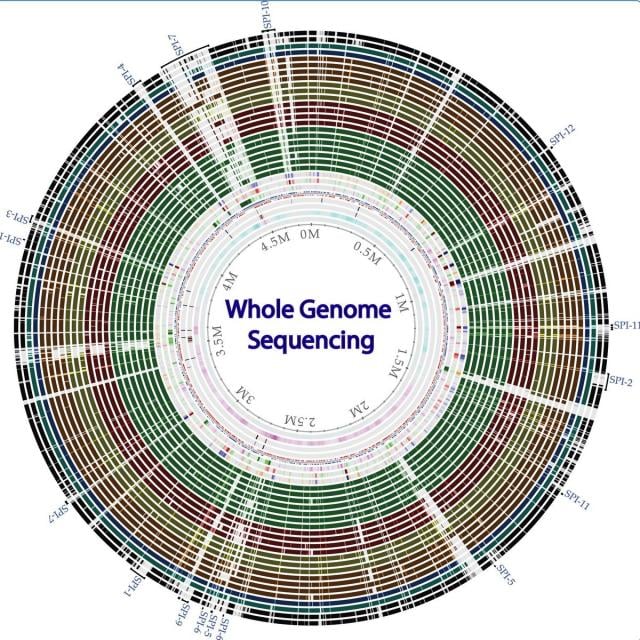
This course will cover the topic of Whole genome sequencing (WGS) of bacterial genomes which is becoming more and more relevant for the medical sector. WGS technology and applications are high on international political agenda, as the classical methods are being replaced by WGS technology and therefore bioinformatic tools are extremely important for allowing the people working in this sector to be able to analyze the data and obtain results that can be interpreted and used for different purposes.

Jun 15th 2026
5-12 Weeks
Introduction to Horses (BHI) Box Hill Institute
Box Hill Institute

Introduction to Horses (BHI)

This course is an introduction to horses, demonstrating basic tasks that you would carry out on a daily basis with a horse. This course can help you to form your decision to enter the wonderful world of horses.

Self Paced
1 Week
Global Biosecurity for One Health (FutureLearn) FutureLearn
Murdoch University

Global Biosecurity for One Health (FutureLearn)

Learn about the drivers, activities and collaborative networks that protect human, animal and environmental health. Discover the environmental, economic and social impacts of pests and diseases. In a world where global trade and human movement is increasing, pests and diseases pose a major threat to agriculture, trade and the environment. Biosecurity is central to the management of these threats.

No sessions available
3 Weeks
One Health: A Ten-Thousand-Year-Old View into the Future (edX) EdX
University of Alaska Fairbanks,AlaskaX

One Health: A Ten-Thousand-Year-Old View into the Future (edX)

Explore the connectedness of people, animals, and the environment through this unique approach to One Health that connects traditional ways of knowing with the natural and social sciences. Combine Western and Indigenous knowledge to form a holistic understanding of the future of life in the Circumpolar North.

Self Paced
Self-Paced
Emergence of Life (Coursera) Coursera
University of Illinois at Urbana-Champaign

Emergence of Life (Coursera)

How did life emerge on Earth? How have life and Earth co-evolved through geological time? Is life elsewhere in the universe? Take a look through the 4-billion-year history of life on Earth through the lens of the modern Tree of Life. This course will evaluate the entire history of life on Earth within the context of our cutting-edge understanding of the Tree of Life. This includes the pioneering work of Professor Carl Woese on the University of Illinois Urbana-Champaign campus which revolutionized our understanding with a new "Tree of Life."

Jun 15th 2026
5-12 Weeks
Industrial Biotechnology (Coursera) Coursera
University of Manchester

Industrial Biotechnology (Coursera)

Fossil fuels have been the primary energy source for society since the Industrial Revolution. They provide the raw material for the manufacture of many everyday products that we take for granted, including pharmaceuticals, food and drink, materials, plastics and personal care. As the 21st century progresses we need solutions for the manufacture of chemicals that are smarter, more predictable and more sustainable.

Jun 15th 2026
5-12 Weeks