Animal Viruses: Their Transmission and the Diseases They Produce (FutureLearn)

Animal Viruses: Their Transmission and the Diseases They Produce (FutureLearn)

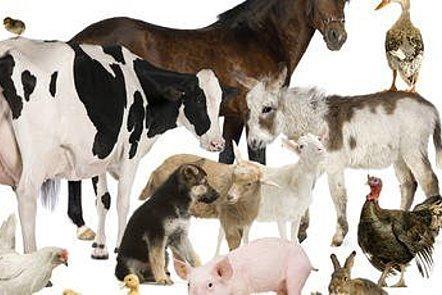
Learn how important animal viruses are transmitted between animals and humans, and understand the diseases they produce. In this free online course, you will learn about animal viruses that affect pets, birds, sheep, cattle, swine and horses, and produce important diseases.

Class Deals by MOOC List - Click here and see FutureLearn's Active Discounts, Deals, and Promo Codes.

These animal diseases may cause huge economic losses to farmers and severe emotional distress to animal owners. They may even be transmitted to humans, posing important questions about their spread and control. The course has been developed by a team at Complutense University of Madrid, who are all experienced in teaching virology and infectious diseases at veterinary schools at Madrid and Alfort.

What topics will you cover?

  • Introduction to animal viruses, their form and structure (or morphology), and characteristics. Basic information to help understanding viral diseases in animals and humans.
  • Faecal-oral transmission: using parvoviruses and canine parvovirosis as an example.
  • Open wounds: focusing on rabies and other zoonotic viruses, which produce diseases in both humans and animals.
  • Arthropod transmission: viruses that are carried by insects and ticks, and introduced directly into the bloodstream.
  • Airborne transmission: such as influenza, which may be transmitted from birds and pigs to humans.
  • Other infections difficult to control because they are persistent: produced by viruses that remain in their host, including herpesvirus and retrovirus.

What will you achieve?
By the end of the course, you'll be able to...

  • Describe the differences between DNA and RNA viruses, naked and enveloped viruses, and how this affects variability of the genome and the resistance pattern to physical and chemical agents.
  • Compare the transmission requirements for the different ways viruses spread: airborne, through the skin (vertebrate/invertebrate/vector bites) shed in faeces, and how to avoid spread through management, such as quarantine, disinfection, etc.
  • Identify which viruses produce the different diseases studied and how they are ascribed to the different families.
  • Describe the epidemiology and the transmission routes of the diseases dealt with in the course and collect data for evaluating the origin and spread of rabies, West Nile, Bluetongue and Influenza outbreaks.
  • Reflect on the pathogenesis of the different diseases, i.e., how viruses produce each specific disease, and the main clinical signs of the diseases mentioned above.
    • Explore which diseases can be transmitted from animals to humans, e.g. zoonosis.
  • Reflect on the effects of climate change on the distribution of vectors of viral diseases and, thus, on the spread of arboviral diseases.
  • Evaluate which samples and techniques are the most conclusive to diagnose the different viral diseases mentioned above.
  • Identify which vaccines are used for the different viral diseases mentioned, their types, and problems that may arise from their use.
Go to Class
MOOC List is learner-supported. When you buy through links on our site, we may earn an affiliate commission.

Related Courses

One Health: Connecting Humans, Animals and the Environment (FutureLearn) FutureLearn
University of Basel

One Health: Connecting Humans, Animals and the Environment (FutureLearn)

BBecome familiar with One Health, a promising concept, and the effective solutions it provides for urgent health problems. Expand how you address health issues, learning from top One Health experts. In today’s globalised world, old diseases persist and new illnesses spread faster than ever thanks to interconnected ecosystems and the close ties between humans and animals.

Oct 9th 2023
5-12 Weeks
Transmitting and Fighting Infectious Diseases (Coursera) Coursera
University of Leeds

Transmitting and Fighting Infectious Diseases (Coursera)

Understanding how pathogens cause infections and how infectious diseases are transmitted is crucial for preventing and controlling the spread of illnesses. In this course, you will learn how diseases like the common flu spread, the mechanisms behind bacterial resistance, the body's defence mechanisms, and the importance of immunization.

Aug 31st 2026
2 Weeks
Edward Jenner Leadership for Veterinary Professionals: Your Leadership Self (FutureLearn) FutureLearn
NHS Leadership Academy,Royal College of Veterinary Surgeons

Edward Jenner Leadership for Veterinary Professionals: Your Leadership Self (FutureLearn)

Explore the concept of leadership, why it matters, the types of issues faced by leaders, and why you are already a leader. Discover what 'leadership' is and why you are already a leader. All veterinary professionals are leaders, it is part of the job. But what is leadership? What makes a great leader? And how can vets and veterinary professionals grow as inclusive and effective leaders?

No sessions available
4 Weeks
Introduction to Biology: Biodiversity (Coursera) Coursera
Rice University

Introduction to Biology: Biodiversity (Coursera)

In this course we will examine the incredible variety of life that inhabits this planet including microorganisms, plants, and animals. For each of the major groups we’ll learn about their characteristics, functions, and how they came into existence as well as some of the roles they play in the natural world, and how they’re relevant to people. We’ll also take a close look at us humans and consider what we know about our origins and what might become of us in the future.

Aug 31st 2026
5-12 Weeks
Animal Advocacy Introductory Course (Animal Advocacy Careers) Other Providers
Animal Advocacy Careers

Animal Advocacy Introductory Course (Animal Advocacy Careers)

This online course will walk you through some of the key considerations involved in working to help animals and will help you plan your next steps. it will provide you with the knowledge that you need to start working out which career path will enable you to maximise your positive impact for animals. You will be supported to use this knowledge in creating a career plan and working out which actions you should take next.

Nov 15th 2021
13-24 Weeks
Religious Symbols of the World (edX) EdX
Seoul National University,SNUx

Religious Symbols of the World (edX)

This course is the third and final course in the series following “Understanding Religious Symbolism” and “Myths, Rituals, and Cosmos.” Through the theories and patterns that you learned in these three courses, I hope that you will be able to interpret the various religious phenomena in different cultures, and through this gain a better understanding of culture and human beings.

Self Paced
Self-Paced
Zoologia (edX) EdX
University of Naples Federico II,FedericaX

Zoologia (edX)

Comprendere gli animali e i sistemi naturali, attraverso il filo conduttore dell’evoluzione. Un viaggio da percorrere con l’entusiasmo di un bambino e la professionalità di uno studioso. La zoologia è la conoscenza degli animali, i nostri coinquilini. Ci sono centinaia di specie animali che interagiscono insieme a noi in una relazione di comunità o ecosistema. Questo corso di Zoologia è una passeggiata nei temi propri della materia come elemento culturale essenziale per il biologo, il naturalista e chiunque si occupi della vita.

Self Paced
Self-Paced
Understanding Food Labels (FutureLearn) FutureLearn
University of Reading,EIT Food,EIT

Understanding Food Labels (FutureLearn)

Learn how to interpret food labels so you can make informed food choices and buy food that supports your health and wellbeing. Get the facts you need to put your trust in the food system. Huge amounts of information are provided on food product labels, but surveys have shown that we’re often unsure of its meaning. On this course, you’ll learn how to make sense of the regulations, data, and logos on packaging so that you can make more informed food choices.

Jan 2nd 2023
3 Weeks
COVID-19 Contact Tracing For Nursing Professionals (Coursera) Coursera
University of Houston

COVID-19 Contact Tracing For Nursing Professionals (Coursera)

Covid-19 Contact Tracing For Nursing Professionals was created for anyone who wants a certificate in Contact Tracing and especially for RN's who would like to obtain 10 CEU credits from The Texas Nurses Association. This nursing continuing professional development activity was approved by the Texas Nurses Association, an accredited approver by the American Nurses Credentialing Center’s Commission on Accreditation.

Jan 9th 2023
4 Weeks
Sustainable Food Production Through Livestock Health Management (Coursera) Coursera
University of Illinois at Urbana-Champaign

Sustainable Food Production Through Livestock Health Management (Coursera)

Learn about the impact of infectious disease on sustainable animal-based food production by understanding the science of growth, immunity, and infection and by learning the problem-solving skills needed to advance animal health and food production through optimal management practices. In this course we will explore the effect of infectious disease on sustainable animal-based food production. The content and learning outcomes of this new course will be designed to be relevant across different food production sectors (i.e., beef, dairy, poultry, and pigs).

Sep 7th 2026
5-12 Weeks
Paleontology: Ancient Marine Reptiles (Coursera) Coursera
University of Alberta

Paleontology: Ancient Marine Reptiles (Coursera)

Paleontology: Ancient Marine Reptiles is a four-lesson course teaching a comprehensive overview of the evolutionary changes that occur when air-breathing terrestrial animals return to water. This course examines the diversity, adaptations, convergence, and phylogenetic relationships of extinct marine reptiles. Students will explore three major groups of marine reptiles: ichthyosaurs, plesiosaurs, and mosasaurs.

Sep 2nd 2026
4 Weeks