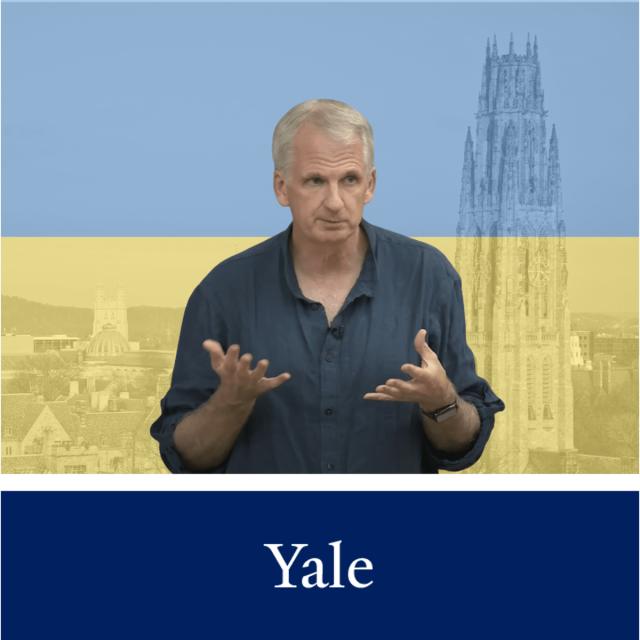
The Making of Modern Ukraine (Coursera)

Offered by Yale University,
The Making of Modern Ukraine (Coursera)

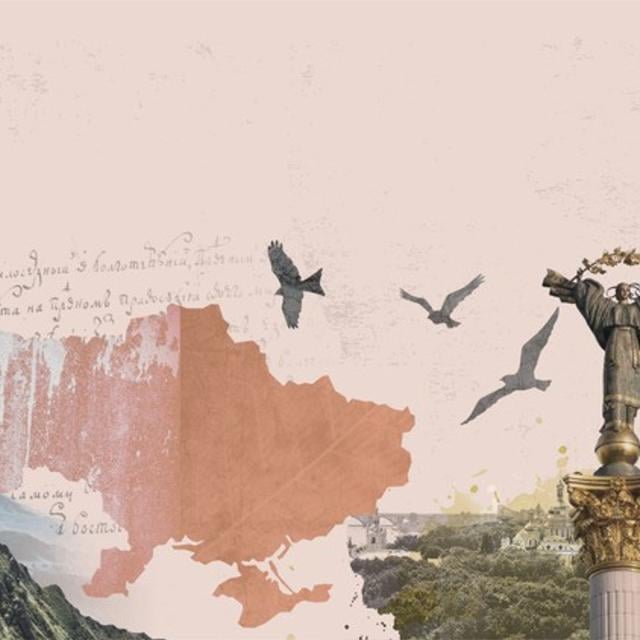
Ukraine must have existed as a society and polity on 23 February 2022, else Ukrainians would not have collectively resisted Russian invasion the next day. What does it mean for a nation to exist? Is this a matter of structures, actions, or both? Why has the existence of Ukraine occasioned such controversy? In what ways are Polish, Russian, and Jewish self-understanding dependent upon experiences in Ukraine? Just how and when did a modern Ukrainian nation emerge?

Class Deals by MOOC List - Click here and see Coursera's Active Discounts, Deals, and Promo Codes.

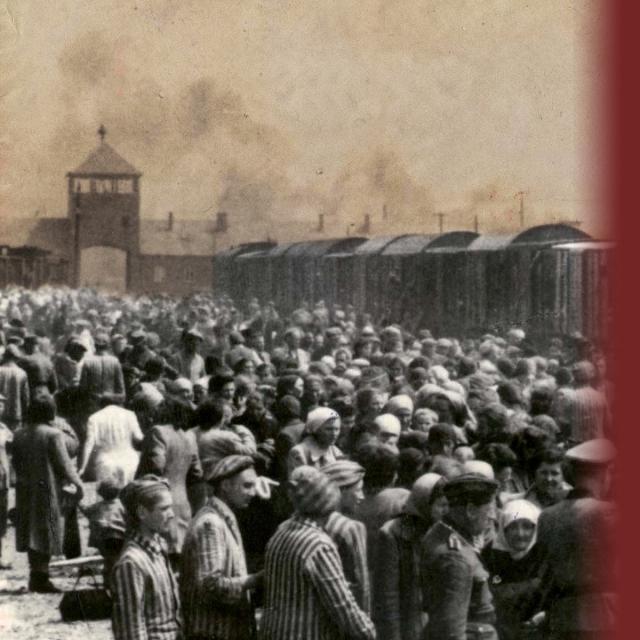
For that matter, how does any modern nation emerge? Why some and not others? Can nations be chosen, and can choices be decisive? If so, whose, and how? Ukraine was the country most touched by Soviet and Nazi terror: what can we learn about those systems, then, from Ukraine? Is the post-colonial, multilingual Ukrainian nation a holdover from the past, or does it hold some promise for the future?

Syllabus

WEEK 1
The Making of Modern Ukraine
Often the most important historical experiences are difficult to see. Ukraine tends to exemplify the major trends in European and world history, but sometimes in forms so intense or radical that they escape notice and classification. Ukraine provides an early example of European state formation and an early example of anti-colonial rebellion. We will thus begin with brief reflections on ancient history and geography and cover the middle ages and the early modern period, but will concentrate upon the nineteenth and the twentieth centuries, and will conclude with the current war. Topics therefore include the Kyiv state as well early modern Lithuania and Poland during the age of discovery. Ukraine also provides an intense example of the confrontation between modern national politics and extreme colonial alternatives from the far right and far left. Modern topics therefore include Russian and Austrian empires; Jewish and Polish urban society; Romanticism and modern nationalism; the Bolshevik Revolution and its Ukrainian counterparts; Soviet modernization and terror; Nazi occupation, the Holocaust, ethnic cleansing. Finally, contemporary Ukrainian history poses in striking form the question of the functionality and durability of the post-imperial state. The last few topics include: the late Soviet Union; problems of post-Soviet rule, the Orange Revolution and Maidan and the war of 2014; and the present war.
Go to Class
MOOC List is learner-supported. When you buy through links on our site, we may earn an affiliate commission.

Related Courses

Understanding Europe: Why It Matters and What It Can Offer You (Coursera) Coursera
HEC Paris

Understanding Europe: Why It Matters and What It Can Offer You (Coursera)

Regardless of where you live, the European Union not only affects your life, but may also transform it. By learning how Europe works, a new world will open up to you and discover new jobs you never heard of. The European Union has a large, yet often unnoticed, impact on many aspects of everybody’s life. We will analyze what the EU is doing for YOU regardless of where you live. We will also look at what YOU can do for and in Europe.

Nov 25th 2024
5-12 Weeks
Russia and Nuclear Arms Control (Coursera) Coursera
Saint Petersburg State University

Russia and Nuclear Arms Control (Coursera)

As a state with one of the largest arsenals of nuclear weapons Russia is a key participant of nuclear non-proliferation regime and defines nuclear arms control as a priority of its foreign policy. This course will discover the logic and the frames of Russian nuclear arms control policies. You will learn the historical background and the modern context of bilateral US-Russian relations in nuclear arms control and understand how these relations influence the global nuclear non-proliferation regime. You will get the basic tools for analyzing Russian defence and security policy in regards to nuclear non-proliferation and disarmament.

May 16th 2022
5-12 Weeks
Doing Business in Europe (Coursera) Coursera
ESCP Europe

Doing Business in Europe (Coursera)

Europe is a major world trade partner as well as a place where to acquire significant business experience. This is the reason why this MOOC has been designed with the view to explaining and guiding you in doing business in Europe. Do you really know Europe? How should you consider and approach the European continent? What business lessons can be drawn in a European perspective?

May 4th 2026
5-12 Weeks
History of Russia: from Peter the Great to the Revolution (Coursera) Coursera
Saint Petersburg State University

History of Russia: from Peter the Great to the Revolution (Coursera)

This course offers unique lectures by the leading professors of St. Petersburg State University, interesting assignments, interactive maps and much more. The online course «History of Russia» follows the tradition of teaching Russian history at St. Petersburg State University, which is distinguished by its approach to the analysis of historical problems and the scientific understanding of events, periods, epochs in their historical relationship. Thoroughly selected factual material serves as the basis that enables learners to conduct an independent analysis of the history of Russian state.

May 16th 2022
5-12 Weeks
Europe and the World, ca. 1500 to 1914 (Coursera) Coursera
Higher School of Economics - HSE University

Europe and the World, ca. 1500 to 1914 (Coursera)

The course aims to introduce the audience to global history from the European discovery of the Americas to the coming of the First World War. These transformative four centuries of the human experience traditionally called Modern history saw the growing economic, military, and political ascendancy of the European states which. thus, lie at the heart of this course.

Jul 18th 2022
5-12 Weeks
Russia-Ukraine War: One Year Later Teach-Out (Coursera) Coursera
University of Michigan

Russia-Ukraine War: One Year Later Teach-Out (Coursera)

One year after Russia launched a full-scale military invasion of Ukraine, the war continues to rage throughout the country impacting millions of Ukrainians, the economy, the educational system, and everyday life. Without a clear pathway to resolution in sight, it’s more crucial than ever to seek to understand the motivations of the war and shifting global policies, learn about the impact the war has had on everyday people, and explore ways in which people around the world can take action to support Ukraine.

May 7th 2023
1 Week
Russian Invasion of Ukraine Teach-Out (Coursera) Coursera
University of Michigan

Russian Invasion of Ukraine Teach-Out (Coursera)

The armed conflict in Ukraine first started in the beginning of 2014, when Russia invaded and annexed the Ukrainian region of Crimea. Over the past eight years, there has been ongoing conflict between Ukraine and Russia, with regular shelling and skirmishes occurring along Russian and Ukrainian borders in the eastern part of the country. On February 24, 2022, Russia launched a full-scale military invasion of Ukraine, plunging the entire country into war and sending shockwaves across the world.

Jul 25th 2022
1 Week
Russian company law. Company management (Coursera) Coursera
Moscow State Institute of International Relations - MGIMO

Russian company law. Company management (Coursera)

The present course gives an overview of Bases of Russian company law. Company management. The course is directed to students of general educational institutions, Russian and foreign lawyers, heads of legal entities, financial directors, chief accountants, auditors, practicing in English, and to any person, interested in the Russian Company Law.

Aug 1st 2022
1 Week
Russian for beginners 1. Русский язык: A1 (Coursera) Coursera
Saint Petersburg State University

Russian for beginners 1. Русский язык: A1 (Coursera)

Russian is considered to be one of the world's most difficult languages. This course is aimed at helping those who are interested in understanding the basics of Russian language. Every unit of the course consists of several parts explaining vocabulary, phonetics (pronunciation), grammar, and provides examples of simple dialogues in Russian.

Jul 18th 2022
4 Weeks
Russian for beginners 3. Русский язык: A1 (Coursera) Coursera
Saint Petersburg State University

Russian for beginners 3. Русский язык: A1 (Coursera)

Russian is considered to be one of the world's most difficult languages. This course aimed at helping those who are interested in understanding the Russian language. Every unit of the course consists of several parts explaining vocabulary, phonetics (pronunciation), grammar, and provides examples of simple dialogues in Russian. Russian for Beginners 3 continues to explain the basics of Russian to those who have already completed the previous two parts of the course as well as the introduction to the Russian alphabet.

May 16th 2022
4 Weeks
Cross-border road transport in EU law context (Coursera) Coursera
Erasmus University Rotterdam

Cross-border road transport in EU law context (Coursera)

Have you ever wondered which legal rules are applicable to cross-border EU road transport? Are you interested in the issues revolving around EU employment law in the international road transport sector? Then, on behalf of the University of Antwerp, Erasmus University Rotterdam, University of Gdańsk, University of Luxembourg and Tilburg University, we would like to welcome you to this MOOC on Cross-border Road Transport in EU law context. This MOOC is a part of the Erasmus + Project funded by the European Commission. In this MOOC, you will not only learn what the current legal framework is, but also, how it is applied in the road transport sector.

Jun 1st 2026
5-12 Weeks
Stalin and Stalinism in Russian History (Coursera) Coursera
Higher School of Economics - HSE University

Stalin and Stalinism in Russian History (Coursera)

The course presents the life and deeds of Joseph Stalin, the leader of the Soviet Union from 1924 till 1953. It analyses the reasons for his actions and their results, as well as the causes of his popularity in Russia today. It offers an analysis of the phenomenon of Stalinism and of its significance for Russia and beyond. In the late 1920s – early 1930s Stalin directed the massive and rapid industrialisation of the country and the forced collectivisation of its agriculture. The industrialisation was based on forced labour, and collectivisation on repression, but both helped to create the material base for the Soviet defence industry.

Jul 18th 2022
5-12 Weeks