The Holocaust through the Perspective of Primary Sources (Coursera)

Offered by Yad Vashem,
The Holocaust through the Perspective of Primary Sources (Coursera)

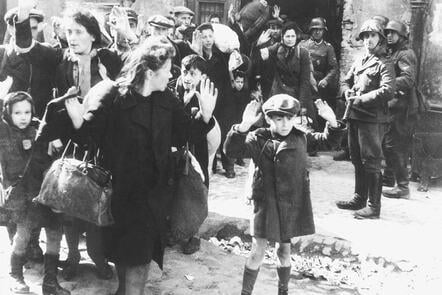
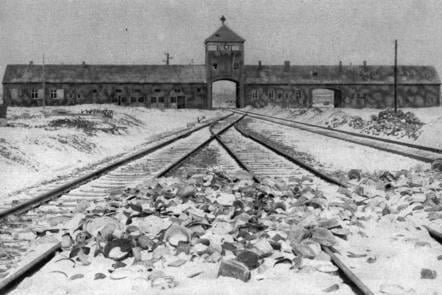
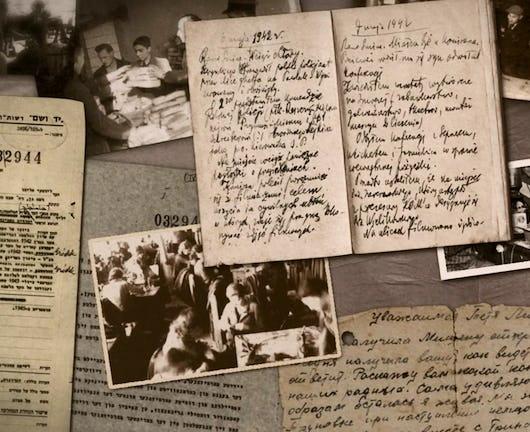
In this new online video course produced by EHRI, the European Holocaust Research Infrastructure, we will explore diaries, photographs, official Nazi documents, postwar survivor testimonies and much more - all together with leading scholars in the field. We will become acquainted with original documents and gain hands-on experience in using them while learning about their importance, and the unique perspectives they provide us into this cataclysmic event.

Class Deals by MOOC List - Click here and see Coursera's Active Discounts, Deals, and Promo Codes.

Yad Vashem is one of EHRI's 26 partners, tasked with creating and operating the course.

Syllabus

Introduction to the Course
Welcome to the online course "'It Must All Be Recorded Without a Single Fact Left Out': The Holocaust through the Perspective of Primary Sources" for EHRI, the European Holocaust Research Infrastructure. Yad Vashem is one of 26 EHRI partners, and tasked with creating and operating the course. In this first short week, we will introduce the subject of Holocaust research and study using primary sources, including some of the main issues within this domain.

The Warsaw Ghetto Through the Lens of Diaries
This week, we will learn about researching and studying the Holocaust using diaries as unique historical sources. We will demonstrate these through the diaries of Adam Czerniakow and Emanuel Ringelblum, among others.

The Lodz Ghetto through the Perspective of Photographs
This week, we will learn about the use of photographs and images as tools in documenting and commemorating the Holocaust, and as historical sources, through the photographs of two photographers active in the Lodz Ghetto: Walter Genevein, a Nazi official, and Mendel Grossman, a Jew incarcerated in the ghetto.

The Holocaust Through German Bureaucratic Sources
This week, we will learn about researching and studying the Holocaust using German bureaucratic sources. We will focus on four German bureaucratic source types relating to specific aspects and stages of the Holocaust: Situation Reports; documents on the confiscation of Jewish property; Einsatzgruppen reports; and documents on the deportation process.

Personal Letters Written Immediately After Liberation
This week, we will learn about researching and studying the Holocaust using personal letters written immediately after liberation. We will examine such letters' significance in Holocaust research and studies, the motives of their writers, and their main themes.

Testimonies of Survivors as Primary Sources
This week, we will learn about researching and studying the Holocaust using testimonies of survivors. These testimonies include early accounts submitted closer to the time of the events themselves, as well as later ones. We will explore questions and arguments regarding the use of testimonies as historical sources, their significance, and the invaluable perspective they offer, especially concerning topics where other source types are lacking.

Go to Class
MOOC List is learner-supported. When you buy through links on our site, we may earn an affiliate commission.

Related Courses

Coexistence in Medieval Spain: Jews, Christians, and Muslims (Coursera) Coursera
University of Colorado System

Coexistence in Medieval Spain: Jews, Christians, and Muslims (Coursera)

This course explores Jewish, Christian, and Muslim intercultural relations in Iberia from the Visigothic era (6th century CE) until the creation of Queen Isabel I and King Ferdinand II Catholic Spain (late 15th century). We evaluate the many identities of the peninsula known as Christian Hispania, Jewish Sefarad, and Islamic al-Andalus. We trace the origins and trajectory of conflict between these communities (the Muslim conquest of Spain, Christian Reconquista, prohibitions blocking intermixing of peoples, and expulsions).

Jun 22nd 2026
5-12 Weeks
The Einstein Revolution (edX) EdX
HarvardX,Harvard University

The Einstein Revolution (edX)

Traces Albert Einstein’s engagement with relativity, quantum mechanics, Nazism, nuclear weapons, philosophy, the arts, and technology. Albert Einstein has become the icon of modern science. Following his scientific, cultural, philosophical, and political trajectory, this course aims to track the changing role of physics in the 20th and 21st centuries.

Self Paced
Self-Paced
Terrorism and Counterterrorism: Comparing Theory and Practice (Coursera) Coursera
Leiden University

Terrorism and Counterterrorism: Comparing Theory and Practice (Coursera)

Terrorism has arguably been one of the defining factors of our age. It frequently makes headlines, threatening or attacking governments, private business and ordinary citizens. And in many parts of the world, it has been one of the most important threats to peace, security and stability. But what does this exactly mean? What is the nature of this threat? Who or what is threatened, how, by whom and why? What can be done about it or how can we at least limit the impact of terrorism and make sure that terrorists do not make headlines and manage to scare us? These are just a handful of questions that will be addressed in this course that consists of three parts.

Jun 15th 2026
5-12 Weeks
The Holocaust: an Introduction - Part 1 (FutureLearn) FutureLearn
Tel Aviv University

The Holocaust: an Introduction - Part 1 (FutureLearn)

Part 1 of 2. This course depicts the complex history of the Holocaust, highlighting its impact on our world today. The Holocaust was an inconceivable historical event, which forever robbed Western culture of its innocence. As civilized human beings, we fail to understand how events of such horror could have taken place, and how an idea so inhumanly warped could have spread like wildfire through an entire continent, instigating the systematic annihilation of millions of Jews.

No sessions available
3 Weeks
The Holocaust: an Introduction - Part 2 (FutureLearn) FutureLearn
Tel Aviv University

The Holocaust: an Introduction - Part 2 (FutureLearn)

Part 2 of 2. This course depicts the complex history of the Holocaust, highlighting its impact on our world today. The Holocaust was an inconceivable historical event, which forever robbed Western culture of its innocence. As civilized human beings, we fail to understand how events of such horror could have taken place, and how an idea so inhumanly warped could have spread like wildfire through an entire continent, instigating the systematic annihilation of millions of Jews.

No sessions available
3 Weeks
Plagues, Witches, and War: The Worlds of Historical Fiction (Coursera) Coursera
University of Virginia

Plagues, Witches, and War: The Worlds of Historical Fiction (Coursera)

A unique and exciting introduction to the genre and craft of historical fiction, for curious students, aspiring authors--anyone with a passion for the past. Read classics of the genre, encounter bestselling writers of historical fiction, and discover your own historical archive while interacting with a global community of interested readers.

Jun 22nd 2026
5-12 Weeks
Calvin - Histoire et réception d'une Réforme (Coursera) Coursera
University of Geneva

Calvin - Histoire et réception d'une Réforme (Coursera)

Ce cours introduit à la vie et à la pensée du réformateur Jean Calvin (1509-1564) ainsi qu’à son influence sur le monde moderne et contemporain. La démarche proposée se veut critique, il ne s’agit ni de canoniser ni de condamner Calvin, mais de comprendre sa pensée avec toute la distance requise et d’en analyser les enjeux.

Jun 22nd 2026
5-12 Weeks
Transmedia Writing (Coursera) Coursera
Michigan State University

Transmedia Writing (Coursera)

Do you have a desire to write a novel, write a screenplay, design a video game? In this project-centered course you will develop your own, original, intellectual property (IP) into a transmedia project containing written versions of your IP on various platforms. You will begin your novel, adapt the first chapters of your novel into the opening scenes of a film or TV show and create a game design concept of your IP.

Jun 15th 2026
5-12 Weeks
The History of Modern Israel – Part I: From an Idea to a State (Coursera) Coursera
Tel Aviv University

The History of Modern Israel – Part I: From an Idea to a State (Coursera)

How did the State of Israel come to be? How is it that an idea, introduced in 19th century Europe, became a reality? And how does that reality prevail in the harsh complexities of the Middle East? Presented by Professor Eyal Naveh, with additional units from Professor Asher Sussers' "The Emergence of the Modern Middle East" course, This course will take you on a journey through the history of Modern Israel. In this 1st part of the course we will explore: How did the 19th century idea of a Jewish state become a reality? So the next time you hear about Israel in the news, you will be informed enough about the history of this area to comprehend the many sides and narratives that interact to shape the complex reality of Israel today.

Jun 1st 2026
3 Weeks
Magic in the Middle Ages (Coursera) Coursera
University of Barcelona

Magic in the Middle Ages (Coursera)

Magical thought has always attracted human imagination. In this course we will introduce you to the Middle Ages through a wide conception of magic. Students will have an approach to medieval culture, beliefs and practices from the perspective of History and History of Science. Popular magic, as well as learned magic (alchemy, geomancy and necromancy) will be addressed. Moreover, we will also deal with how eastern practices and texts influenced western culture. In July 2016, the course will contain a brand-new module devoted to astrology. Magic in the Middle Ages offers a captivating overview of medieval society and promotes reflection about certain stereotypes associated with this period.

Jun 22nd 2026
5-12 Weeks
William Shakespeare's Twelfth Night: Comedy, Conflict, and Community (Coursera) Coursera
University of Colorado Boulder

William Shakespeare's Twelfth Night: Comedy, Conflict, and Community (Coursera)

This course introduces and explores William Shakespeare’s classic comedy, Twelfth Night. Interviews with actors who appeared in the Colorado Shakespeare Festival’s 2019 production of Twelfth Night, as well as lectures by scholars and theater professionals who work and teach at the University of Colorado Boulder, offer students insight into Shakespeare’s artistic vision and its applications.

Jun 22nd 2026
5-12 Weeks