History of Slavery in the British Caribbean (FutureLearn)

History of Slavery in the British Caribbean (FutureLearn)

Explore the history and legacy of British colonial slavery and oppression in the Caribbean through historical slave accounts. Learn about Britain’s involvement in the transatlantic slave trade. On this course, you’ll be introduced to the history of slavery and the lived experiences of enslaved people in the British Caribbean.

Class Deals by MOOC List - Click here and see FutureLearn's Active Discounts, Deals, and Promo Codes.

Explore the link between global racial civil unrest and colonial and post-colonial processes
Against a backdrop of global protests and civil unrest due to racial inequities in our contemporary society, this course offers the opportunity to explore how these inequalities are related to historical colonial processes.
Starting with the context of life, culture, and economy of West Africa, you’ll follow enslaved people through their forced migration to the islands of the Caribbean and the life they found there.

Discover the lives of enslaved people in British colonies in the Caribbean
The course will teach you how enslaved people lived in the Caribbean and what methods were used to control their way of life and oppress enslaved people.
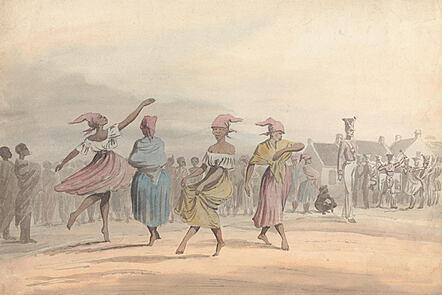
As you interpret different types of historical evidence of slavery through written and visual material, you’ll learn how enslaved people resisted slavery in small, everyday ways, as well as through armed rebellion and revolution.
You’ll also examine the context and events that led to the end of slavery, as well as the labour systems devised to replace it.

Consider the ongoing legacies of British slavery
Led by leading academics from the University of Glasgow, you’ll benefit from a wide range of expertise on the history, archaeology and legacies of slavery.
By the end of the course, you’ll better understand the contemporary legacies of slavery in the modern world and be equipped with the skills to investigate slavery’s legacies in your local area.

What topics will you cover?

  • Trafficking in enslaved people in the transatlantic trade.
  • The culture and lifestyle of enslaved people.
  • How enslaved people resisted enslavement.
  • What methods were used to control and oppress enslaved people in the Caribbean.
  • What happened in the Caribbean when slavery was outlawed.
  • How to explore the contemporary legacies of slavery in the modern world.

What will you achieve?
By the end of the course, you‘ll be able to...

  • Learners will be able to explain how slavery was organised in the British Caribbean.
  • They will be able to describe the lifestyles of enslaved people.
  • They will be able to interpret different types of historical evidence of slavery: written, visual and material.
  • They will be able to debate the relative importance of different factors in bringing slavery to a legal end.
  • Learners will be equipped to investigate slavery’s legacies in their local area.

Who is the course for?
The course is designed for anyone interested in learning more the Black experience during British involvement in the transatlantic slave trade.
The inclusion of slavery’s legacy centres on the racial inequities in our contemporary society will also be useful for heritage, third-sector, educational and media workers who wish to engage in conversations around current global racialised civil unrest and how they are linked to colonial and post-colonial processes.
Go to Class
MOOC List is learner-supported. When you buy through links on our site, we may earn an affiliate commission.

Related Courses

Irish Lives in War and Revolution: Exploring Ireland's History 1912-1923 (FutureLearn) FutureLearn
Trinity College Dublin

Irish Lives in War and Revolution: Exploring Ireland's History 1912-1923 (FutureLearn)

Explore the lives of men, women and children living through war and revolution and social changes that made modern Ireland. How do people experience war and revolution? How does political change, violence, total war, affect life in its most basic ways? Looking at Ireland through war and revolution, this course considers these and other questions about Irish life between 1912 and 1923.

No sessions available
5-12 Weeks
Learning from the Past: A Guide for the Curious Researcher (FutureLearn) FutureLearn
University of Birmingham,The University of Nottingham,British Library

Learning from the Past: A Guide for the Curious Researcher (FutureLearn)

Learn how to understand the past to explain the present, and get to know the amazing sources and resources of the British Library. Discover sources that help you understand the past, and explain the present! The language of history determines how we view our world and understand urgent issues, such as the environment, conflict and human rights.

Available now
3 Weeks
Accounting for Death in War: Separating Fact from Fiction (FutureLearn) FutureLearn
Royal Holloway, University of London,Every Casualty Counts

Accounting for Death in War: Separating Fact from Fiction (FutureLearn)

Discover the main methods used to account for war deaths, how they've been used and practice using them yourself. Calculating the number of deaths during a war is a difficult, but necessary, task - having accurate information is crucial for political and societal debates and decisions. On this course you will explore the methods currently used to account for war deaths and then apply these methods to particular wars.

Available now
3 Weeks
Heart of Scotland: History & Heritage of Stirling at 900 Years (FutureLearn) FutureLearn
University of Stirling

Heart of Scotland: History & Heritage of Stirling at 900 Years (FutureLearn)

Explore Stirling, the 'Gateway to the Highlands', and discover 900 years of history in the city of Scottish kings and queens. On this four-week course, spanning the 12th century to the modern era, gain an expansive understanding of one of Scotland’s most important and beloved cities. Hit all the stops on this heritage tour of Stirling.

Oct 21st 2024
4 Weeks
World War 1: Paris 1919 - A New World Order? (FutureLearn) FutureLearn
University of Glasgow

World War 1: Paris 1919 - A New World Order? (FutureLearn)

This course reassesses the legacy of the Paris Peace Conference (1919) and how it sought to create a new world order. The Paris Peace Conference of 1919 ended a Great War, but it also designed the post-war future. In 1919, world leaders assembled in Paris redrew the map of the world, partitioned and created countries, and ushered in a new era of international relations. The naivety of the peace-makers of 1919 has been justly criticised. However, in setting up a permanent ‘world organisation’, the League of Nations, they changed the management of world affairs forever…

No sessions available
3 Weeks
Empire: The Controversies of British Imperialism (FutureLearn) FutureLearn
University of Exeter

Empire: The Controversies of British Imperialism (FutureLearn)

The British Empire continues to cause enormous disagreement among historians. Find out why and join the debate. Explore the British Empire through six controversial themes. Over six weeks, we’ll explore the British Empire through six themes - money, violence, race, religion, gender and sex, and propaganda. You’ll get to hear the stories of the fascinating individuals who contributed to both its rise and fall.

Available Now
5-12 Weeks
How We Remember War and Violence: Theory and Practice (FutureLearn) FutureLearn
University of Bath

How We Remember War and Violence: Theory and Practice (FutureLearn)

Compare three models of remembering, exploring how the new model of ‘agonistic memory’ can help us better understand conflict. Consider how we recall war and violence and discover a different way to remember. Our memories of conflict are often used against us. Nationalist movements manipulate the story - offering confrontational, harmful perspectives. But there’s a different way.

No sessions available
4 Weeks
World War 1: Trauma, Memory, Controversy (FutureLearn) FutureLearn
The Open University

World War 1: Trauma, Memory, Controversy (FutureLearn)

Explore the traumatic effects of WW1 on soldiers and civilians. Discover how we remember and debate the history of this war. In this free online course, you will study the social, cultural, medical and diplomatic history of the First World War. Topics range from physical and mental trauma suffered by combatants to the traumatic experiences of civilians in wartime.

Available now
4 Weeks
Casing the Joint: Introducing Histories of Crime (FutureLearn) FutureLearn
The University of Newcastle, Australia

Casing the Joint: Introducing Histories of Crime (FutureLearn)

Learn about historical approaches to the study of crime and punishment, particularly in Australia. Delve beyond true crime podcasts, books and television series Crime holds a special place in Australian history, having facilitated colonisation, provided its most celebrated anti-hero in Ned Kelly and been used to sell millions of newspapers, books and movie tickets.

No sessions available
3 Weeks
Inequalities in Latin America and the Caribbean: Research, Policy and Management for Social Transformations (FutureLearn) FutureLearn
UNESCO

Inequalities in Latin America and the Caribbean: Research, Policy and Management for Social Transformations (FutureLearn)

Find out how to promote informed policies towards equity and social transformation in Latin America and the Caribbean. Use strategies to fight against social issues. Inequality is one of the main challenges facing Latin America and the Carribean and is a constant concern for their governments. Faced with these increasingly complex scenarios, a fluid dialogue between social research and public policy is essential.

No sessions available
4 Weeks