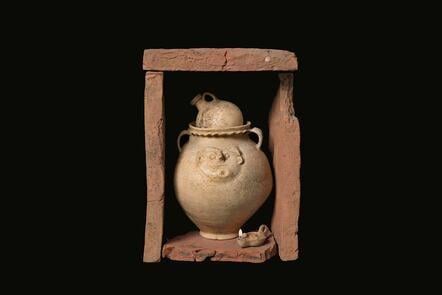
Dead Interesting: Uncovering Roman Britain in Old Museum Collections (FutureLearn)

Dead Interesting: Uncovering Roman Britain in Old Museum Collections (FutureLearn)

Explore the archaeology of early Roman Britain an d learn techniques to build a profile of an individual from the first century AD. Uncover the history of early Roman Britain. What did a Roman funeral look, sound, and smell like? And how can you tell just from a person’s remains? Join a research team uncovering exciting new information about cremation burials excavated over 100 years ago in Colchester, the site of Camulodunum, one of Britain’s oldest towns and its first Roman capital city.

Class Deals by MOOC List - Click here and see FutureLearn's Active Discounts, Deals, and Promo Codes.

Learn about the latest techniques used to discover some of the secrets of the Roman Empire.
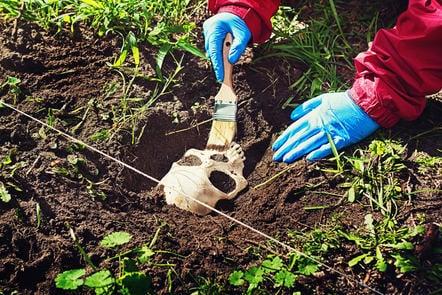
This two-week archaeology course will give you an introduction to osteoarchaeology, the methods, techniques and theory used to study ancient bones, with a focus on early Roman Britain.
Ancient Romano-British culture from what is left behind
Step behind the scenes with a museum specialist and osteologist to explore the stores housing the Romano-British collections as they show you the latest archaeological and osteological methods to analyse the cremated remains of an individual.
Piece together the profile of someone who lives and died in early Roman Colchester
Using the evidence gathered by the experts, you’ll create a fact file about the age, sex, health, status, and origins of the individual. You’ll also identify other sources of information such as inscriptions and grave goods to build your knowledge of the people of Roman Colchester, including their cultural identity and migration patterns.
Discuss how to create a public exhibition
Once you’ve built your profile of a cremated individual and understood the techniques used to reveal new insights about early Roman Britain, you’ll discuss how to present your findings in a public exhibition.

What topics will you cover?

  • The archaeology of early Roman Britain, in particular Colchester during the first century AD.
  • Roman attitudes to death and the different parts of the funerary process.
  • What modern osteoarchaeological analysis can reveal about the funerary process, age, sex, and the diseases that individuals lived with.
  • What isotope analysis can tell us about geographic origin and Roman migration. How does geographical origin relate to ethnicity and cultural identity?
  • How different archaeological methods are required to build up a picture of an individual and how this can be presented to the public.

What will you achieve?

  • By the end of the course, you‘ll be able to...
  • Explore the archaeology of early Roman Britain, in particular Colchester during the first century AD
  • Describe Roman attitudes to death and what a funeral would have looked, sounded and smelled like
  • Identify osteological techniques used to identify the age, sex, status and pathologies of individuals from cremated burials
  • Discuss what it means to be Romano-British
  • Understand the value of using new techniques to revisit, analyse and learn more from old museum collections.
Go to Class
MOOC List is learner-supported. When you buy through links on our site, we may earn an affiliate commission.

Related Courses

Archaeology of Portus: Exploring the Lost Harbour of Ancient Rome (FutureLearn) FutureLearn
University of Southampton

Archaeology of Portus: Exploring the Lost Harbour of Ancient Rome (FutureLearn)

Learn how ancient artefacts, written evidence, excavation and digital technologies are transforming understanding of this harbour. The Roman harbour city of Portus lay at the heart of an empire that extended from Scotland to Iraq. Established by Claudius and enlarged by the emperor Trajan with spoils of the Dacian wars, the port was the conduit for everything the city of Rome required from its Mediterranean provinces: the food and, particularly grain, that fed the largest urban population of the ancient world, as well as luxuries of all kinds, building materials, people and wild animals for the arena.

No sessions available
5-12 Weeks
Christian-Muslim Relations (FutureLearn) FutureLearn
University of Edinburgh

Christian-Muslim Relations (FutureLearn)

Uncover important themes in the history of Christian-Muslim relations and understand the politics that continue to shape it. Gain an insight into the academic study of Christian-Muslim Relations. On this innovative four-week course, you’ll be introduced to the academic study of Christian-Muslim Relations with the School of Divinity at the University of Edinburgh.

Oct 3rd 2022
4 Weeks
Hadrian's Wall: Life on the Roman Frontier (FutureLearn) FutureLearn
Newcastle University

Hadrian's Wall: Life on the Roman Frontier (FutureLearn)

Explore the archaeology of the most heavily fortified frontier in the Roman Empire, its people and their lives. Hadrian’s Wall stretches over 73 miles (117 km), from coast to coast in what is now Northern England. The Wall, complemented by a sophisticated system of outposts and coastal watch stations, offers a remarkable glimpse of ancient society. In addition to housing one of the largest concentrations of Roman soldiers anywhere in the Empire’s provinces, Hadrian’s frontier system was home to an incredibly cosmopolitan array of civilians. This six week course offers a comprehensive introduction to Hadrian’s Wall and its people and raises fascinating issues concerning colonisation, cultural transformation, immigration, integration and imperialism.

No sessions available
5-12 Weeks
The Scottish Highland Clans: Origins, Decline and Transformation (FutureLearn) FutureLearn
University of Glasgow

The Scottish Highland Clans: Origins, Decline and Transformation (FutureLearn)

Explore fascinating Scottish history by learning about the Highland clans and how clanship has changed across hundreds of years. Discover the important history of the Highland clans. The Highland, Gaelic speaking clans are a vital part of Scotland’s history. They also shape how the world imagines Scotland today.

Apr 3rd 2023
3 Weeks
The Museum as a Site and Source for Learning (FutureLearn) FutureLearn
University of Glasgow

The Museum as a Site and Source for Learning (FutureLearn)

Explore the purpose of museums today and find how they facilitate learning. Find out how museum collections, spaces and technology help visitors learn. What is the purpose of museums in today’s world - a world obsessed with technology? On this course we explore what can be gained from interacting with museum collections and spaces, and how to use technology to encourage engagement.

Available now
3 Weeks
Discover the Hidden History of York (FutureLearn) FutureLearn
University of York

Discover the Hidden History of York (FutureLearn)

Investigate York’s cultural and social history and the pivotal events and people that helped define a nation. Uncover fascinating facts about the city of York, from medieval times to today. York is a city bursting with engaging and unusual episodes from its rich and diverse history. On this three-week course, you’ll delve into the city’s past and learn about some of the most interesting events and people to have contributed to York’s story.

Jul 7th 2022
3 Weeks
A Question of Time: How We Date Human Evolution (FutureLearn) FutureLearn
Griffith University

A Question of Time: How We Date Human Evolution (FutureLearn)

Discover the role that dating human fossils plays in the reconstruction of human evolution: explore examples from around the world. Uncover the history of our ancestors by dating human fossils. Trace your origins and develop your understanding of human evolution, with this course from the world-leading experts at Griffith University.

No sessions available
2 Weeks
World War 1: Trauma, Memory, Controversy (FutureLearn) FutureLearn
The Open University

World War 1: Trauma, Memory, Controversy (FutureLearn)

Explore the traumatic effects of WW1 on soldiers and civilians. Discover how we remember and debate the history of this war. In this free online course, you will study the social, cultural, medical and diplomatic history of the First World War. Topics range from physical and mental trauma suffered by combatants to the traumatic experiences of civilians in wartime.

Available now
4 Weeks