How We Remember War and Violence: Theory and Practice (FutureLearn)

Offered by University of Bath,
How We Remember War and Violence: Theory and Practice (FutureLearn)

Compare three models of remembering, exploring how the new model of ‘agonistic memory’ can help us better understand conflict. Consider how we recall war and violence and discover a different way to remember. Our memories of conflict are often used against us. Nationalist movements manipulate the story - offering confrontational, harmful perspectives. But there’s a different way.

Class Deals by MOOC List - Click here and see FutureLearn's Active Discounts, Deals, and Promo Codes.

This course takes a new approach to remembering, ‘agnostic memory’. You’ll explore how it improves upon the other two models of memory - ‘cosmopolitan memory’ and ‘antagonistic memory’, going on to see how agonistic memory can be used in your own work to relate more accurately to the past.
By the end of this course, you’ll understand how the various models are used today - and will have a new way to look at history.

What topics will you cover?

  • What are the different types of memory in Europe today?
  • Theoretical and practical examples of antagonistic and cosmopolitan memory.
  • What is agonistic memory?
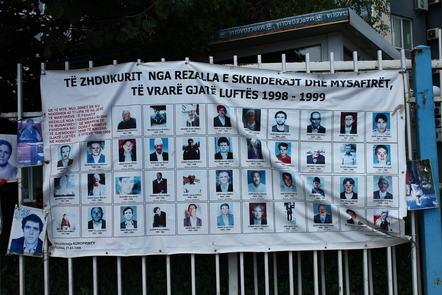
  • How has agonistic memory been applied in museums, in education and at sites of mass exhumations?
  • Case studies testing an agonistic mode of remembering: a Spanish theatre performance and museum exhibits in Germany and Northern Ireland.

Learning on this course
You can take this self-guided course and learn at your own pace. On every step of the course you can meet other learners, share your ideas and join in with active discussions in the comments.

What will you achieve?
By the end of the course, you'll be able to...

  • Identify, describe and compare three models of memory - cosmopolitan, antagonistic and agonistic
  • Evaluate and summarise the shortcomings of antagonistic and cosmopolitan memory
  • Reflect on and debate 'agonistic remembering'
  • Engage with and discuss applications of agonistic memory in different environments
  • Discuss and develop how you might best apply agonistic memory in your own heritage context

Who is the course for?
The course will be of interest to policymakers who are responsible for funding and coordinating commemorative activities. It would also be of interest to civic organisations in the field of memory and commemoration, and museum professionals - including directors, curators, conservators, and educators.
Go to Class
MOOC List is learner-supported. When you buy through links on our site, we may earn an affiliate commission.

Related Courses

Lancaster Castle and Northern English History: The View from the Stronghold (FutureLearn) FutureLearn
Lancaster University

Lancaster Castle and Northern English History: The View from the Stronghold (FutureLearn)

We will use the iconic building of Lancaster Castle to investigate how 2000 years of history has shaped the north-west of England. This course takes an innovative approach to exploring history, focusing on Lancaster Castle as a microcosm of broader trends. This fascinating location provides a wealth of evidence from the remains of Roman forts to its life as a prison and visitor attraction.

Oct 18th 2021
5-12 Weeks
Empire: The Controversies of British Imperialism (FutureLearn) FutureLearn
University of Exeter

Empire: The Controversies of British Imperialism (FutureLearn)

The British Empire continues to cause enormous disagreement among historians. Find out why and join the debate. Explore the British Empire through six controversial themes. Over six weeks, we’ll explore the British Empire through six themes - money, violence, race, religion, gender and sex, and propaganda. You’ll get to hear the stories of the fascinating individuals who contributed to both its rise and fall.

Available Now
5-12 Weeks
Irish Lives in War and Revolution: Exploring Ireland's History 1912-1923 (FutureLearn) FutureLearn
Trinity College Dublin

Irish Lives in War and Revolution: Exploring Ireland's History 1912-1923 (FutureLearn)

Explore the lives of men, women and children living through war and revolution and social changes that made modern Ireland. How do people experience war and revolution? How does political change, violence, total war, affect life in its most basic ways? Looking at Ireland through war and revolution, this course considers these and other questions about Irish life between 1912 and 1923.

No sessions available
5-12 Weeks
Forced Marriage: Challenges and Dilemmas (FutureLearn) FutureLearn
University of Strathclyde

Forced Marriage: Challenges and Dilemmas (FutureLearn)

Develop your knowledge of human rights and societal issues as you explore the impact of forced marriage and measures to combat it. Learn how to define forced marriages. Forced marriage is recognised internationally as a violation of women and children’s human rights and as a form of violence against women. This course will explore the meaning and impact of forced marriage on the individual and communities where it takes place.

May 30th 2022
4 Weeks
New Zealand History, Culture and Conflict: A Museum Perspective (FutureLearn) FutureLearn
Museum of New Zealand Te Papa Tongarewa

New Zealand History, Culture and Conflict: A Museum Perspective (FutureLearn)

Discover the social history of Aotearoa New Zealand, learning how the country’s bicultural national consciousness was formed. Identify the factors that have contributed to New Zealand’s cultural identity. New Zealand’s social history is built on a foundation of exploration and colonial conflict. On this three-week course, you’ll access artefacts, treasures, and exhibitions within Te Papa Tongarewa’s collections to discover how New Zealand culture has evolved over time, identifying key historical moments that have impacted the formation of a national identity.

Nov 27th 2023
3 Weeks
Religion and Conflict (FutureLearn) FutureLearn
University of Groningen

Religion and Conflict (FutureLearn)

Understand and analyze the role of religion in conflicts and peacebuilding in present-day societies, with this free online course. Many conflicts in the world today are framed in terms of religion, but there is much discussion and confusion concerning the precise role religion plays in these conflicts. According to some, conflict and violence are inherent to religion. Others claim that religion is only the guise under which social, economic or political conflicts are fought out. The first step to solving religiously framed conflicts is understanding the role of religion in them, and that is what this free online course is about.

No sessions available
5-12 Weeks
The Life and Afterlife of Mary Queen of Scots (FutureLearn) FutureLearn
University of Glasgow

The Life and Afterlife of Mary Queen of Scots (FutureLearn)

Explore the 16th century life of Mary Queen of Scots, and her place in cultural history in the centuries that followed. Discover the life and lasting legacy of Mary Queen of Scots. Mary Queen of Scots was born and ascended to the throne of Scotland in 1542, before being forced to abdicate in 1567. She was married three times, first to the king of France, and then to two noblemen from the British Isles, one of whom was spectacularly murdered.

Mar 13th 2023
3 Weeks
Discover the Hidden History of York (FutureLearn) FutureLearn
University of York

Discover the Hidden History of York (FutureLearn)

Investigate York’s cultural and social history and the pivotal events and people that helped define a nation. Uncover fascinating facts about the city of York, from medieval times to today. York is a city bursting with engaging and unusual episodes from its rich and diverse history. On this three-week course, you’ll delve into the city’s past and learn about some of the most interesting events and people to have contributed to York’s story.

Jul 7th 2022
3 Weeks
The Scottish Highland Clans: Origins, Decline and Transformation (FutureLearn) FutureLearn
University of Glasgow

The Scottish Highland Clans: Origins, Decline and Transformation (FutureLearn)

Explore fascinating Scottish history by learning about the Highland clans and how clanship has changed across hundreds of years. Discover the important history of the Highland clans. The Highland, Gaelic speaking clans are a vital part of Scotland’s history. They also shape how the world imagines Scotland today.

Apr 3rd 2023
3 Weeks