Health Impacts of Chemicals in Consumer Products (Coursera)

Health Impacts of Chemicals in Consumer Products (Coursera)

This course focuses on assessing health impacts of chemicals in products and of fine particulate emitted along the product life cycle. We first develop the assessment framework to assess exposure and health impacts of chemicals in products. We then detail the application of mass-balance approaches to the case of parabens in personal care products.

Class Deals by MOOC List - Click here and see Coursera's Active Discounts, Deals, and Promo Codes.

Participants then learn to assess the human health impacts of chemicals in products using the USEtox model (UN-Environment toxicity model) and discuss the level of protection offered by existing regulations about chemicals in products contrasting US and Europe. We extend the assessment to risks and impacts 5000+ chemical-household product combinations identifying the products and chemicals of concern in e.g. home maintenance and personal care products and looking at children as a sensitive population and at the magnitude of the risks associated with exposures to chemicals in toys. We also introduce a Life Cycle-based approach to Chemical Alternatives Assessment (CAA) combining both quantified exposure and hazards and discuss the applicability domain of CAA compared to Risk Assessment (RA) and Life Cycle Assessment (LCA). We finally determine exposure to and effect of fine particulates on human health along the product and chemical supply chain and life cycle. This course concludes the course series by providing cutting-edge progress on the overall exposome and compares the health impacts of multiple environmental exposures on health.
Course 4 of 4 in the Healthy and Sustainable Foods and Products Specialization.

Syllabus

WEEK 1
Chemicals in Products
This course focuses on assessing the health impacts of chemicals in products and of fine particulates emitted along the product life cycle. This week we will develop the assessment framework to assess exposure and health impacts of chemicals in products. Then we detail the application of mass-balance approaches to the case of parabens in personal care products. Participants then learn to assess the human health impacts of chemicals in products using the USEtox model (UN-Environment toxicity model) and discuss the level of protection offered by existing regulations about chemicals in products contrasting US and Europe.

WEEK 2
Chemicals of Concern
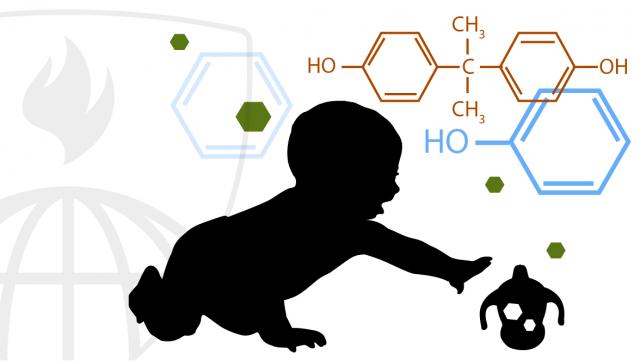
This week we will extend the assessment to risks and impacts 5000+ chemical-household product combinations identifying the products and chemicals of concern in e.g. home maintenance and personal care products and looking at children as a sensitive population and at the magnitude of the risks associated with exposures to chemicals in toys.

WEEK 3
Life Cycle Based Chemical Alternatives Assessment and Impacts of Fine particulates
This week we will introduce a Life Cycle-based approach to Chemical Alternatives Assessment (CAA) combining both quantified exposure and hazards and discuss the applicability domain of CAA compared to Risk Assessment (RA) and Life Cycle Assessment (LCA). Finally, we will determine exposure to and effect of fine particulates on human health along the product and chemical supply chain and life cycle. This course concludes the course series by providing cutting-edge progress on the overall exposome and compares the health impacts of multiple environmental exposures on health.

Go to Class
MOOC List is learner-supported. When you buy through links on our site, we may earn an affiliate commission.

Related Courses

Psychology of Popularity (Coursera) Coursera
University of North Carolina

Psychology of Popularity (Coursera)

The level of popularity you experienced in childhood and adolescence is still affecting you today in ways that you may not even realize. Learn about how psychologists study popularity and how these same concepts can be used in adulthood to be more successful at work, become better parents, and have a happier life.

Sep 14th 2026
5-12 Weeks
Career 911: Your Future Job in Medicine and Healthcare (Coursera) Coursera
Northwestern University

Career 911: Your Future Job in Medicine and Healthcare (Coursera)

This course aims to help high school students, recent graduates, and those considering career transitions explore health care career options and learn strategies for entry into the health care workforce and health related fields. There are lots of amazing job opportunities in medicine and healthcare! Join us, as we share the strategies and secrets for getting those jobs.

Sep 14th 2026
5-12 Weeks
Clinical Kidney, Pancreas and Islet Transplantation (Coursera) Coursera
Leiden University,Leiden University Medical Center

Clinical Kidney, Pancreas and Islet Transplantation (Coursera)

Kidney transplantation is a major advance of modern medicine which provides high-quality of life for patients with end-stage renal disease. What used to be an experimental, risky, and very limited treatment option more than 50 years ago is now routinely performed in many countries worldwide. The number of renal transplants is expected to rise sharply in the next decade since the proportion of patients with end stage renal disease is increasing.

Sep 14th 2026
4 Weeks
Impacting the Opioid Crisis: Prevention, Education, and Practice for Non-Prescribing Providers (Coursera) Coursera
University of Michigan

Impacting the Opioid Crisis: Prevention, Education, and Practice for Non-Prescribing Providers (Coursera)

This course will empower non-prescribing providers to directly impact the ongoing opioid crisis in the United States through increased knowledge and tools that will transform practice and policies. The course will inform you about the opioid epidemic and provide information and research about evidence-based strategies that are focused on prevention, intervention, education, or policy.

Sep 14th 2026
5-12 Weeks
Diabetes - a Global Challenge (Coursera) Coursera
University of Copenhagen

Diabetes - a Global Challenge (Coursera)

Diabetes and obesity are growing health problems in rich and poor countries alike. With this course you will get updated on cutting-edge diabetes and obesity research including biological, genetic and clinical aspects as well as prevention and epidemiology of diabetes and obesity. All lectures are provided by high-profile scientists from one the world's leading universities in diabetes research.

Sep 14th 2026
5-12 Weeks
Chemicals and Health (Coursera) Coursera
Johns Hopkins University

Chemicals and Health (Coursera)

This course covers chemicals in our environment and in our bodies and how they impact our health. It addresses policies and practices related to chemicals, particularly related to how they get into our bodies (exposures), what they do when they get there (toxicology), how we measure them (biomonitoring) and their impact on our health. Most examples are drawn from the US.

Sep 14th 2026
5-12 Weeks
Evidence-based Toxicology (Coursera) Coursera
Johns Hopkins University

Evidence-based Toxicology (Coursera)

Welcome to the Evidence-based Toxicology (EBT) course. In medicine and healthcare, evidence-based medicine has revolutionized the way that information is evaluated transparently and objectively. Over the past ten years, a movement in North America and Europe has attempted to translate this revolution to the field of toxicology.

Sep 14th 2026
5-12 Weeks
Case Studies in Personalized Medicine (Coursera) Coursera
Vanderbilt University

Case Studies in Personalized Medicine (Coursera)

Learn how advances in biomedicine hold the potential to revolutionize drug development, drug treatments, and disease prevention: where are we now, and what does the future hold? This course will present short primers in genetics and mechanisms underlying variability in drug responses. A series of case studies will be used to illustrate principles of how genetics are being brought to bear on refining diagnoses and on personalizing treatment in rare and common diseases. The ethical and operational issues around how to implement large scale genomic sequencing in clinical practice will be addressed.

Sep 14th 2026
5-12 Weeks
Epidemiology: The Basic Science of Public Health (Coursera) Coursera
University of North Carolina

Epidemiology: The Basic Science of Public Health (Coursera)

Often called “the cornerstone” of public health, epidemiology is the study of the distribution and determinants of diseases, health conditions, or events among populations and the application of that study to control health problems. By applying the concepts learned in this course to current public health problems and issues, students will understand the practice of epidemiology as it relates to real life and makes for a better appreciation of public health programs and policies. This course explores public health issues like cardiovascular and infectious diseases – both locally and globally – through the lens of epidemiology.

Sep 14th 2026
5-12 Weeks
Everyday Chinese Medicine (Coursera) Coursera
The Chinese University of Hong Kong

Everyday Chinese Medicine (Coursera)

This course aims to serve as an education platform on Chinese medicine (CM) for the general public. Our primary goal is to empower healthcare choices by promoting awareness and practical application on CM diagnostic and therapeutic approaches, as well as regulation on CM services and herbal products using international examples.

Sep 14th 2026
5-12 Weeks
A Life of Happiness and Fulfillment (Coursera) Coursera
Indian School of Business - ISB

A Life of Happiness and Fulfillment (Coursera)

What are the determinants of a happy and fulfilling life? This is surely one of life’s biggest questions, and a question that has interested many of our ancestors. Buddha famously gave up his kingdom in search of happiness. Several Greek philosophers (from Aristotle to Epicurus and Plato to Socrates) had their own views on what it takes to be happy. And of course, we all have our own theories about happiness too.

Sep 14th 2026
5-12 Weeks
Disease Screening in Public Health (Coursera) Coursera
University of Geneva

Disease Screening in Public Health (Coursera)

Current and future public health is characterized by the increase of chronic and degenerative diseases, corresponding to the worldwide ageing of the population. The increasing prevalence of these conditions together with the long incubation period of the chronic diseases and the restless technological innovations, offer new opportunities to develop strategies for early diagnosis.

Sep 14th 2026
5-12 Weeks