Grand Challenges: Food for Thought (FutureLearn)

Grand Challenges: Food for Thought (FutureLearn)

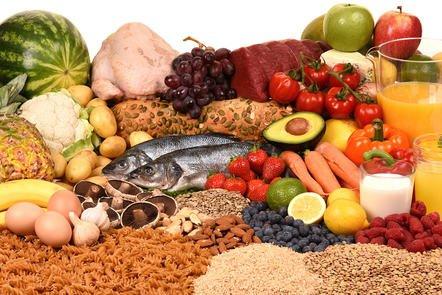
Where does our food come from and what impact does it have on our environment? Our demand for food from natural systems is changing the world we live in from the soil beneath our feet to the birds in the sky and the fish in the sea. Unsustainable practices of production (overfishing or monoculture) and consumerism are to blame.

Class Deals by MOOC List - Click here and see FutureLearn's Active Discounts, Deals, and Promo Codes.

Widely publicised examples include mere decades of soil fertility for crop growth and drastic declines in pollinating insects. This course aims to educate you in the way that every human being can reduce their impact on our planet and inspire you to make global connections to tackle sustainability issues.

What topics will you cover?

  • The pillars of sustainability
  • Environmental impacts of food production
  • Exploitation of the sea
  • Case studies on the production of Bananas, Coffee and Palm Oil
  • Importance of pollinators

What will you achieve?
By the end of the course, you'll be able to...

  • Describe the term 'sustainability' in the context of food production
  • Explain the 'Pillars of Sustainability' model
  • Compare and contrast the sustainability of global coffee, palm oil and banana industries
  • Reflect on the importance of pollinators in relation to food production
  • Investigate the food available from your local area and contrast with your weekly shop
Go to Class
MOOC List is learner-supported. When you buy through links on our site, we may earn an affiliate commission.
Related Courses

Transforming Urban Mobility: Introduction to Transport Planning for Sustainable Cities (FutureLearn) FutureLearn
University College London,Transforming Urban Mobility Initiative - TUMI,GIZ

Transforming Urban Mobility: Introduction to Transport Planning for Sustainable Cities (FutureLearn)

Discover the different dimensions of sustainable urban mobility, including the Avoid-Shift-Improve (ASI) framework. Good transport systems and projects are critical to the development of environmentally sustainable and socially inclusive cities. This course considers the impacts of motorisation, our current unsustainable travel patterns, and the framework for changing to sustainable urban mobility.

Self Paced
4 Weeks
Unleash Your Potential: Sustainable Futures (FutureLearn) FutureLearn
University of Bristol

Unleash Your Potential: Sustainable Futures (FutureLearn)

Learn about the sustainability challenges of the modern world, and make a positive contribution to society. Find out how to deal with world sustainability issues. United Nations (UN) countries have adopted a set of goals to end poverty, protect the planet and ensure prosperity for all. On this online course, you’ll learn about these UN Sustainable Development Goals, and the different roles people can play in creating a sustainable future.

Self Paced
4 Weeks
Maqasid Al-Shariah and Sustainable Development (FutureLearn) FutureLearn
University of Malaya

Maqasid Al-Shariah and Sustainable Development (FutureLearn)

Discover how religion, particularly Islamic teachings, and scientific knowledge can work together towards sustainable solutions. Use a blend of religion and science to explore sustainability. Sustainable Development is one of the most comprehensive worldwide concepts today in the quest to safeguard the environment. This principle of sustainability has been discovered to be intrinsically linked to the concept of Shariah, which emphasises the importance of continuity not just in this world, but also in the afterlife.

Self Paced
3 Weeks
Food Science and Nutrition: From the Farm to You (FutureLearn) FutureLearn
University of Leeds

Food Science and Nutrition: From the Farm to You (FutureLearn)

Follow food’s fascinating journey from the farm to your body and explore new food technologies and nutrition around the world. Discover the science of food and understand the value of nutrition in our diets. On this course, you’ll learn how food science and nutrition helps us to understand and study the fascinating world of food.

Self Paced
2 Weeks
Achieving Transitions to Zero Carbon Emissions and Sustainable Urban Mobility (FutureLearn) FutureLearn
University College London,Transforming Urban Mobility Initiative - TUMI,EIT Urban Mobility,ICLEI

Achieving Transitions to Zero Carbon Emissions and Sustainable Urban Mobility (FutureLearn)

Discover how cities can transform their urban mobility systems to become more sustainable and reach zero carbon emissions. Understand the steps to becoming sustainable city. Transport accounts for a large proportion of carbon emissions, so ensuring urban mobility systems are sustainable is key to helping cities to achieve zero-carbon goals. On this four-week course, you’ll discover how cities can transition their mobility systems to become sustainable, innovative, and inclusive.

Self Paced
4 Weeks
Introduction to Sustainable Practices in Food Service (FutureLearn) FutureLearn
International Culinary Studio

Introduction to Sustainable Practices in Food Service (FutureLearn)

Create a more sustainable food service business and make a difference to your bottom line, your stakeholders, and the environment. Improve your sustainable practices within your organisation. Sustainability isn’t just about ‘greening’; sustainability actually means ‘meeting the needs of the present without compromising the ability of future generations to meet their needs.’ On this course, you’ll look at general global sustainability concepts, issues, and concerns, before focusing on sustainability specifically within food service and what you can do to reduce your impact.

Self Paced
2 Weeks
Tackling Environmental Challenges for a Sustainable Future (FutureLearn) FutureLearn
University of York

Tackling Environmental Challenges for a Sustainable Future (FutureLearn)

Discover how environmental research can inform how we respond to and solve the major global environmental issues of today. Explore sustainable solutions to environmental issues like changing glaciers. Our energy use is unsustainable, we’re producing waste plastic that’s endangering oceans, and large parts of the natural world are disappearing. We know our planet is facing huge environmental challenges, but what are we doing to solve them?

Self Paced
4 Weeks
Environmental Challenges: Human Impact in the Natural Environment (FutureLearn) FutureLearn
University of Leeds

Environmental Challenges: Human Impact in the Natural Environment (FutureLearn)

Complexity in nature arises from a myriad of simple interactions. How can this lead to an unpredictable dynamism? Complex patterns in ecology are not always causal and predictable. Populations have their own dynamics that can be independent of external environmental conditions. In this course we look at the way that natural systems are organised; although living systems are complex, there are also some fairly constant patterns and relationships.

Self Paced
2 Weeks
Renewable Energy: Achieving Sustainability through Bioenergy (FutureLearn) FutureLearn
University of Leeds

Renewable Energy: Achieving Sustainability through Bioenergy (FutureLearn)

Understand the principles of bioenergy and learn how to harness this form of renewable energy to achieve sustainability. Learn about the principles and environmental implications of bioenergy. On this two week course, you will explore bioenergy, one of the most diverse and readily available sources of renewable energy. You’ll look into what types of biomass can be used and how sustainable energy solutions can be developed in a wide range of communities.

Self Paced
2 Weeks
Creating Ethical and Sustainable Cities at the Local Level (FutureLearn) FutureLearn
RMIT University,EIT Community

Creating Ethical and Sustainable Cities at the Local Level (FutureLearn)

See how frameworks for ethical and sustainable cities can be localised, fostering resilient cities for the future. Learn how you can contribute to the sustainable cities of tomorrow. It’s widely accepted that, as we look towards the future, we need to actively create cities that are ethical, sustainable, inclusive, and well-governed. To do this, we need to localise frameworks and principles such as the Sustainable Development Goals (SDGs), the European Green Deal and New European Bauhaus to make tangible differences. Knowing how to start this localisation can be daunting, which is why this course from RMIT is so valuable.

Self Paced
2 Weeks