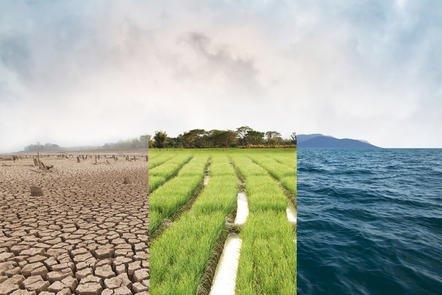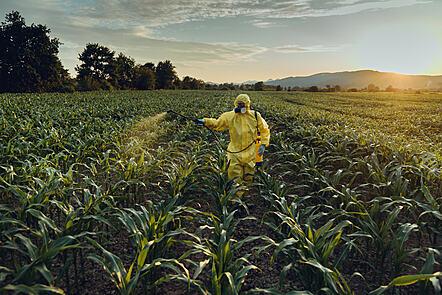
Complexity in nature arises from a myriad of simple interactions. How can this lead to an unpredictable dynamism? Complex patterns in ecology are not always causal and predictable. Populations have their own dynamics that can be independent of external environmental conditions. In this course we look at the way that natural systems are organised; although living systems are complex, there are also some fairly constant patterns and relationships.
Class Deals by MOOC List - Click here and see FutureLearn's Active Discounts, Deals, and Promo Codes.
This course explores three approaches to the causality and dynamics of environmental systems, and how humans are involved and affected by these systems world-wide. It also includes an introduction to correlation and the limitations of statistical testing.
Syllabus
Week 1: The principles of human impact in the natural environment
Week 2: Applying the principles
What will you achieve?
By the end of the course, you'll be able to...
- Explore the question of causality as it applies to vegetation and climate.
- Discuss density-dependent population dynamics, where many individual interactions can lead to apparently chaotic fluctuations.
- Explain mathematical rules in nature and human social systems.
- Develop mathematical understanding of correlation and the limitations of statistical testing.
Who is the course for?
The course is suitable for anyone with a general interest in nature and environmental decision-making; no previous knowledge or experience is required.
If you are working in environmental management, or wish to learn more about it, this course is designed to support you as a professional. By completing all aspects of the course you will have achieved 14 hours of CPD time.