EdX

Genetic Models for Animal Breeding (edX)

Genetic Models for Animal Breeding (edX)

Understand the genetic and statistic principles that enable responsible animal breeding. Animal breeding involves the selective breeding of domestic animals with the intention to improve desirable (and heritable) qualities in the next generation. This course introduces the steps required to design a program for breeding animals and teaches the genetic and statistical concepts that are needed to build a solid breeding program.

Class Deals by MOOC List - Click here and see EdX's Active Discounts, Deals, and Promo Codes.

In this course, you will learn how an animal breeder balances the need for improving the desirable qualities of the animals with the need for genetic diversity and long-term sustainability of the breeding program. You will learn about the scientific concepts in genetics that are applied in animal breeding, as well as how to apply the models and computational methods that are used in animal breeding.

Professionals working with animals will be able to use the knowledge from this course to understand the impact of breeding on animal populations and use genetic principles to make their decisions. This course will allow you an advanced starting point for further studies, such as M.Sc. level courses in breeding.
Knowledge of statistics at a 2nd or 3rd year university level is needed to follow this course successfully.
This course is part of the Animal Breeding and Genetics Professional Certificate.

What you'll learn

  • The steps required in setting up a breeding program.
  • Understanding of the main concepts in animal breeding.
  • Applying genetic models and tools to predict the breeding value of animals.
  • Tools to predict genetic change and/or inbreeding in populations.
  • Introduction to dissemination of genetic progress in different animals.

Syllabus

Week 1: Introduction to Animal Breeding
Introduction to the seven steps that are needed to set up a breeding program.

Week 2: The breeding goal
Learning the characteristics of a breeding goal and how to define a breeding goal for genetic improvement and for genetic diversity.

Week 3: Collection of information and family relationships
Learning the value of information on relationships, performance, and DNA information, including the concept and consequences of inbreeding. Learning methods to quantify relationships and inbreeding.

Week 4: Genetic models
Learning the concept of genetic models and to apply suitable genetic models for different traits. Learning the genetic concepts of heritability, repeatability, common environment ratio and mendelian sampling.

Week 5: Ranking the animals
Learning to estimate the breeding value of animals, using single or multiple sources of information, including DNA information. Learning to calculate the accuracy of estimated breeding values.

Week 6: Response to selection
Learning to calculate the response to selection and knowing its key elements and consequences of trade-offs between them. To understand mating schemes and long term contributions to inbreeding.

Go to Class
MOOC List is learner-supported. When you buy through links on our site, we may earn an affiliate commission.

Related Courses

Introduction to Animal Behaviour (edX) EdX
Wageningen University,WageningenX

Introduction to Animal Behaviour (edX)

Explore the amazing range and complexity of wild animal behaviour. Discover how animals learn, communicate, find food, avoid predators, and interact socially. Do you want to understand how and why animals behave the way they do, and how we test hypotheses about behaviour scientifically? This biology and life sciences course provides an introduction to the complexities of wild animal behaviour, and how it is studied.

Self Paced
Self-Paced
Human Anatomy for Stroke (edX) EdX
The Hong Kong Polytechnic University,HKPolyUx

Human Anatomy for Stroke (edX)

The first MOOC to teach Human Anatomy from multiple healthcare professional perspectives through a case-based study of stroke. How is the human body structured? How are the different body systems interconnected with each other? If you are interested but layman to Human Anatomy, if you find the Human Anatomy textbooks are too difficult to read, or if you want to freshen up quickly your anatomy knowledge, this is the course for you.

Self Paced
Self-Paced
AP® Psychology - Course 2: How the Brain Works (edX) EdX
The University of British Columbia,UBCx

AP® Psychology - Course 2: How the Brain Works (edX)

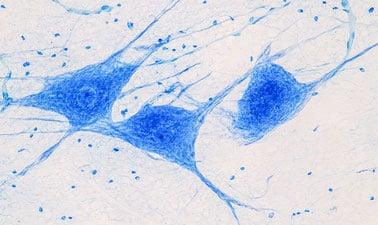
Learn how your brain works and the basics of neuroscience, genetics and consciousness. This psychology course will show you how the brain works. You will learn the basics of neuroscience, genetics and evolutionary psychology. We will also cover the visual system and other sensory systems. The course concludes with coverage of the variety of states of consciousness.

No session available
5-12 Weeks
The Chemistry of Life (edX) EdX
Kyoto University,KyotoUx

The Chemistry of Life (edX)

Learn how to generate ideas at the interface between chemistry and biology. Chemistry and biology are traditionally taught as separate subjects at the high school level, where students memorize fundamental scientific principles that are universally accepted. However, at the university level and in industry, we learn that science is not as simple as we once thought. We are constantly confronted by questions about the unknown and required to use creative, integrated approaches to solve these problems.

Self Paced
Self-Paced
Principles of Synthetic Biology (edX) EdX
MIT,MITx

Principles of Synthetic Biology (edX)

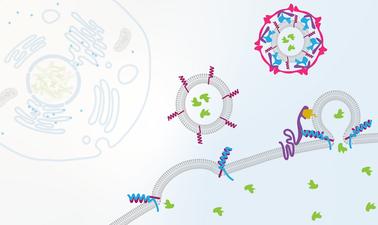
Learn how to engineer biological systems and program organisms to perform novel tasks. Do you like biology, biotechnology, or genetic engineering? Are you interested in computer science, engineering, or design? Synthetic Biology is an innovative field bringing together these subject areas and many more to create useful tools to solve everyday problems.

This course is archived
13-24 Weeks
Human Anatomy: Musculoskeletal Cases (edX) EdX
HarvardX,Harvard University

Human Anatomy: Musculoskeletal Cases (edX)

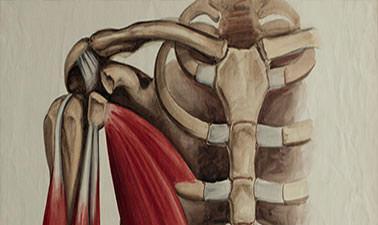
Learn the anatomy basic to understanding five musculoskeletal injuries commonly seen in primary care medicine and orthopedic clinical specialty practice. Follow hypothetical patients from injury to operating room. Human Anatomy: Musculoskeletal Cases invites students to join medical and basic science faculty at Harvard Medical School (HMS) to learn about musculoskeletal injuries commonly seen in clinical practice.

Self Paced
Self-Paced
Molecular Biology - Part 1: DNA Replication and Repair (edX) EdX
MIT,MITx

Molecular Biology - Part 1: DNA Replication and Repair (edX)

An in-depth adventure through DNA replication and repair to strengthen your scientific thinking and experimental design skills. You’re acquainted with your DNA, but did you know that your cells synthesize enough DNA during your lifetime to stretch a lightyear in length? How does the cellular machinery accomplish such a feat without making more mistakes than you can survive?

Apr 16th 2024
5-12 Weeks
Principles of Biochemistry (edX) EdX
HarvardX,Harvard University

Principles of Biochemistry (edX)

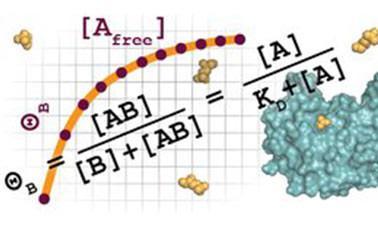
This introduction to biochemistry explores the molecules of life, starting at simple building blocks and culminating in complex metabolism. Principles of Biochemistry integrates an introduction to the structure of macromolecules and a biochemical approach to cellular function. Topics addressing protein function will include enzyme kinetics, the characterization of major metabolic pathways and their interconnection into tightly regulated networks, and the manipulation of enzymes and pathways with mutations or drugs.

Self Paced
Self-Paced
Tropical Coastal Ecosystems (edX) EdX
University of Queensland,UQx

Tropical Coastal Ecosystems (edX)

Take the challenge and understand problems and solutions to managing tropical coastal ecosystems. Do you want to develop the skills and knowledge needed to help preserve tropical coastal ecosystems? These habitats provide goods and services for hundreds of millions of people but human activities have led to their global decline.

Self Paced
Self-Paced
Global Warming Science (edX) EdX
MIT,MITx

Global Warming Science (edX)

Learn about the physics, chemistry, biology, and geology of the earth’s climate system. Global Warming Science teaches you about the risks and uncertainties of future climate change by examining the science behind the earth’s climate. You will be able to answer such questions as, “What is the Greenhouse Effect?” and “How and why has earth’s climate changed through geologic history?”

No sessions available
13-24 Weeks